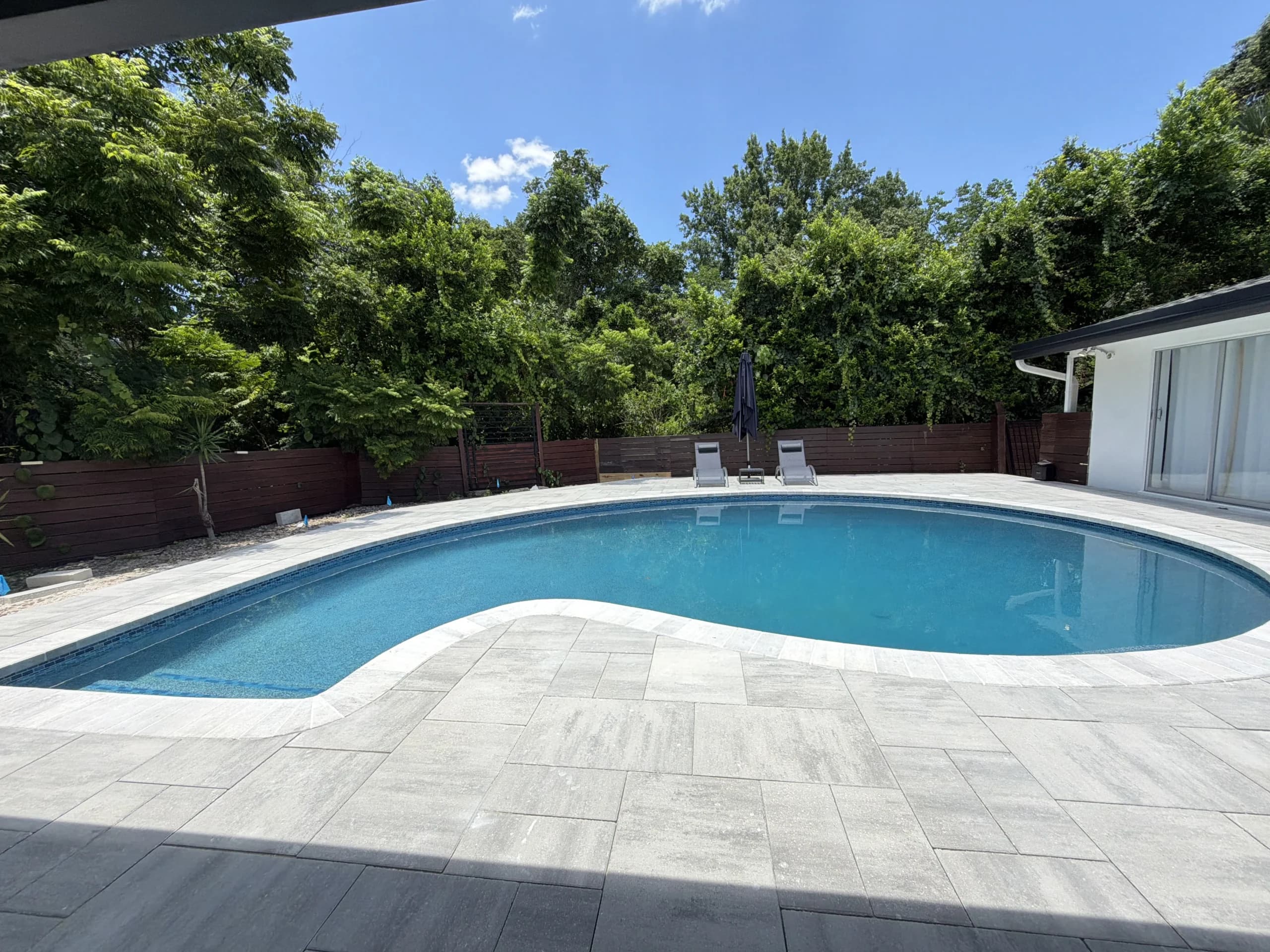
She had been looking at her pool for three months. The surface was rough. The water chemistry was a battle she had stopped fully fighting. There was a crack near the steps that had gotten slightly wider since spring. She knew the pool needed attention — but every time she got close to calling a contractor, she realized she didn't know enough to have the conversation confidently.
How much was it going to cost? How long would it take? Could it be fixed or did it need to be replaced? What contractor should she trust in Orlando? What questions should she even ask?
She finally called D&J in September. The estimate conversation took forty-five minutes. By the end, she had answers to every question she had been carrying for three months — and a scheduled project date for October. The pool that had been "something she needed to deal with" became something she knew how to handle.
This article is that conversation — the most common questions Orlando homeowners ask about pool resurfacing, answered directly and completely, so the next call you make to a contractor is one where you already know what you're asking.
Quick answer: The most common pool resurfacing questions from Orlando homeowners are: how much does it cost, how long does it take, what's the best finish for Florida pools, whether to resurface or replace, and how to find a licensed contractor. D&J answers all of these in a free estimate conversation for homeowners in Orlando, Kissimmee, and Saint Cloud — and this article answers them in writing first.
Questions About Cost
How much does pool resurfacing cost in Orlando?
D&J does not publish pricing — because costs vary significantly based on pool size, current surface condition, the extent of repair work needed before the new surface can be applied, and the finish selected. A small pool in good structural condition with minimal preparation costs meaningfully less than a large pool with significant calcium buildup, surface damage requiring repair, and a premium PebbleTec finish.
The free estimate is how the specific number is determined for a specific pool — real, detailed, and delivered without obligation. Generally: PebbleTec costs more than Quartz, which costs more than plaster, and a pool needing structural repairs before resurfacing costs more than one that doesn't.
Is pool resurfacing worth the cost in Florida?
Yes — for pools showing wear. The alternative — fighting chemistry that won't hold, maintaining a rough surface, and watching deterioration compound — costs money every month in chemicals, service visits, and reduced enjoyment. A resurfaced pool with PebbleTec or Quartz holds chemistry more consistently, needs less chemical intervention, and lasts 15 to 20 years before it needs attention again.
For homeowners considering selling, a resurfaced pool also adds perceived value in Central Florida's market and removes a buyer negotiation point that can cost significantly more than the resurfacing itself.
Can pool resurfacing be financed in Orlando?
Yes. Resurfacing and new pool construction can be financed through specialized lenders — Lyon Financial and Viking Capital are the two D&J works with directly. These are unsecured home improvement loans designed for pool projects: no home equity required, and they process significantly faster than traditional bank loans. D&J provides all contractor documentation the lender needs.
Questions About Timeline
How long does pool resurfacing take?
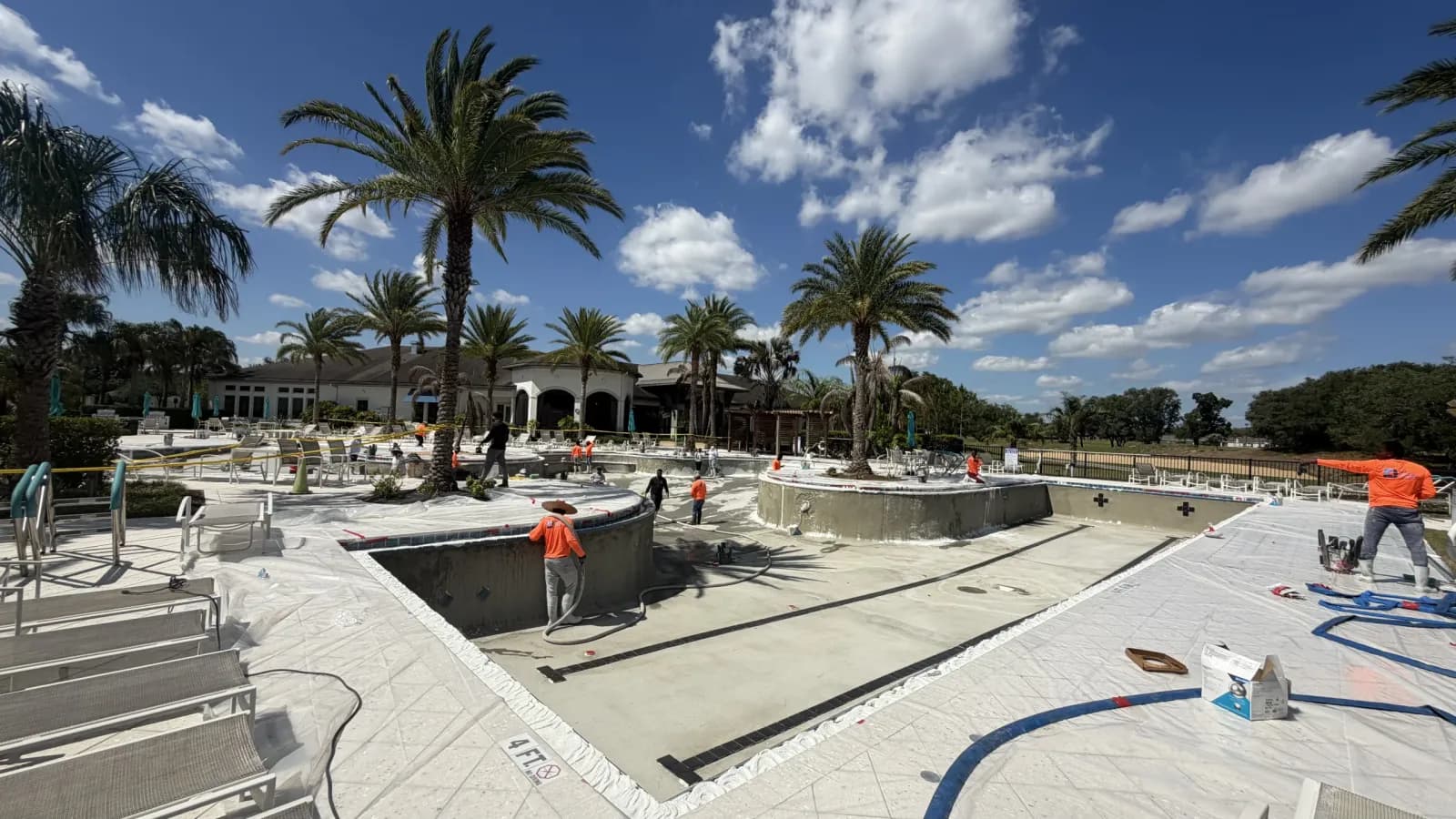
The hands-on work takes 3 to 4 working days. Then the pool fills — 12 to 24 hours for a standard residential pool — and the chemical startup begins, running approximately 4 weeks. Most homeowners can enter the water around the 2-week mark. From first day of work to first swim: plan for 5–6 weeks total.
Why can't I swim right after the work is done?
The new surface — PebbleTec, Quartz, or plaster — is a cementitious material that keeps curing and hardening after it's applied and after the water goes in. During the first weeks it releases minerals into the water, and the chemistry must be actively managed to protect it. Entering before the startup is complete risks staining, scaling, and surface damage on a brand-new finish. The startup isn't a delay — it's the phase that determines how the surface performs for its full lifespan.
When is the best time of year to resurface a pool in Orlando?
October through February — Florida's dry season. Lower humidity, no afternoon storms, and no hurricane season produce the most consistent application and startup conditions for PebbleTec and Quartz. A project started in October or November has the pool ready before the spring heat. Summer projects are possible but carry more weather variables.
Questions About Finish Options
What is the best pool finish for a Florida pool?
PebbleTec is D&J's recommendation for most Florida pools — specifically for homeowners who plan to own the pool long term. It lasts 15 to 20 years (plaster: 7 to 10), is more resistant to Florida's calcium-heavy water and UV, and carries a 25-year manufacturer warranty on the product.
Quartz is a strong middle option — more durable than plaster, less expensive than PebbleTec, lasting 10 to 15 years. Traditional plaster is the entry-level option, appropriate for a specific budget or a sale within a few years, but it needs replacement sooner in Florida's conditions.
What is PebbleTec and how is it different from regular plaster?
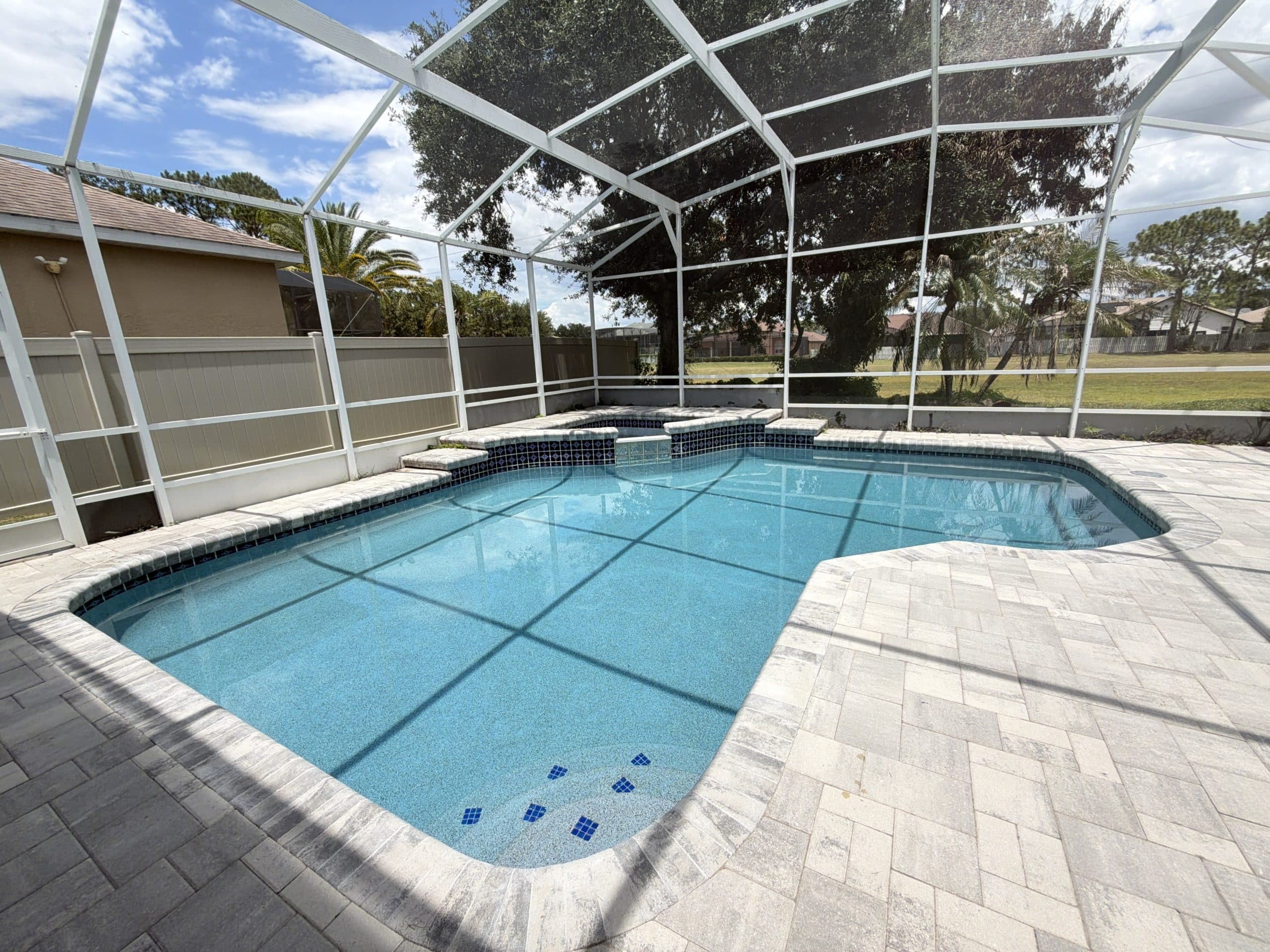
PebbleTec is an aggregate finish of natural river pebbles, cement, and pigment applied as the pool's interior surface. Unlike smooth plaster, its natural stone aggregate is harder, more resistant to Florida's water chemistry and UV, and produces water color — from tropical turquoise to deep blue — that plaster can't replicate.
It requires certified applicators. D&J is one of only two certified PebbleTec applicators in the Orlando and Kissimmee area — the manufacturer credential that determines who can apply it correctly and honor the 25-year warranty.
Does PebbleTec come in different colors?
Yes — from lighter tones producing bright turquoise water to deeper colors producing rich ocean blue. D&J walks every homeowner through color selection with the pool's size, light exposure, and design goals in mind — and for HOA communities, with the community's permitted color range in hand.
Questions About Resurfacing vs. Replacement
Should I resurface my pool or replace it?
In most cases, resurfacing. Replacement is the right answer only when the shell itself has structural damage — compromised integrity from ground movement, active leaks from the shell walls or floor rather than the surface, or severe delamination that has damaged the concrete beneath.
Rough texture, discoloration, chemistry that won't balance, and visible surface cracks are almost always resurfacing issues. If you've received a replacement recommendation, ask what structural evidence supports it — actual findings, documented, not "it's too far gone." If that isn't forthcoming, a second opinion from D&J is worth the time.
What are the signs that my Orlando pool needs resurfacing?
Five specific signs:
- The surface is rough enough to scratch skin or shred swimwear — the aggregate beneath the worn finish is exposed
- Water chemistry that was manageable has become a constant battle
- Staining that doesn't respond to chemical treatment — it's embedded in the deteriorated surface layer
- Visible surface cracks — hairline fractures in the finish that haven't penetrated the shell
- Water that never looks clear despite correct chemistry — a porous surface harbors algae no treatment fully resolves
Any one warrants a professional assessment. All five together indicate a surface past early-stage maintenance and into resurfacing territory.