People who move to Central Florida ask it every fall: can we still swim? The short answer is yes, many days. The longer answer depends on the water, not the air.
November in Orlando often brings warm, sunny afternoons. But the nights get longer and cooler, and a pool loses heat every night. By mid-month, an unheated pool can feel noticeably colder than the air on the deck, even on a nice day.
Quick answer: Many Orlando days in November are pleasant enough to swim, but unheated pool water cools down as the nights get longer, so it often feels cold. A heater or heat pump and a cover at night make the biggest difference. Keep testing the water: cooler weather and less sun change how chlorine and pH behave.
Why the Water Feels Colder Than the Air
Water holds heat for a long time, in both directions. In summer that keeps a pool warm after sunset. In fall it works the other way: a run of cool nights pulls the temperature down, and a few warm afternoons are not enough to bring it back up.
Three things change at once in November:
- Shorter days. Fewer hours of direct sun hit the water.
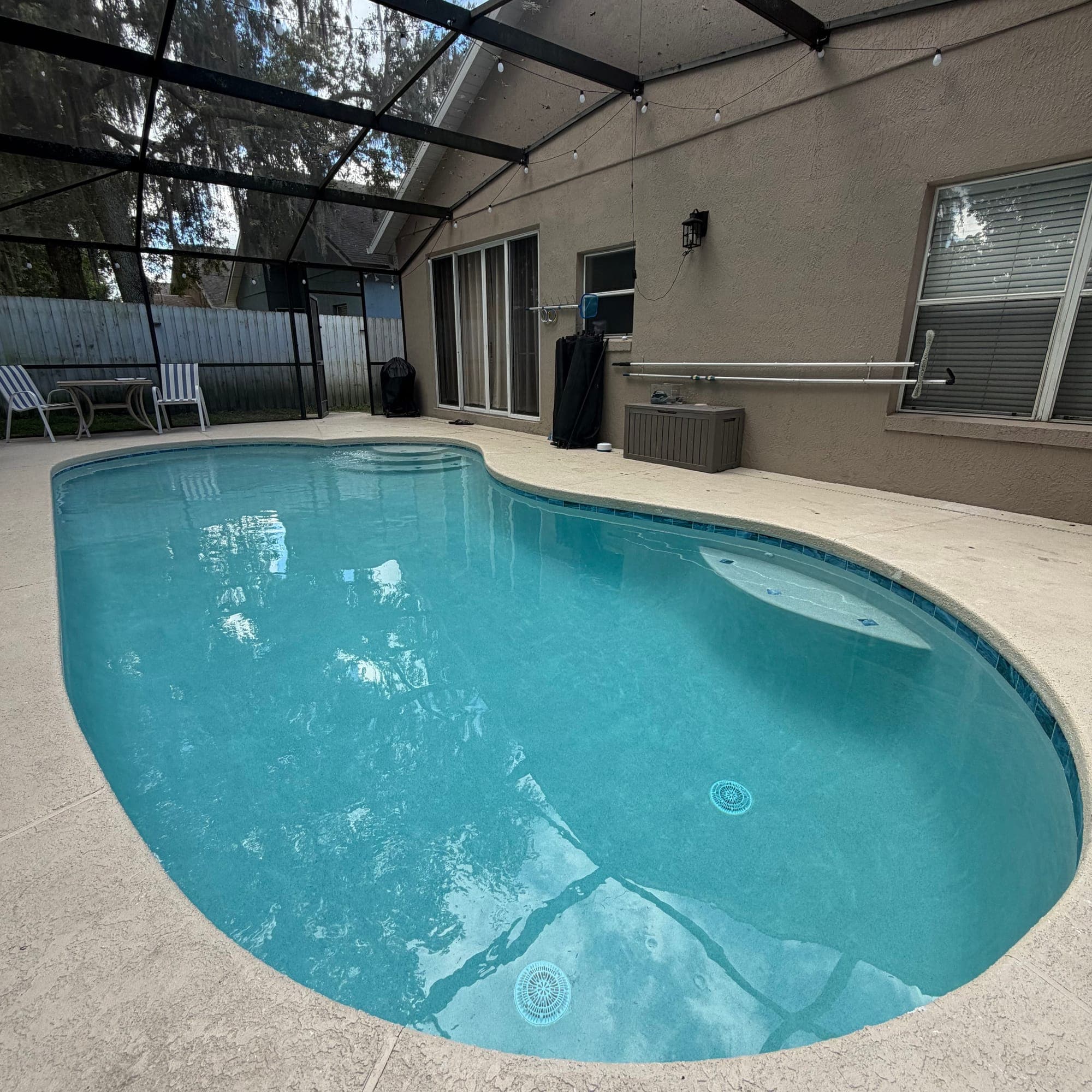
- Lower sun angle. Trees, the house and the screen enclosure throw longer shadows across the pool.
- Cooler, drier nights. Most heat leaves through the surface, and it leaves faster when the air is cool and breezy.
That is why the same pool can feel perfect in early October and cold by Thanksgiving, even if the afternoon high barely changed.
The Best Time of Day to Swim
If your pool is not heated, swim in the early to mid afternoon, after the sun has been on the water for a few hours. Mornings are usually the coldest point of the day for the water. Get out before the sun drops, have towels ready, and keep a warm layer close for kids. Getting out of the water into a breeze is often colder than getting in.
Heater or Heat Pump? The Difference in Plain Words
Both warm the water. They do it in different ways, and that changes how you use them.
- Gas heater. It burns natural gas or propane to heat the water directly. It heats quickly and works no matter how cold the air is. It is a good fit if you swim only now and then and want warm water on short notice.
- Heat pump. It runs on electricity and moves heat from the outside air into the water, a bit like an air conditioner working in reverse. It heats more slowly and works best when the air is mild, which describes most of a Central Florida winter. It is a good fit if you want to keep the pool warm for weeks at a time.
- Solar. Panels on the roof warm the water with the sun. It helps extend the season, but on short, cloudy days it does less.
Whatever you choose, the right size depends on your pool's volume, its sun exposure and how warm you want it. That is a question for a licensed pool or equipment professional who can look at your setup.