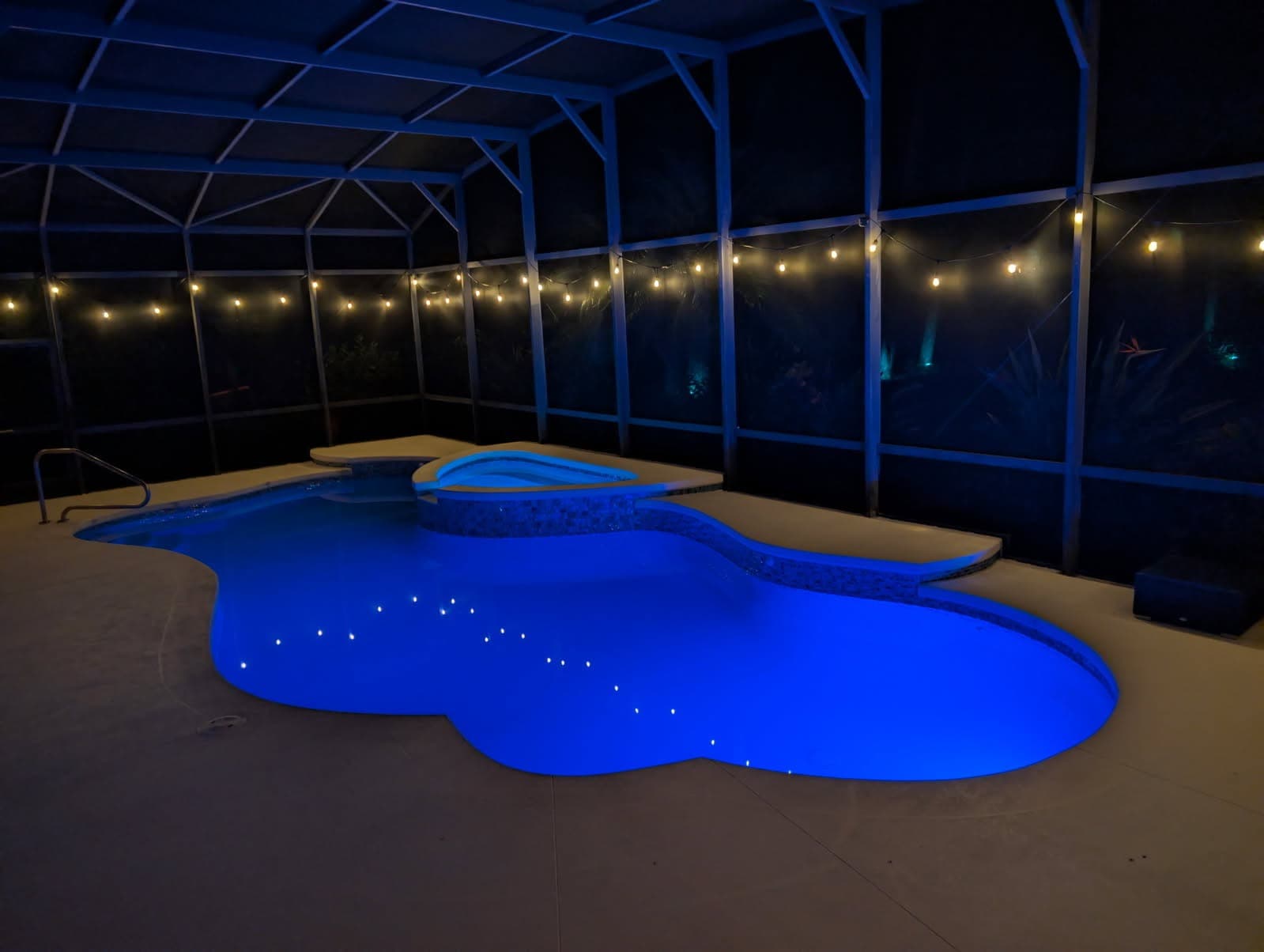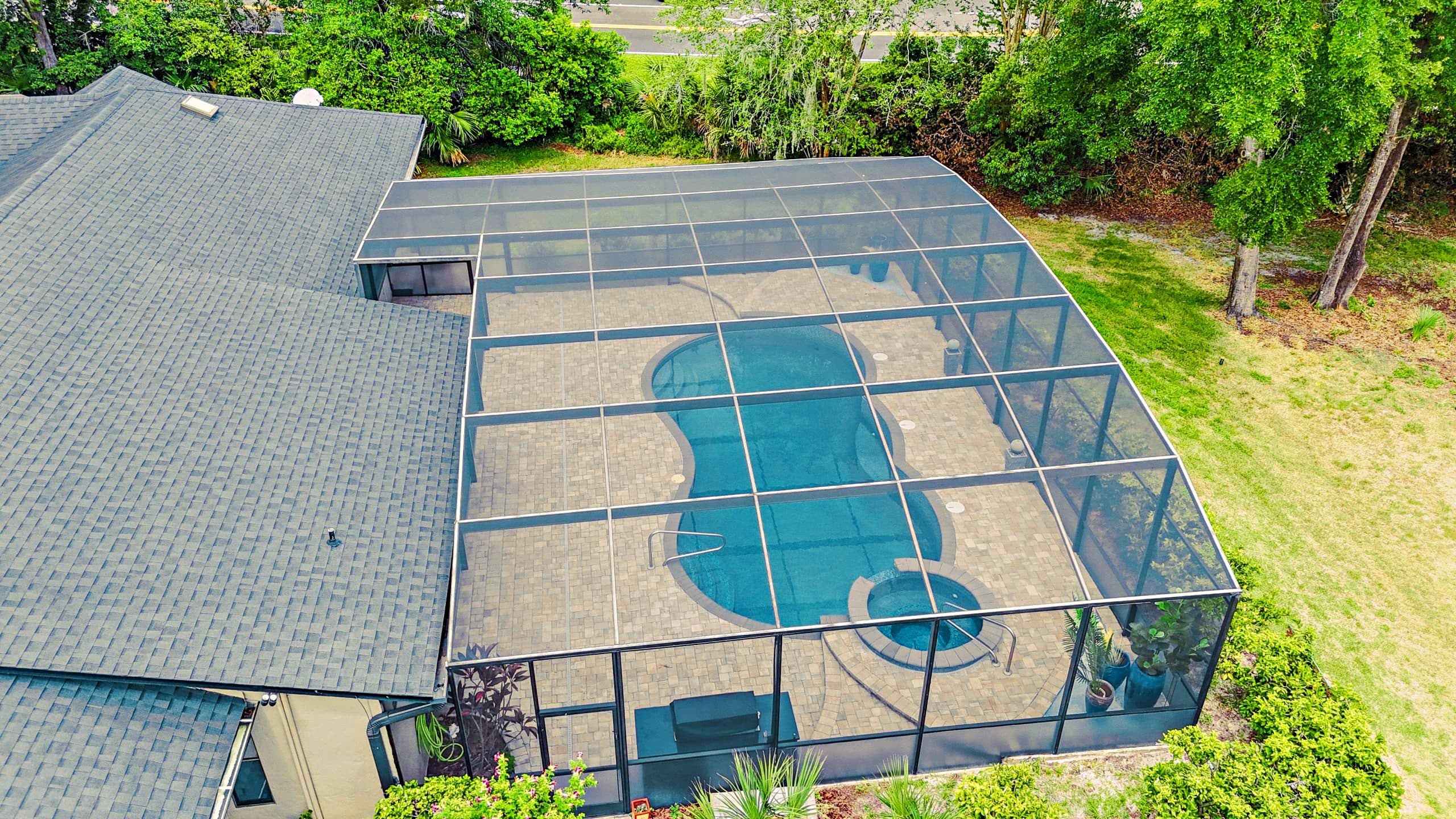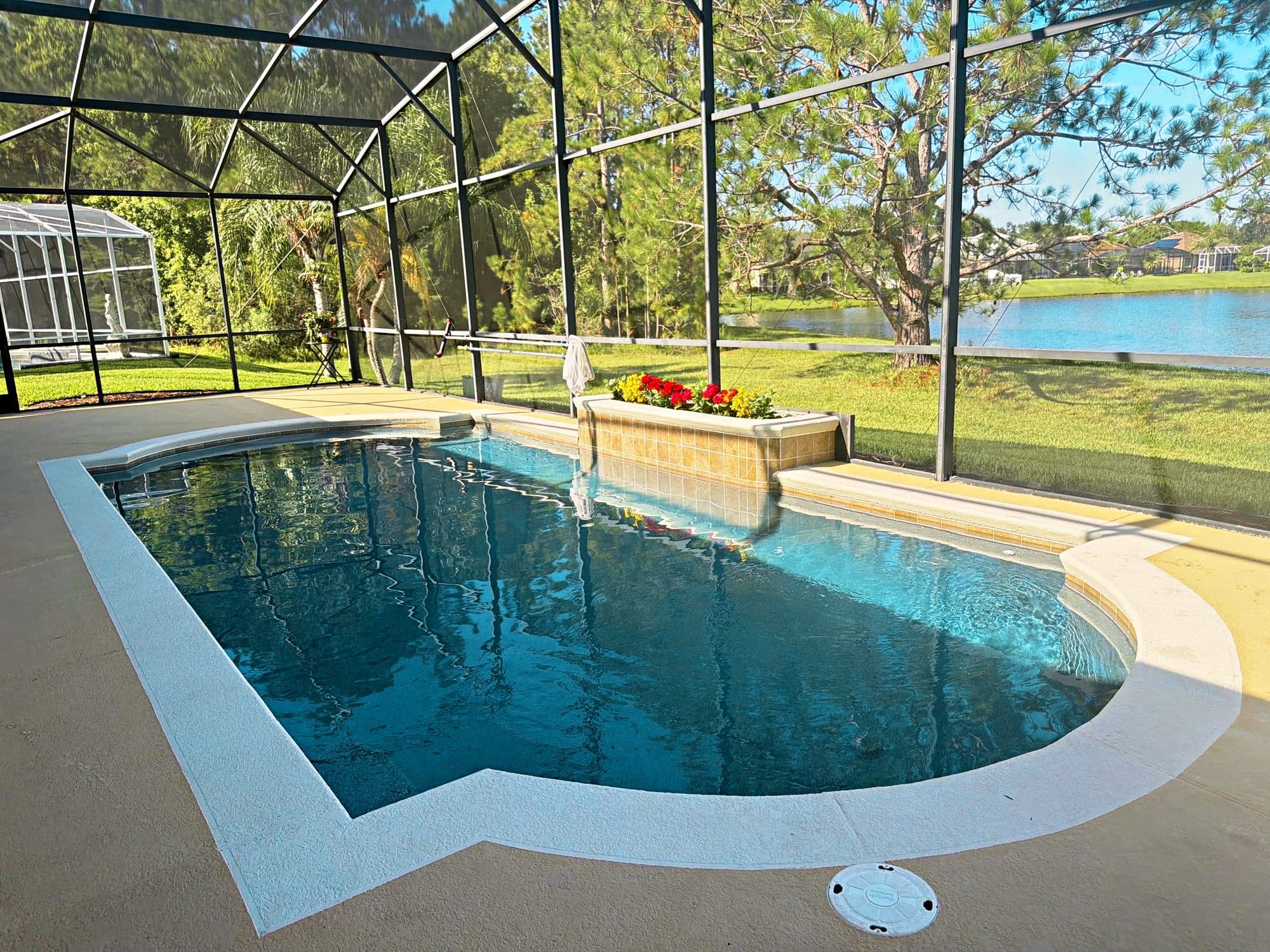
Florida does the holidays outdoors. Palm trees get wrapped in lights, inflatables go up on the lawn, and the pool becomes the brightest part of the yard.
It also puts electricity and water a few feet apart. Most holiday decorating accidents around pools are not dramatic — a cord in a puddle, an indoor extension cord left out in the rain, an outlet without protection. They are also easy to prevent.
Quick answer: Use only lights and cords rated for outdoor use, plug them into GFCI-protected outlets, keep cords and plugs away from the water and off the walking path, and never put anything that plugs into the wall inside the pool. Anything permanent — new outlets, fixtures or wiring near the pool — is a job for a licensed electrician.
Know the Two Distances
The National Electrical Code, which Florida follows, keeps standard outlets at least 6 feet from the inside wall of a pool, and requires GFCI protection on outlets within 20 feet of it. Those numbers are a good guide for decorating too: keep plugs, connections and transformers well back from the water and make sure the outlet you use is protected.
Not sure if an outlet has GFCI protection? Look for the "Test" and "Reset" buttons on the outlet or on another outlet on the same circuit. Press "Test": the power should cut off. Press "Reset" to restore it. If nothing happens, don't use that outlet for decorations near the pool and have an electrician check it.
Outdoor-Rated Means Outdoor-Rated
Indoor string lights and indoor extension cords are not made for dew, rain and sprinklers. Check the box or the tag on the cord: it should say it is for outdoor use. In Florida, with afternoon showers and heavy morning dew even in December, that label matters every night.
Keep Connections Off the Ground and Out of the Path
- Raise plug connections off the deck so they don't sit in water after rain or a splash.
- Run cords along walls and fences, not across the deck where guests walk barefoot.
- Don't staple or nail through cords; use clips made for outdoor lights.
- Avoid daisy-chaining many strands into one cord — follow the limit on the package.