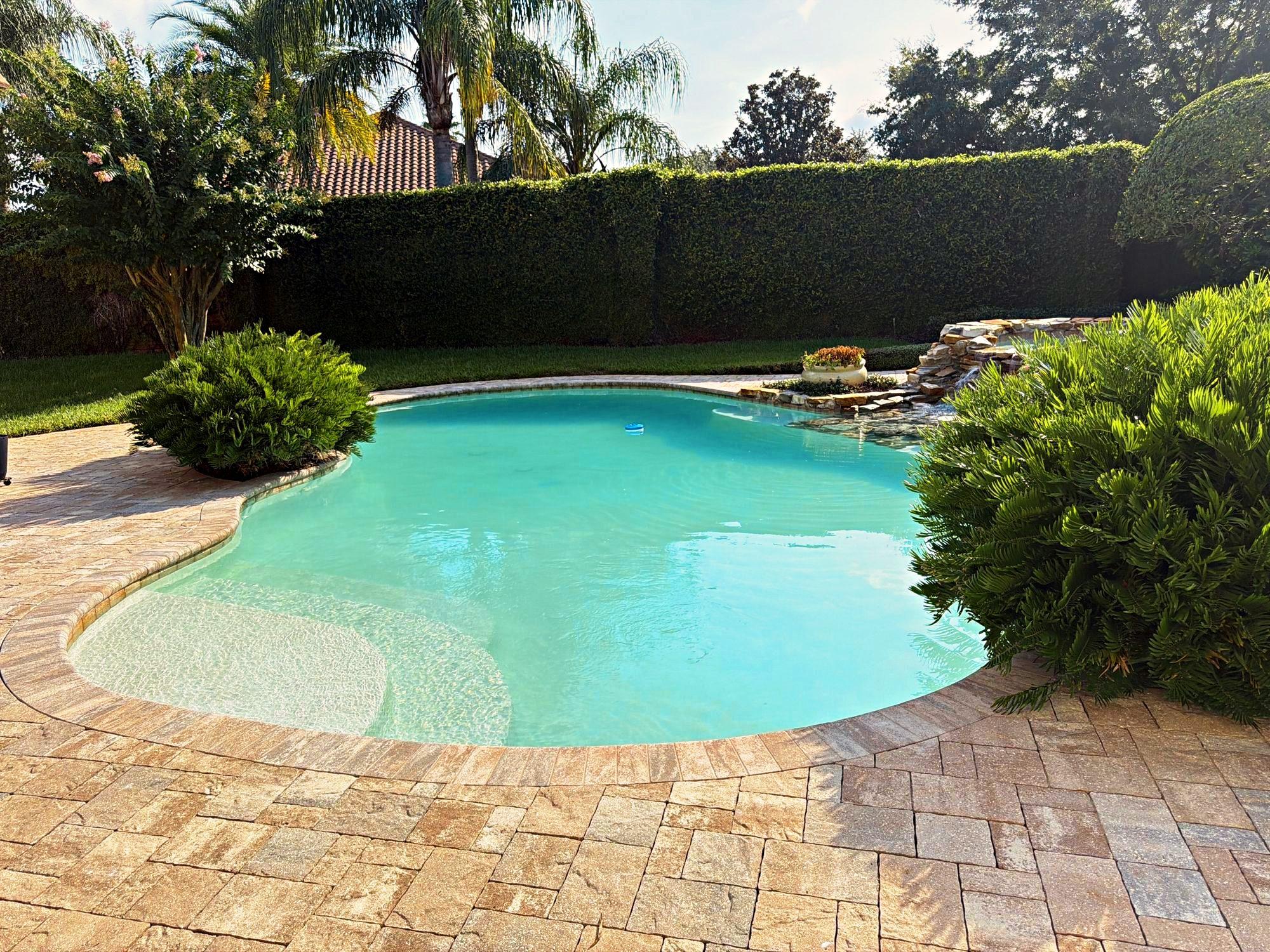
If you've started noticing stains that won't go away, rough surfaces under your feet, discoloration, or small cracks in your pool, you're probably wondering whether it's time for resurfacing.
The reality is that every swimming pool eventually reaches a point where the original finish begins to wear down. Florida pools face unique challenges compared to other states. Year-round sun exposure, heavy rain, high temperatures, chemical treatments, and continuous use all accelerate surface deterioration.
For homeowners in Orlando, pool resurfacing is one of the most important investments you can make to protect both your property value and your family's enjoyment of the pool. The good news is that resurfacing isn't just a repair — it's an opportunity to completely transform the appearance of your backyard, improve durability, and reduce future maintenance.
How much does pool resurfacing cost in Orlando, FL? Pool resurfacing in Orlando, FL typically costs depending on pool size, current surface condition, and the finish selected. Premium finishes such as PebbleTec generally cost more than standard plaster but offer significantly greater durability and longevity. D&J The Pool Resurfacers provides free estimates for homeowners throughout Orlando, Kissimmee, and Saint Cloud.
What Is Pool Resurfacing and Why Is It Necessary?
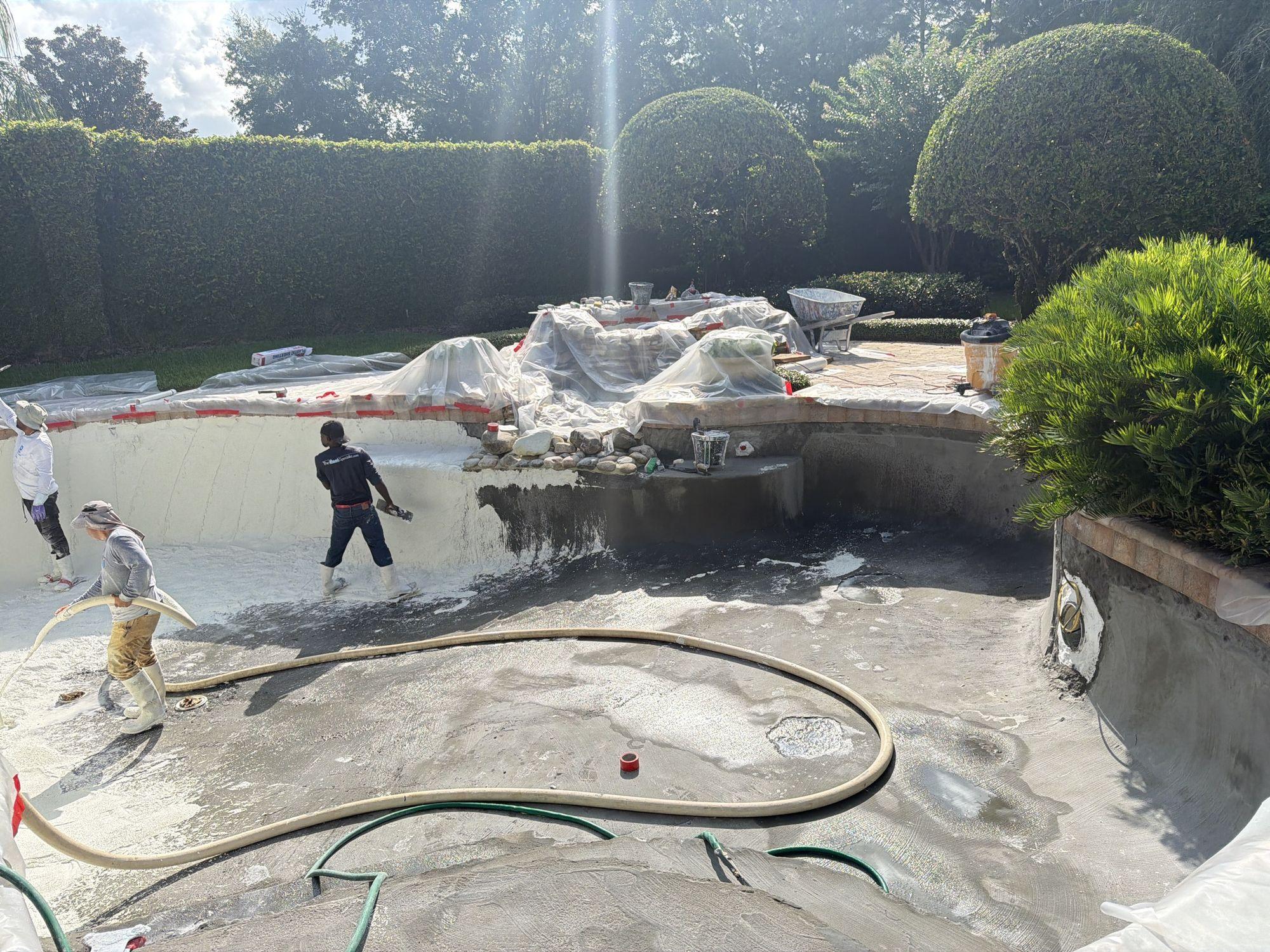
Pool resurfacing is the process of removing or preparing the existing interior surface of a pool and applying a new finish. Over time, pool surfaces naturally deteriorate due to:
- Chemical exposure
- UV radiation
- Water chemistry imbalance
- Daily use
- Florida weather conditions
Common signs that resurfacing may be needed include:
- Rough surfaces
- Persistent staining
- Surface cracks
- Chalking
- Discoloration
- Exposed aggregate
Ignoring these signs can lead to larger structural issues and more expensive repairs later.
How Much Does Pool Resurfacing Cost in Orlando in 2026?
The cost depends on several factors.
Pool Size
A larger pool requires more material, more labor, and longer installation time.
Surface Condition
Pools with structural cracks, delamination, or extensive damage require additional preparation.
Finish Selection
| Finish Type | Typical Lifespan |
|---|---|
| Standard Plaster | 7–10 years |
| Quartz | 10–15 years |
| PebbleTec | 15–20+ years |
Premium finishes require higher upfront investment but often reduce long-term costs.
Additional Renovations
Many homeowners combine resurfacing with new tile, new coping, pool deck renovations, or water features. These upgrades affect the total project budget.
The Pool Resurfacing Process Step-by-Step
Many homeowners are surprised by how structured the process actually is.
- STEP 1Inspection
A professional evaluation identifies surface condition, structural concerns, and finish options.
- STEP 2Draining the Pool
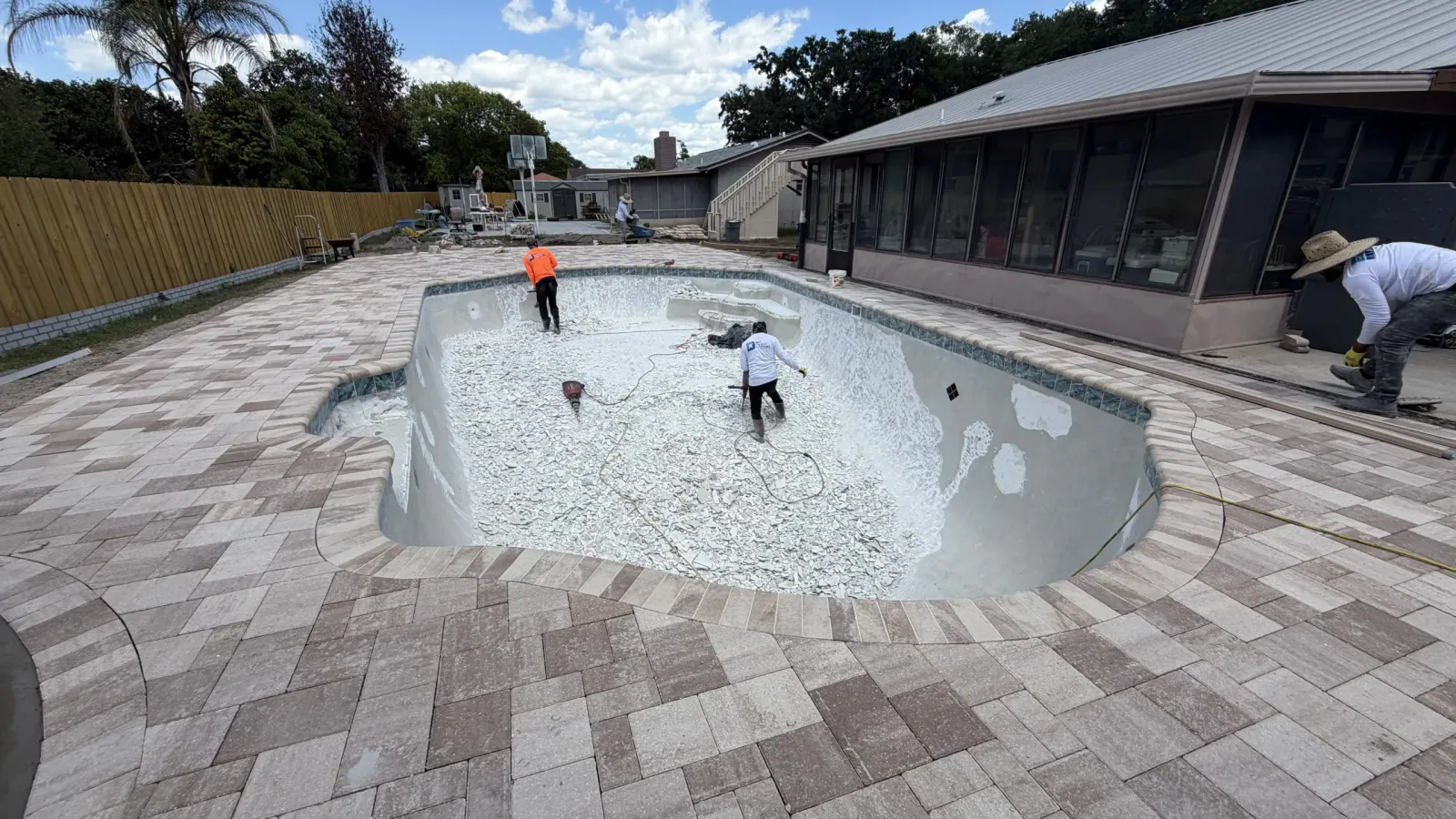
The pool is safely drained to expose the surface.
- STEP 3Surface Preparation
Old material is removed or prepared using specialized equipment. This stage is critical because the new finish is only as strong as the preparation underneath.
- STEP 4Finish Application
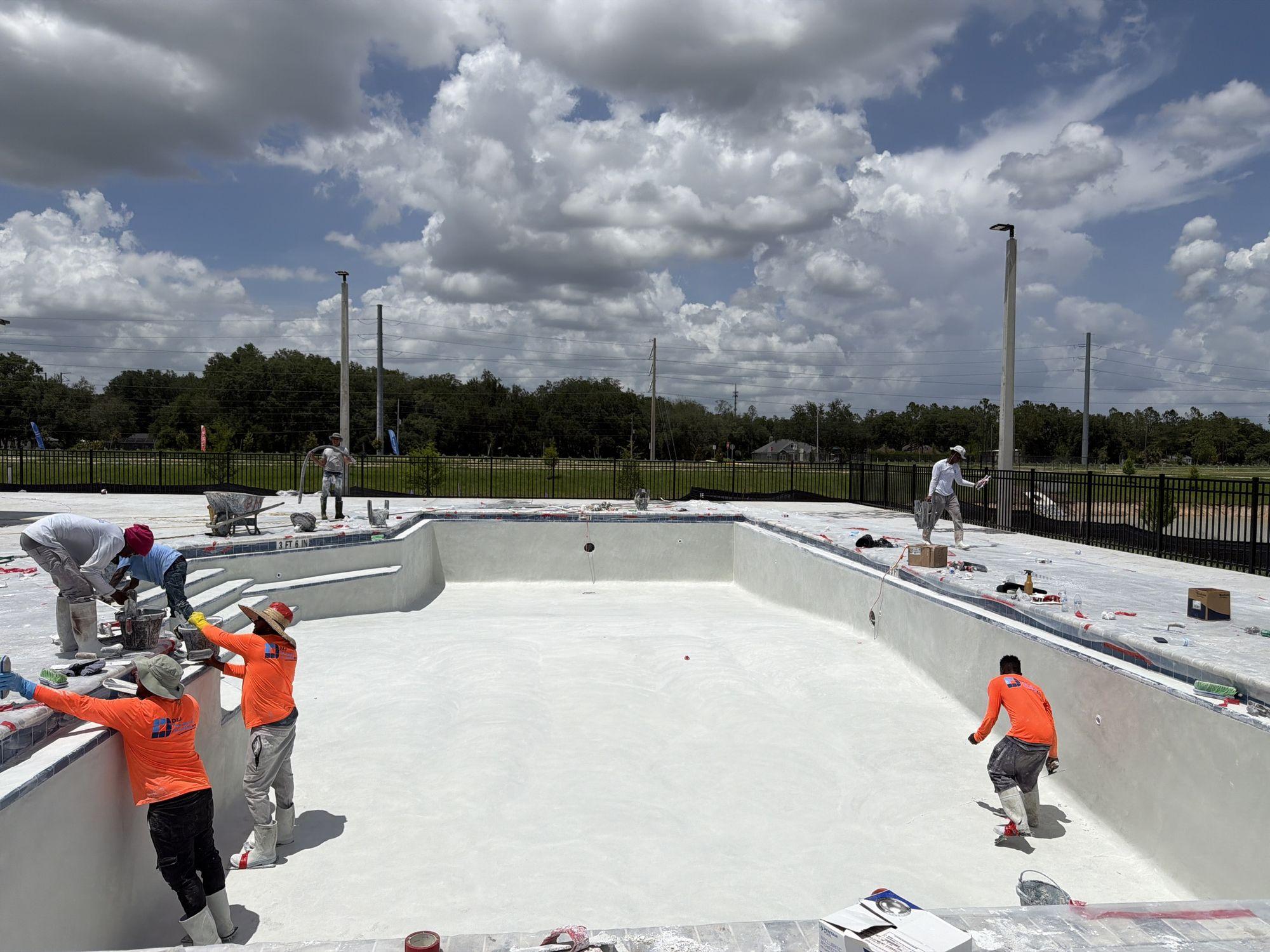
The selected finish is installed — PebbleTec, Quartz, or plaster.
- STEP 5Curing and Filling
The finish cures according to manufacturer guidelines. The pool is then refilled and chemically balanced.