Pool Deck Resurfacing in Orlando, FL: What Your Deck Is Telling You and What to Do About It?
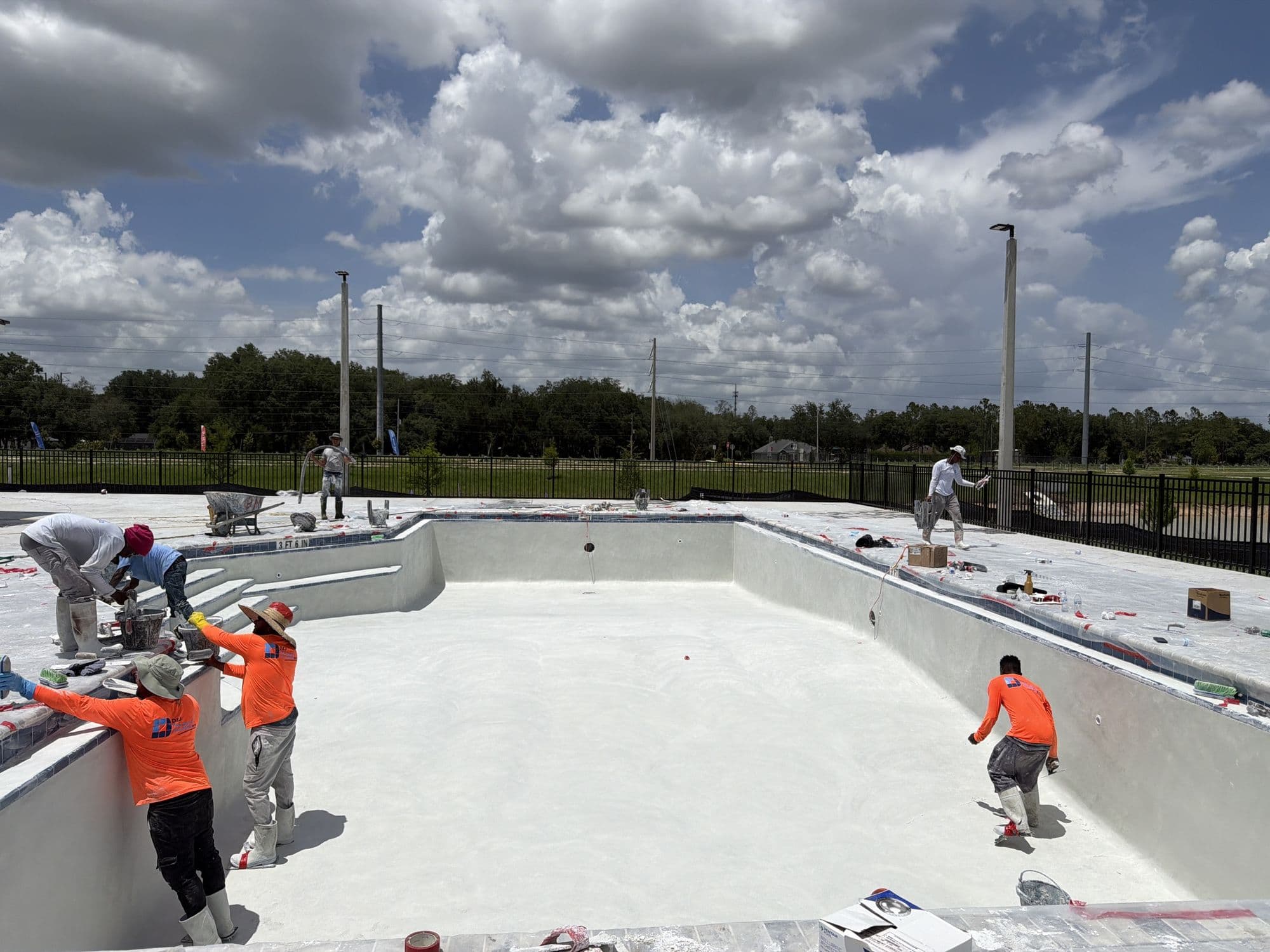
You've been stepping around that crack for two seasons now.
Maybe it started with a small hairline fracture near the coping that you noticed one morning and told yourself you'd deal with later. Now it's wider. The surface around it is rough in a way that wasn't there before. The color has faded unevenly from years of Florida sun, and there's a section near the steps where the texture has worn down enough that wet feet feel less safe than they should.
The pool still looks fine. But everything around it is telling a different story.
Here's what most Orlando homeowners don't realize: the deck is working harder than the pool. It's exposed to full Florida sun every single day. It absorbs heat, expands, contracts, gets wet dozens of times a week during pool season, and takes the constant foot traffic and chemical splash that the pool itself never sees.
Quick answer: Pool deck resurfacing in Orlando involves applying a new surface layer over an existing concrete deck — restoring appearance, improving slip resistance, and extending the life of the structure without full demolition. The right option depends on the current condition of the deck, the finish desired, and whether the work is being done alongside pool resurfacing or as a standalone project.
What Florida Sun and Pool Chemistry Do to a Concrete Deck Over Time
Most homeowners think of deck damage as an aesthetic problem — it looks bad, but it doesn't feel urgent. That's the wrong way to think about it, and Florida's environment is the reason why.
UV index readings in Orlando regularly hit the highest categories during summer — the same exposure that fades car paint and breaks down roofing materials works on your deck every single day, year-round. It doesn't just change the color; it breaks down the surface layer chemically, making it more porous and more susceptible to staining and moisture damage.
Then there's thermal expansion. Surface temperatures on an uncoated concrete deck can reach levels genuinely painful to walk on barefoot in July. That heat causes expansion during the day and contraction at night — and every cycle puts stress on the surface. Over years, that stress is where cracks start.
Add pool chemistry: chlorinated water splashing and dripping from wet bodies accelerates surface degradation in ways that wouldn't happen on a driveway or patio that doesn't live next to a pool. A surface that has started cracking, spalling, or losing its texture isn't just aesthetic — it's a slip hazard and a barefoot hazard that gets more expensive to address the longer it's allowed to compound.
Pool Deck Resurfacing Options in Orlando: What's Available and What Works in Florida
Kool Deck
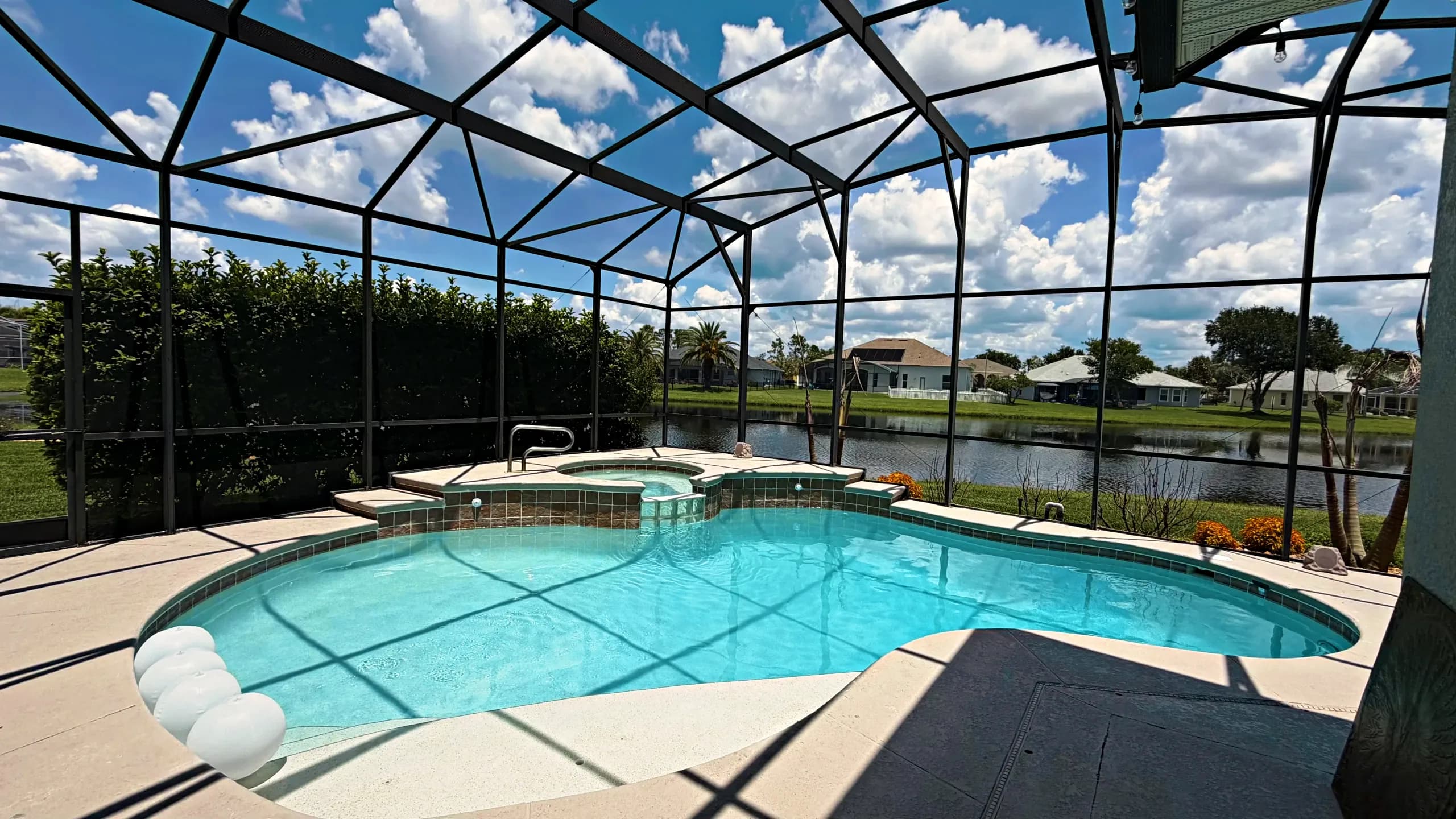
The finish most longtime Florida homeowners grew up with — matte, slightly textured, off-white or beige. It reflects heat rather than absorbing it, staying significantly cooler underfoot than plain concrete. Resurfacing with a Kool Deck or similar cool-coat product is one of the most practical options for an existing concrete deck in good structural condition, addressing temperature, appearance, and slip resistance without full replacement.
Decorative concrete overlays — stamped, stained, and textured
For homeowners who want the deck to make a visual statement, overlays open up stamped patterns mimicking stone, tile, or wood, acid staining with natural color variation, and textured, exposed-aggregate finishes. The sealer is critical in this climate — it protects against UV fade, chemical exposure, and moisture. An unsealed overlay, or one sealed with a product not rated for Florida's UV intensity, wears significantly faster.
Travertine and concrete pavers
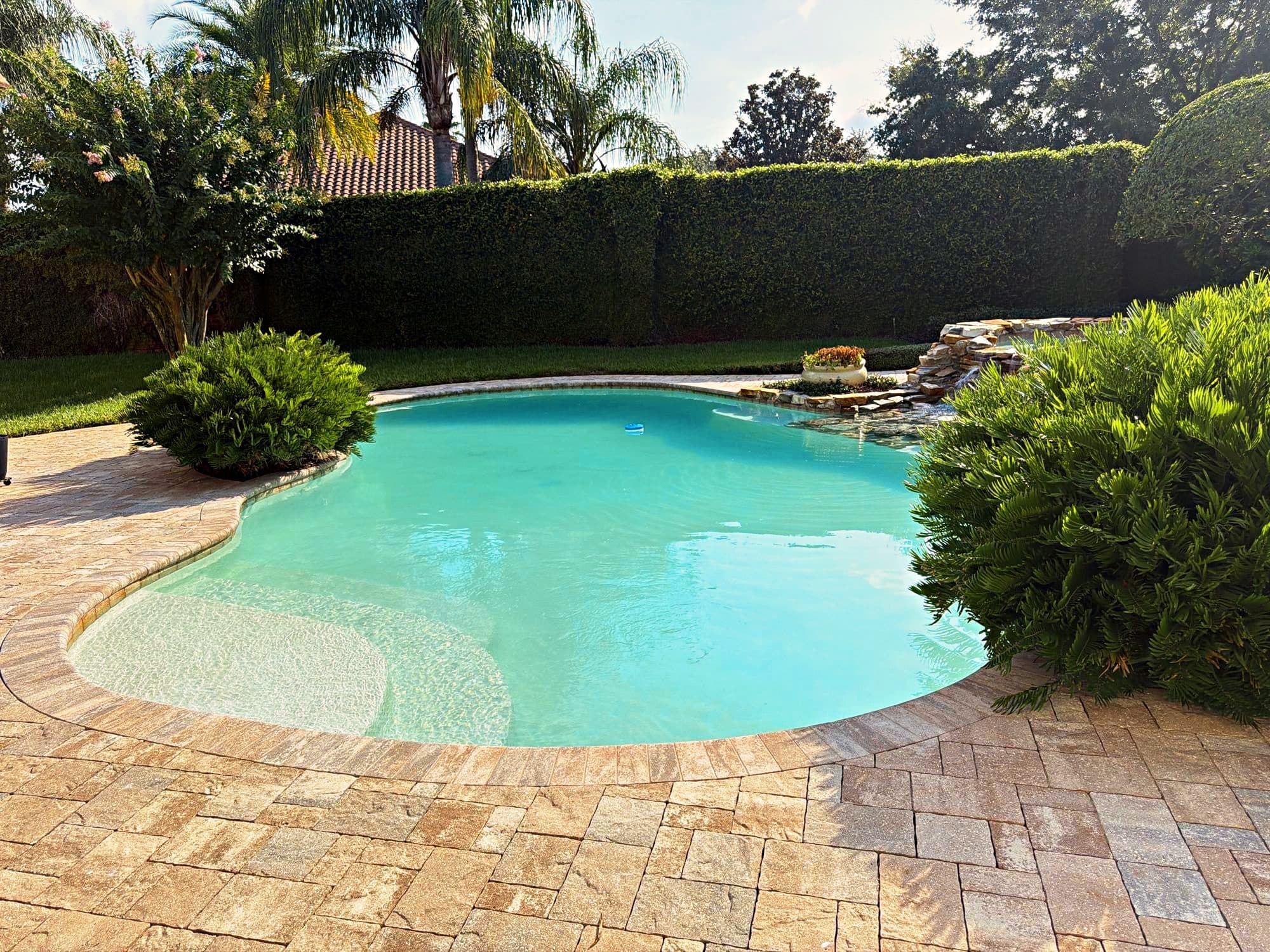
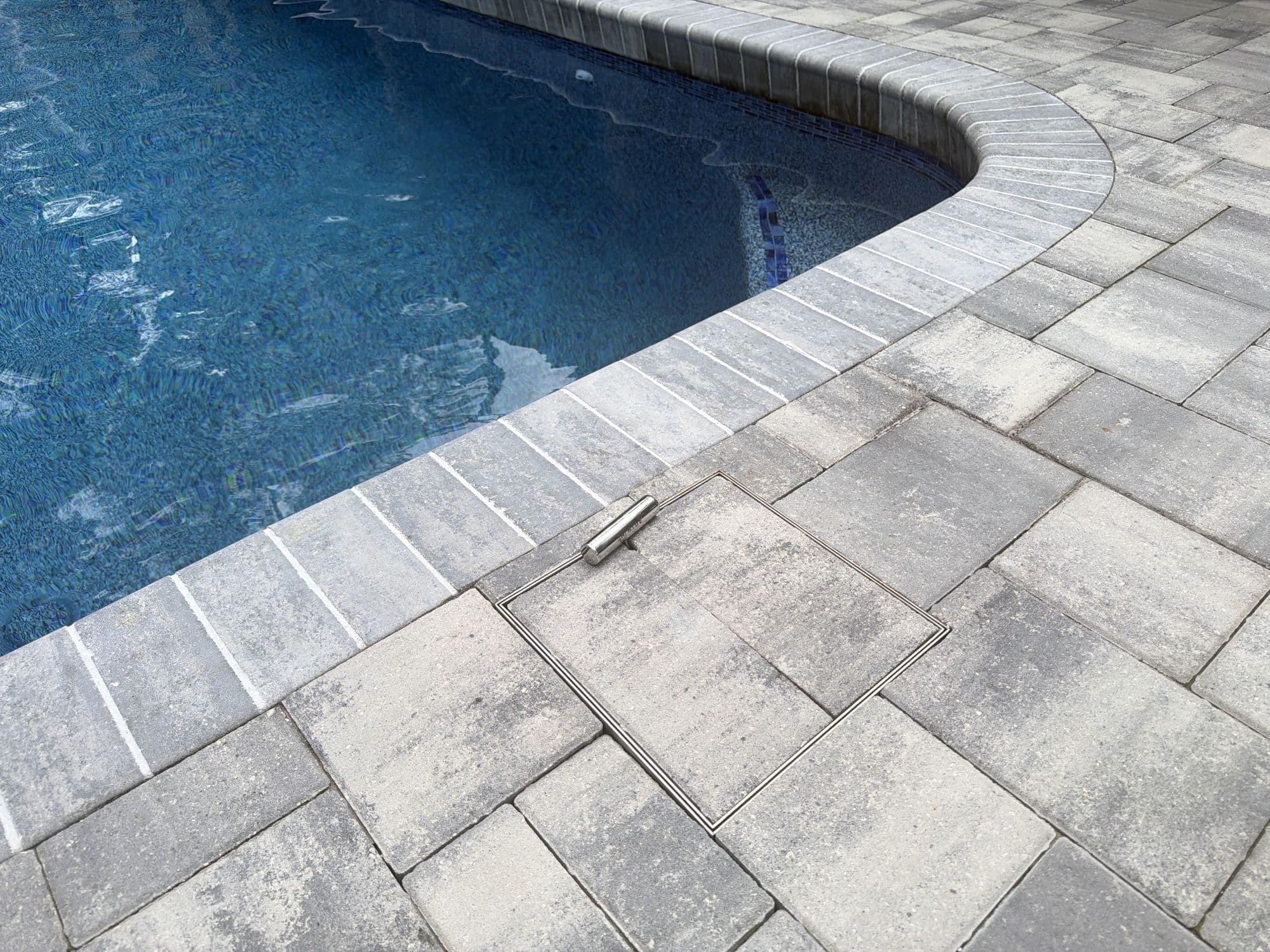
One of the most popular choices in the Orlando market over the last decade. Travertine stays cool underfoot because of its natural porosity; pavers let water drain between joints rather than pooling. Installing either over an existing concrete deck is possible in many cases, but requires assessing the slab condition first — structural cracks or instability need to be addressed before overlay installation.
Resurfacing alongside pool work
Completing a deck resurfacing at the same time as a pool resurfacing project almost always produces a better result and a more efficient process. The crew is already on-site, the coping transition is addressed cohesively, and the aesthetic result of a new pool finish surrounded by a refreshed deck is dramatically different from a beautiful new pool surrounded by a deck that still looks ten years old.
The Signs That Tell You It's Time — Not Next Season, Now
SIGN 1Cracks that have grown since last season
A hairline crack that stayed the same for two years is different from one that's visibly wider than six months ago. Active growth means the underlying cause is still working on the deck.
SIGN 2Surface rough enough to catch on bare feet
When texture has worn to the point the aggregate is exposed, it's past cosmetic wear and into safety territory.
SIGN 3Pooling water that didn't used to pool
Standing water means the drainage slope has shifted — a slip hazard and a surface damage accelerator.
SIGN 4Spalling — the surface coming apart in pieces
Once spalling starts, it doesn't stop on its own; each piece that lifts exposes more raw concrete to the moisture-and-heat cycle that caused the first piece to go.
SIGN 5A deck that's noticeably hotter than it used to be
As surface coating breaks down, the deck loses its reflective properties and absorbs more heat — a sign the surface layer has degraded past the point of doing its job.
What the Process Actually Looks Like: From First Call to Finished Deck
01The assessment comes first
D&J evaluates the concrete's structural integrity, the nature and location of any cracks, drainage, and existing surface material. This is a diagnostic conversation — if resurfacing won't solve the issue, we say so before anyone signs anything.
02Surface preparation
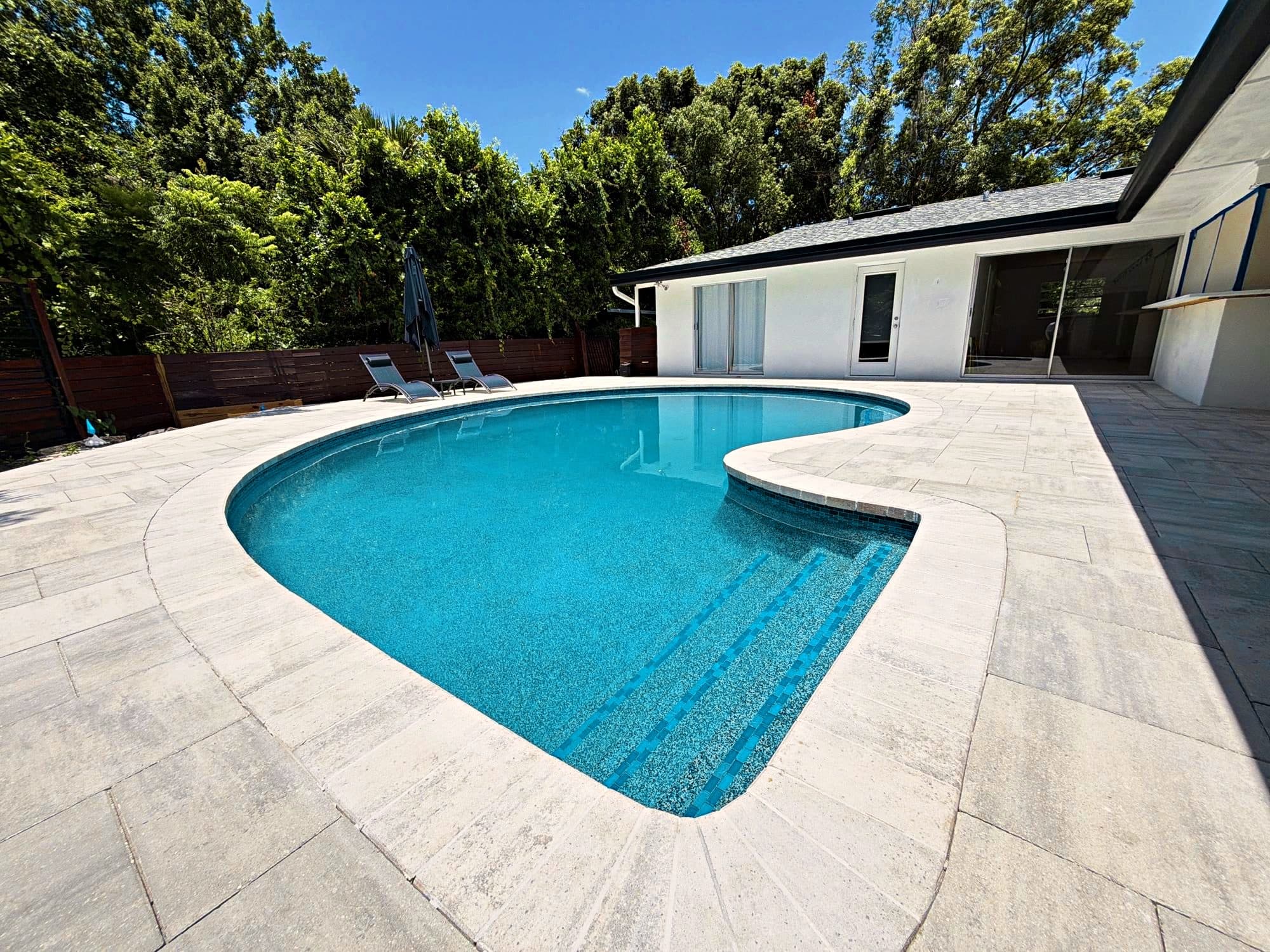
The most important — and most invisible — phase. Cracks are filled and stabilized, spalling is ground down, and the surface is profiled so the new material bonds correctly. A finish applied over an unprepared surface fails quickly.
03Application and curing
Depending on the finish, application takes one to two days for a standard residential deck. Curing time varies by material — some coatings are walkable within 24 hours, others need longer.
04Sealing
For most decorative finishes in Florida, sealing is part of the project, not an optional add-on. It protects against UV fade, chemical exposure, and moisture penetration.
Frequently Asked Questions
What is pool deck resurfacing?
Applying a new surface layer over an existing concrete deck rather than demolishing and replacing it — restoring appearance, improving slip resistance, and extending structural life. Options range from cool-coat coatings to decorative overlays, travertine, and pavers.
How long does pool deck resurfacing take in Orlando?
Typically one to two days for prep and application, plus a curing window. Total timeline depends on scope, existing surface condition, and whether it's combined with pool resurfacing.
Can pool deck resurfacing fix cracks?
Surface cracks that haven't compromised structural integrity can be filled, stabilized, and covered. Active structural cracks need to be addressed at the structural level first — a proper assessment determines which applies.
What pool deck finish works best in Florida's heat?
Cool-coat products like Kool Deck are designed to reflect heat. Travertine's natural porosity also keeps temperatures lower. Decorative overlays with light-colored finishes and proper sealing perform well too. Dark, unsealed concrete is the worst choice.
Should I resurface my pool deck at the same time as my pool?
In most cases, yes — if both need attention. One crew on-site, a cohesive aesthetic result, and a unified coping detail all favor doing the work simultaneously.
Does D&J handle pool deck resurfacing in HOA communities in Orlando?
Yes. Deck work is subject to the same approval process as pool resurfacing — most HOA committees require written approval before exterior work begins. We start the documentation conversation before scheduling anything.
How long does a resurfaced pool deck last in Florida?
A properly applied and sealed cool-coat or decorative overlay typically lasts 8 to 12 years before it needs attention again. Travertine and quality pavers can last significantly longer with proper joint maintenance and periodic sealing.
You Now Know More About This Process Than Most Homeowners Do Before They Start That's how every resurfacing conversation should begin.
Written and reviewed by
D&J The Pool Resurfacers
A Florida-licensed pool contractor and certified PebbleTec applicator that resurfaces, remodels and builds pools across Central Florida, working with pebble, quartz and polished finishes.
- Florida Certified Pool/Spa Contractor
- CPC1459797 · Verify the license on MyFloridaLicense.com
- PebbleTec
- Certified PebbleTec applicators
- Last updated
Why trust this article: it’s written by the licensed crew that does this work in Central Florida, and it only states what we do on our own jobs — pebble, quartz and polished finishes. More about D&J