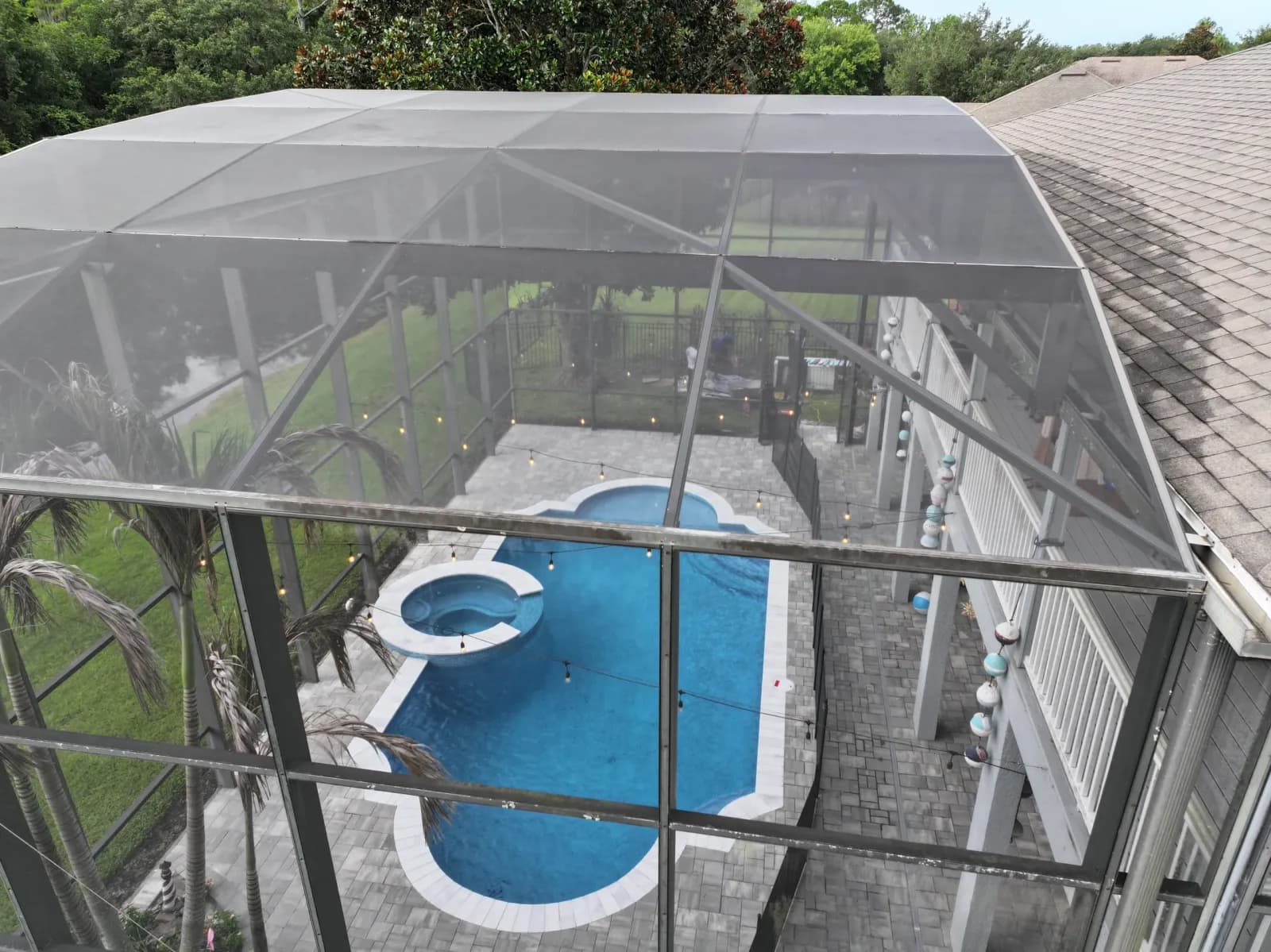
Every October, the same thing happens. Homeowners who spent the summer looking at their pool — watching the surface get rougher, the chemistry get harder to balance, the crack near the steps get slightly wider — finally decide it's time to call. And they discover that the contractors with the right credentials and the right availability are already booked.
Not because the work is complicated. Because the dry season is real, and the homeowners who understand it book early.
Florida's dry season runs from October through May. It is, by every meaningful measure, the best window of the year to resurface a pool in Central Florida — lower humidity, no afternoon storms, no hurricane season, and the conditions that allow PebbleTec and Quartz finishes to cure as they're designed to. And every year, the October schedule at D&J The Pool Resurfacers fills up faster than most homeowners expect.
This article explains exactly why dry season matters for pool resurfacing and what to do right now if your pool needs attention before next summer.
Quick answer: Yes, booking pool resurfacing before Florida's dry season is strongly recommended. Dry season (October through May) offers lower humidity and stable temperatures that let pool finishes cure more consistently than summer allows. D&J's Orlando schedule fills significantly in October and November every year — homeowners who contact D&J in September typically secure better availability and faster start dates than those who wait until November or December.
Why Dry Season Produces Better Pool Resurfacing Results in Orlando
The quality of a resurfacing result isn't determined only by the contractor and the materials. Florida's climate plays a direct role in how a new surface cures — and that process determines how the finish performs for its full lifespan.
| Factor | Summer (June–Sept) | Dry season (Oct–Feb) |
|---|---|---|
| Humidity | 80–90% | 50–65% |
| Rain | Daily, intense afternoon storms | Occasional rain, no daily pattern |
| Hurricane season (June 1–Nov 30) | Inside the window | Outside it, from late November on |
The humidity factor
Summer humidity — routinely 80 to 90 percent from June through September — slows curing for cementitious pool surfaces and creates inconsistency in how the material sets. High humidity during application can affect adhesion; during the first weeks of startup it can affect how evenly the surface hardens. October through February regularly sees humidity in the 50 to 65 percent range, letting PebbleTec and Quartz cure consistently.
The rain window factor
Summer afternoon storms are daily, intense, and largely unpredictable hour to hour. Rain during application before the material sets can cause streaking, texture inconsistency, and adhesion issues; rain during early startup disrupts chemistry and can stain a brand-new surface before anyone has swum in it. Dry season eliminates that ongoing weather risk at every phase.
The hurricane season factor
Hurricane season runs June 1 through November 30. A project completed before June — or started after late November — is outside that window entirely. A project during hurricane season risks a tropical system arriving during application or the first weeks of startup.
Why October Bookings Fill Up — and What That Means for Your Timeline
D&J's dry season schedule fills in a predictable pattern every year. It's not a sales technique — it's the documented scheduling reality of a contractor whose dry season availability is finite.
- SEPTThe forward-thinking homeowners call
They've watched their pool through the summer, know what they want, and understand October is the start of the optimal window.
- OCTThe urgency becomes visible
September callers are scheduled and confirmed. Homeowners who call in October find late October and early November dates already claimed.
- NOVThe reality lands for those who waited
The best dry season dates are taken. Available dates push into December or January — which still works, but with the 4-week startup, the pool isn't ready until February or March at the earliest.
- DEC–FEBMaking peace with swimming later
Homeowners who didn't call in September settle for later start dates than they planned.

What Happens to Your Pool If You Wait One More Summer?
Waiting is not neutral. A pool surface that needs resurfacing doesn't hold its current condition while the homeowner decides. Florida's summer — four months of intense UV, daily rain, high humidity, and the chemical load of year-round use — accelerates deterioration during the very period most homeowners postpone the project.
A surface with minor calcium deposits and early roughness in May can have significant buildup, established roughness, and potentially active cracking by October. Each stage makes the eventual preparation more intensive — and sometimes reveals structural issues that weren't present a season earlier. The pool that needed a standard resurfacing in October 2025 sometimes needs additional structural repair in October 2026. The scope grows, the timeline extends, the investment increases.