Before You Build a Pool: The Homeowner's Pre-Construction Checklist
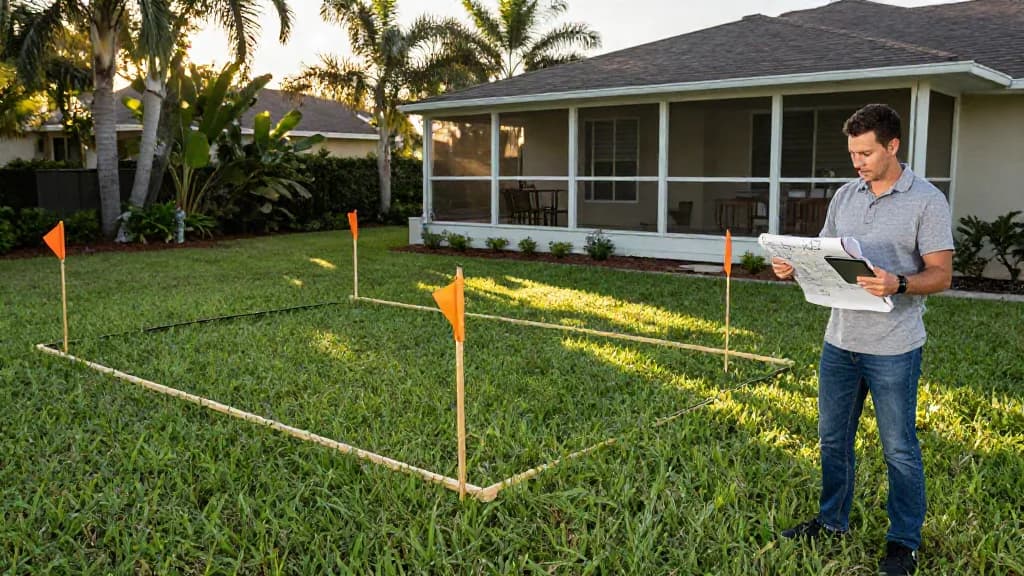
The decisions that make or break a new pool happen long before the first shovel hits the ground. Here is the list we wish every homeowner had in hand.
Most people start dreaming about a pool with the fun part: the shape, the water color, the spa. That's natural. But smooth projects usually start with a little homework.
This checklist walks you through that homework in order. It doesn't replace your contractor, your county or your attorney, but it will help you walk into every conversation better prepared.
Quick answer: Before building a pool in Central Florida, define how you'll use it, set a realistic budget that includes extras, check your property survey and HOA rules, make sure underground utilities get located through Sunshine 811, design the pool, verify your contractor's license, get insurance and a written contract, plan the permits, choose a safety barrier option that meets Florida law, line up financing if you need it, and decide where the equipment and electrical will go.
This article is general information for homeowners, not legal or financial advice. Rules change — confirm the details with your county, your HOA and, when needed, an attorney.
1. Decide how you'll actually use the pool
Start with people, not shapes. Ask yourself:
- Is this mostly for kids splashing, adults lounging, laps, or entertaining?
- Do you want a spa, a sun shelf (repisa de sol, as our Spanish-speaking clients call it) or a shallow play area?
- How much of the yard do you want left over for grass, pets or a play set?
- Who will be using it in five or ten years?
Your answers shape the size, depth, finish and safety plan. Writing them down also makes it much easier to compare proposals later.
2. Set a budget that includes the "extras"
The pool shell is only part of the cost. Homeowners are often surprised by items that sit around the pool rather than in it:
- Decking and coping
- Screen enclosure or fencing
- Electrical work and lighting
- Landscaping and sod repair after construction
- Water features, heating or automation
- Permit fees and any engineering or survey updates
- Furniture, shade and the first months of chemicals
We don't publish price ranges, because every yard is different. What we do recommend is deciding on a comfortable total number — including a cushion for surprises — before you fall in love with a design. Our related guide on what really drives the cost of building a pool in Orlando explains the main factors.
3. Pull out your property survey
Your survey shows property lines, easements and the footprint of the house. A pool contractor and the permitting office will both care about it. Look for:
- Setbacks: minimum distances from property lines and structures.
- Easements: strips of land reserved for utilities or drainage, where building may be restricted.
- Septic systems, wells and drainage areas that might limit where a pool can go.
Can't find it? Check your closing documents.
4. Get HOA approval (if you have an HOA)
Many Central Florida neighborhoods require architectural approval before any pool, deck or screen enclosure goes in. Read your HOA's rules early — some ask for drawings, materials, colors and contractor information, and approval can take weeks. Don't sign a construction schedule that assumes HOA approval you don't have yet.
5. Plan for underground utility locates (Sunshine 811)
Florida's Underground Facility Damage Prevention and Safety Act, Chapter 556 of the Florida Statutes, requires the excavator to notify the free notification system — Sunshine 811 — before digging, generally at least two full business days in advance. Member utilities then mark their buried lines.
On a pool job, your contractor is normally the one digging and placing that ticket, but ask to confirm it. Also keep in mind that the utility marks cover member utility lines; things you installed yourself, such as sprinkler pipes, landscape lighting or a line to a shed, are worth pointing out to your builder ahead of time.
6. Design the pool before you request quotes
A rough design is the best way to make sure every contractor is pricing the same project. Our free Brito Pool Builder lets you sketch a pool in 3D — shape, size, steps, sun shelf, spa and finish colors — before you ever pick up the phone. It's not a substitute for professional measurements and engineering, but it turns "something like this photo" into a clear starting point.
7. Verify the contractor's license
In Florida, you can look up any contractor on the DBPR license search by name or license number. Confirm the license is active and that it matches the type of work being proposed. Our article on what a CPC licensed pool contractor is explains why this matters. (For the record, D&J's license is CPC1459797.)
8. Ask about insurance — theirs and yours
Ask the contractor for a certificate of insurance and confirm it is current. Then call your homeowners insurance agent: a pool can affect your coverage and premium, and some insurers have requirements about barriers or diving boards.
9. Get a written contract and schedule
Before any deposit, the scope should be in writing. A good contract spells out:
- The design, dimensions and finish
- Equipment brands and models
- What is included and excluded (decking, electrical, enclosure, landscaping)
- Payment schedule tied to progress
- How change orders are priced and approved
- Who handles permits and inspections
- Warranty terms and who to call after completion
If something was promised verbally, ask for it to be added.
10. Understand the permits
A new pool requires permits and inspections. Who applies, what is submitted and how long it takes depend on where you live — the City of Orlando, unincorporated Orange County and Osceola County each have their own process. We covered this in detail in how to get a pool construction permit in Orange County and Osceola County, so we won't repeat it here. The key point for your checklist: no permit, no digging.
11. Choose your safety barrier plan now
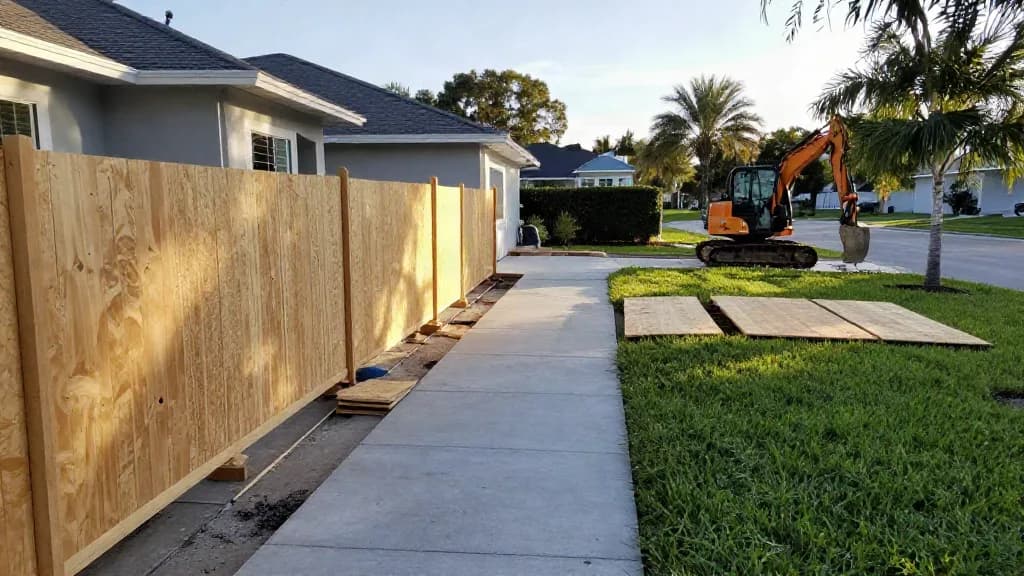
Florida's Residential Swimming Pool Safety Act requires a new residential pool to meet at least one of several safety features to pass final inspection. Under section 515.27, Florida Statutes, the options include:
| Option | What it means |
|---|---|
| Barrier/enclosure | The pool is isolated from the home by a barrier meeting the statute's requirements |
| Safety pool cover | An approved safety cover on the pool |
| Exit alarms | Alarms on every door and window with direct access from the home to the pool |
| Self-closing, self-latching doors | On every door with direct access, with the release mechanism at least 54 inches above the floor |
| Pool alarm | An in-pool alarm certified to ASTM F2208 (wearable alarms don't count) |
Deciding early matters because it affects your budget, your HOA submission and the look of your yard. Your local building department may have additional requirements, so confirm with your contractor and county.
12. Line up financing (if you need it)
If you plan to finance, start before you sign. D&J's financing page lets you estimate a monthly payment and apply with Lyon Financial or Viking Capital. Financing is subject to credit approval. Whatever lender you use, read the terms carefully and make sure the loan timeline lines up with the contractor's payment schedule.
13. Decide where the equipment and electrical will go
The pump, filter, heater and control panel need a home — usually beside the house, within reach of electrical service and plumbing runs. Think about:
- Noise near bedrooms or a neighbor's patio
- Access for service and future replacements
- Distance from the pool (longer runs can affect plumbing and electrical work)
- Whether your electrical panel has room for new circuits
A quick conversation now can prevent an equipment pad in the worst possible spot.
Frequently Asked Questions
Do I need to call 811 myself before my pool is built?
Florida law places the notification duty on the excavator — on a pool job, usually your contractor. Ask your builder to confirm the Sunshine 811 ticket was placed before excavation starts, and point out any private lines you installed yourself.
What safety feature does Florida require for a new pool?
Under section 515.27, a new residential pool must have at least one approved feature — such as a compliant barrier, a safety cover, exit alarms, self-closing and self-latching doors, or a certified pool alarm — to pass final inspection. Local codes may add requirements.
How do I check if a pool contractor is licensed in Florida?
Use the DBPR license search on myfloridalicense.com. You can search by name or license number and confirm the license is active.
Should I design the pool before getting quotes?
Yes. A shared design means every contractor prices the same project, so you can compare quotes fairly. The Brito Pool Builder is a free way to start.
Ready to take the next step?
At D&J The Pool Resurfacers, we've been serving Central Florida since 2014 with new pool construction and resurfacing, and we're happy to walk you through this checklist on your own property. Start with a design in the Brito Pool Builder, then request a free estimate or call (689) 358-9790 — se habla español. We'll give you a written, itemized quote after seeing your yard.
Related: Building a Custom Pool from Scratch: What to Expect · How to Get a Pool Construction Permit in Orange County and Osceola County, FL
Written and reviewed by
D&J The Pool Resurfacers
A Florida-licensed pool contractor and certified PebbleTec applicator that resurfaces, remodels and builds pools across Central Florida, working with pebble, quartz and polished finishes.
- Florida Certified Pool/Spa Contractor
- CPC1459797 · Verify the license on MyFloridaLicense.com
- PebbleTec
- Certified PebbleTec applicators
- Last updated
Why trust this article: it’s written by the licensed crew that does this work in Central Florida, and it only states what we do on our own jobs — pebble, quartz and polished finishes. More about D&J