Skip to content
D&J The Pool Resurfacers

How to Get a Pool Construction Permit in Orange County and Osceola County, FL?

By D&J The Pool Resurfacers

Published

Updated

9 min read

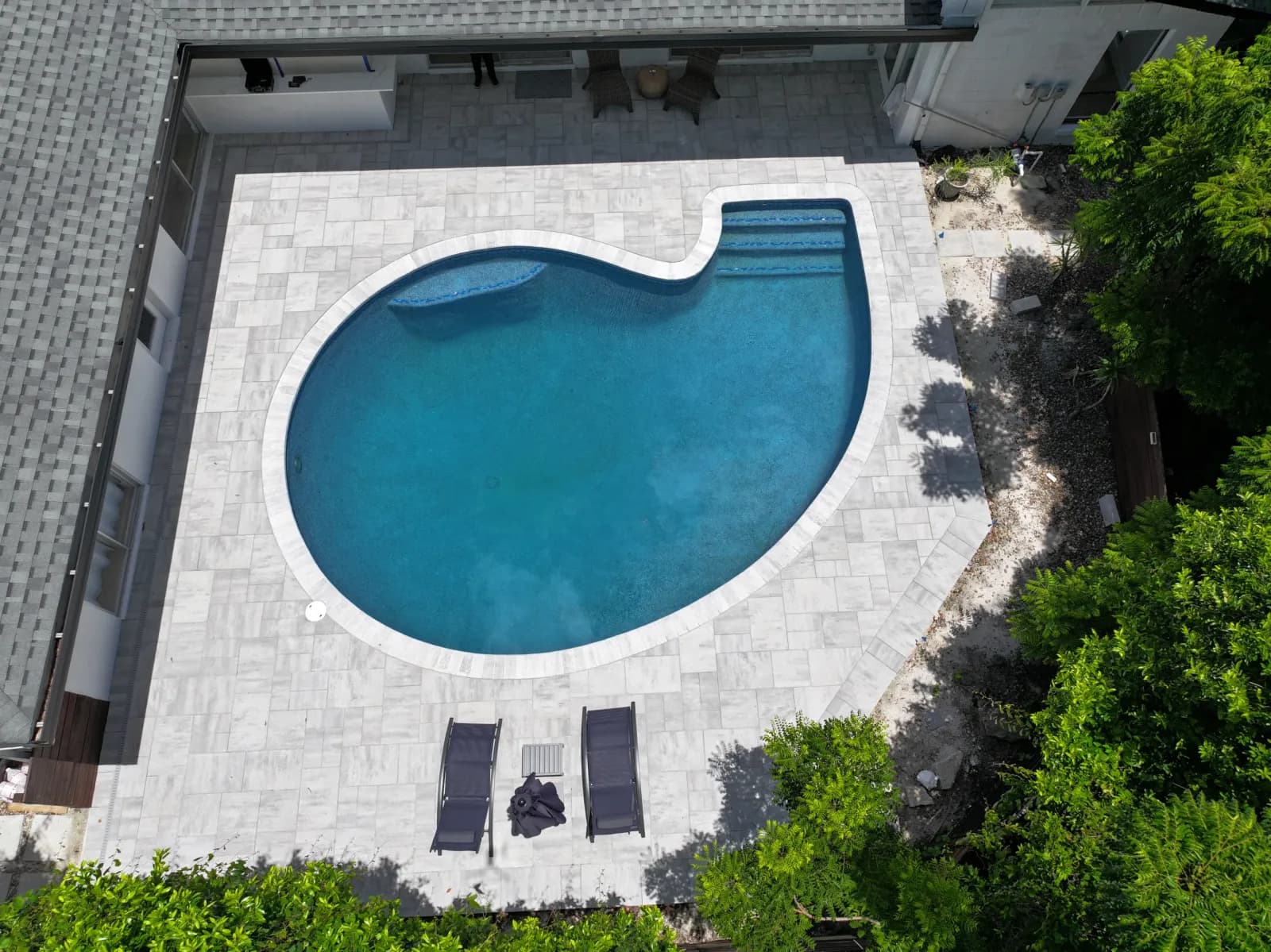
Aerial view of a freeform pool with a tanning ledge and a gray porcelain patio

You've decided to build a pool. You have a design in mind. You're ready to move. And then someone tells you about the permit — and suddenly the timeline you had in your head looks completely different.

Here's what most homeowners in Orange County and Osceola County don't realize until they're already in the process: the permit isn't an obstacle. It's a protection. It's what ensures that your pool is built to Florida's structural, electrical, and plumbing standards — and what protects your property value when you sell.

The process is real. It takes time. And doing it wrong, or hiring a contractor who skips it, creates problems that follow your property for years.

At D&J The Pool Resurfacers, we've been managing the permitting process for pool construction projects across Orange County and Osceola County since 2014. License CPC1459797. We guide every client through every step, from the first plan submission to the final inspection sign-off.

Pool construction permit process Orange County and Osceola County Florida

Quick answer: To get a pool construction permit in Orange County, FL, homeowners need to submit structural plans, a site plan showing property setbacks, and electrical and plumbing documentation to the Orange County Building Division. The review typically takes 4–8 weeks for standard residential pool projects, and work cannot legally begin until the permit is issued. D&J manages the complete permitting process in both Orange County and Osceola County.

Why Pool Permits in Florida Are Not Optional

Skipping the permit isn't a shortcut — it's a liability that follows your property. In Florida, pool construction is classified as a major structural improvement. Orange County and Osceola County both require a building permit before any excavation begins — a legal requirement backed by Florida Statute 489 and enforced by county building inspectors. Here's what happens when work starts without one:

  • STOPA stop-work order

    The county issues one the moment an inspector identifies unpermitted construction. All work halts — including work done correctly. The homeowner must demolish and start over with a permit, or pay for a retroactive permit process that's significantly more expensive and complicated.

  • SALEProblems when you sell

    Unpermitted pool construction shows up in the property record during the title search and buyer inspection. Buyers either walk away or require the work to be brought to code at the seller's expense before closing.

  • RISKLiability

    A pool built without a permit was never inspected for structural integrity, electrical bonding, or plumbing compliance. If something fails, the homeowner has no documentation that the work met Florida's safety standards — which matters significantly in an insurance or legal context.

One permit, done correctly, eliminates all three of those scenarios before they exist.

How the Permit Process Works in Orange County, FL

The Orange County Building Division manages residential pool permits for unincorporated Orange County. The City of Orlando has its own building department for properties within city limits. Before submitting, confirm which jurisdiction applies to your address.

  • STEP 1Engineering and plan preparation

    A licensed engineer produces site-specific structural drawings that account for your soil conditions, groundwater level, and the pool's dimensions — not generic templates. Typically 2 to 4 weeks. D&J coordinates the engineering directly; the homeowner doesn't manage this independently.

  • STEP 2Application submission to Orange County Building Division

    The package includes structural drawings signed and sealed by a licensed engineer; a site plan showing the pool's location, distances from the foundation and property lines, and any easements; electrical and plumbing plans; and the contractor's license (CPC1459797) and proof of insurance. D&J submits everything on the client's behalf — online or in person.

  • STEP 3Plan review period

    Orange County reviews standard residential pool applications in approximately 4 to 8 weeks. Complex designs, unusual soil conditions, or incomplete documentation can extend it, and each revision cycle adds time — which is why D&J prepares every submission to be complete the first time.

  • STEP 4Permit issuance and construction start

    Work cannot legally begin until the permit is issued in writing — not when it's submitted, not while it's under review. A contractor who offers to start excavation while the permit is pending is misinformed or planning to operate outside the law. D&J does not begin any work until the permit is in hand.

  • STEP 5Inspections during construction

    Typically a rebar inspection before gunite, a plumbing rough inspection before backfill, an electrical rough inspection, and a final inspection after equipment is installed. Each must pass before the next phase proceeds. D&J schedules all inspections directly with the county.

  • STEP 6Final sign-off and certificate of completion

    After the final inspection passes, the county issues a certificate of completion — the official document confirming the pool was built to code. It stays with the property record and protects the homeowner at the time of sale.

How the Permit Process Works in Osceola County, FL

Osceola County manages pool permits through its Building Division for unincorporated areas. Kissimmee and Saint Cloud have their own municipal building departments for properties within city limits. The process is similar to Orange County but with specific submission requirements and review timelines that differ.

Osceola County permit requirements

The same core documentation applies — structural engineering, site plan, electrical and plumbing plans, and contractor credentials — and standard residential reviews typically run 4 to 8 weeks. One distinction: Osceola County has specific requirements for pools near wetlands, flood zones, and the water features common throughout the county. Properties near the Kissimmee Chain of Lakes or other water bodies may require additional environmental review. D&J identifies these during the initial assessment and builds them into the timeline.

City of Kissimmee and City of Saint Cloud permits

Properties within city limits submit to the City of Kissimmee Building Department or the City of Saint Cloud, each with its own portal, fee structure, and review timeline. D&J manages submissions across all three jurisdictions — Orange County, Osceola County, and the municipal departments — as a standard part of every pool construction project in Central Florida.

How Long Does the Pool Permit Process Take in Orange County and Osceola County?

The complete permitting timeline from the start of engineering to permit issuance typically runs 6 to 12 weeks for a standard residential pool in Central Florida.

PhaseTypical duration
Engineering and plan preparation2–4 weeks
Plan review — Orange County4–8 weeks
Plan review — Osceola County4–8 weeks
Revision cycles (if required)+2–4 weeks per cycle
Total, decision to permit in hand6–12 weeks

This is the timeline that should be built into every pool construction project before scheduling anything else. A homeowner who wants a pool ready by Memorial Day needs to start the permitting conversation no later than January — not March. D&J builds the permit timeline into every project schedule from the first conversation.

What a Licensed CPC Contractor Does in the Permit Process

The permit process for pool construction in Florida is not something a homeowner manages independently. It requires a licensed Certified Pool Contractor — a CPC license holder — to pull the permit on behalf of the project. This is a legal requirement, not a technicality. If a contractor suggests you can pull your own permit for a pool construction project, that contractor is either uninformed or planning something outside the legal framework.

D&J holds license CPC1459797 — issued by the Construction Industry Licensing Board — which authorizes us to submit permit applications, manage inspection sequences, and legally execute pool construction work in Orange County, Osceola County, and throughout Florida. Verifiable right now at myfloridalicense.com: Active status, Certified Pool/Spa Contractor.

"The permit conversation is the one I have with every client at the very beginning — before we talk about design, before we talk about materials. Because the permit controls the timeline. Homeowners who don't understand that end up frustrated when the pool they wanted ready by June isn't getting started until May because nobody told them about the 6 to 8 week review window.

Orange County and Osceola County both take permit reviews seriously — the structural engineering, the site setbacks, the electrical plans. And they should. The permit is not a delay. It's the part of the project that makes everything else worth doing. A pool with a certificate of completion is a protected asset. A pool without one is a liability waiting to surface."

Mauro — Owner, D&J The Pool Resurfacers · CPC1459797 · Certified PebbleTec Applicator · FSPA & NPC Member
Pool construction project Orange County Osceola County Florida

Frequently Asked Questions

How long does it take to get a pool permit in Orange County, FL?

Plan review typically takes 4 to 8 weeks for standard residential pools, plus 2 to 4 weeks of engineering beforehand. The complete timeline from the start of engineering to permit issuance typically runs 6 to 10 weeks; complex designs or incomplete submissions extend it.

Can I start building my pool before the permit is approved?

No. Starting excavation or any construction before permit issuance violates Florida building code and Orange County regulations — the consequence is a stop-work order, potential demolition, and a more complicated retroactive permit. D&J does not begin any work until the permit is in hand.

Who pulls the pool permit — the homeowner or the contractor?

A licensed CPC contractor. Homeowners cannot pull pool construction permits independently in Florida. D&J manages the full process: engineering coordination, application preparation, and inspection scheduling.

How much does a pool permit cost in Orange County?

Fees are calculated based on the project's construction value and scope, and typically include a plan review fee, a permit issuance fee, and inspection fees.

Does D&J handle permits in both Orange County and Osceola County?

Yes — Orange County, Osceola County, the City of Kissimmee, and the City of Saint Cloud. The homeowner does not coordinate with the building department independently.

What happens if my pool was built without a permit?

It creates an unpermitted structure on your property record, which complicates or prevents sales, may require demolition or retroactive permitting at your expense, and leaves the structure without code-compliance documentation. Contact D&J for an assessment of the situation and your options.

Do I need a permit for pool resurfacing in Orange County?

Resurfacing typically does not require a building permit — it's classified as renovation. However, HOA communities may require architectural review approval, and structural shell repairs may trigger permit requirements depending on scope. D&J assesses permit requirements for every project before scheduling.

Common Mistakes Homeowners Make With Pool Permits in Central Florida

  • #1Assuming the contractor is handling the permit without confirming

    Ask: "Will you pull the permit before work begins?" and "Can I see the permit number once it's issued?" A contractor who can't answer directly is worth reconsidering.

  • #2Not accounting for the permit timeline in the project schedule

    The permit adds 6 to 12 weeks before construction begins. A homeowner who signs in March expecting a pool by Memorial Day is setting up for disappointment.

  • #3Hiring a contractor who offers to start before the permit is issued

    A red flag that should end the conversation. The homeowner who allows it takes on the legal and financial risk of unpermitted construction — not the contractor.

  • #4Choosing a design without a site assessment first

    Setbacks, soil conditions, utility locations, and environmental review can all reject a design at plan review — adding weeks and redesign costs. D&J conducts a site assessment before any design is finalized.

Ready to Start the Permit Process for Your New Pool in Central Florida? The conversation starts with a free estimate.

Written and reviewed by

D&J The Pool Resurfacers

A Florida-licensed pool contractor and certified PebbleTec applicator that resurfaces, remodels and builds pools across Central Florida, working with pebble, quartz and polished finishes.

Florida Certified Pool/Spa Contractor
CPC1459797 · Verify the license on MyFloridaLicense.com
PebbleTec
Certified PebbleTec applicators
Last updated

Why trust this article: it’s written by the licensed crew that does this work in Central Florida, and it only states what we do on our own jobs — pebble, quartz and polished finishes. More about D&J

Ready to bring your pool back?

Tell us about your pool. We’ll inspect it in person and send a clear quote for a pebble, quartz or polished finish.

Florida license CPC1459797

All articles