How to Prepare Your Home and Yard for Pool Construction
The contract is signed and the permit is in motion. Now comes the part nobody talks about: getting your house, your yard and your family ready for a construction site in the backyard.
Building a pool is exciting, but for a while your backyard becomes a job site. Heavy equipment comes and goes, the ground gets opened up and your daily routine shifts around the crew.
A little preparation makes that stretch easier on everyone — and protects things you care about, like your lawn, your driveway and your peace of mind.
Quick answer: To prepare for pool construction, agree on an access route for equipment, plan which fence panels or gates will be removed, mark and protect sprinklers and plants, keep pets and kids away from the work area, give your neighbors a heads-up, decide where vehicles and any dumpster will go, confirm what happens to the excavated soil, protect your driveway and lawn, think about the rainy season, and know what's expected of you at each phase — including what "clean" looks like at the end.
If you haven't done the planning steps yet (budget, survey, HOA, permits, contractor license), start with our pre-construction checklist. This article picks up where that one ends.
1. Plan the access route for equipment
Excavators, skid steers and delivery trucks need a way to reach the backyard. Walk the property with your contractor and agree on:
- The path: usually along the side of the house with the widest clearance.
- Width: measure the narrowest point between the house and fence, AC unit, trees or a neighbor's wall.
- Obstacles: low branches, gutters, downspouts, hose bibs, utility boxes, pavers and decorative rocks.
- Overhead lines: note any service lines that cross the access path.
If access is very tight, your contractor may suggest a different approach or smaller equipment. Better to know now than on dig day.
2. Fences and gates: what comes down and who puts it back
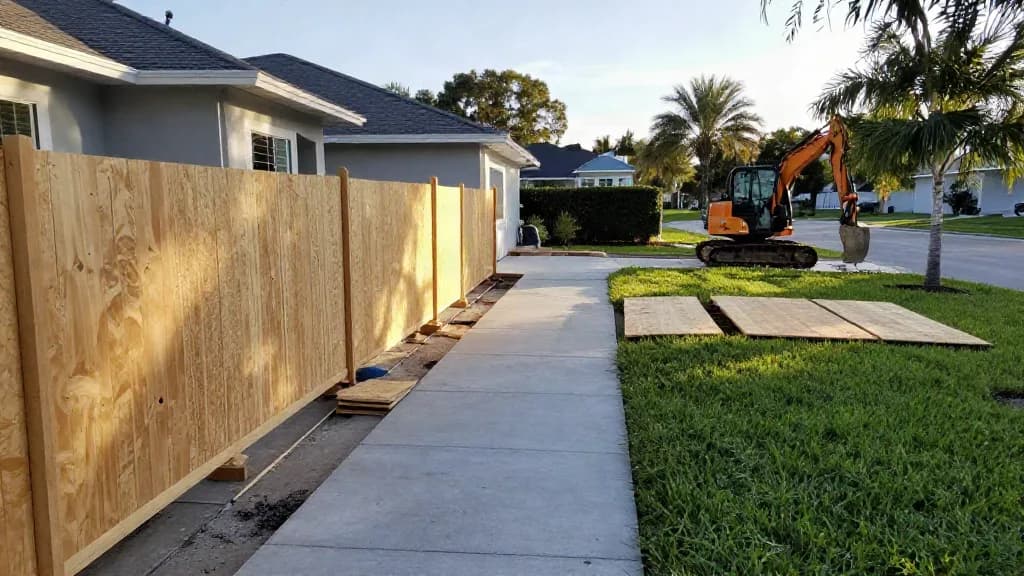
On many Central Florida lots, a section of fence or a gate has to be removed temporarily for equipment. Clarify in writing:
- Which panels or gates will be removed
- Who removes and reinstalls them
- What happens if old panels break during removal
- How the yard stays secured while the fence is open
That last point matters a lot if you have dogs or small children, and it may matter to your HOA too.
3. Sprinklers, landscaping and things you want to keep
Irrigation lines and heads in the work zone and along the access path are likely to be disturbed. Before work starts:
- Turn off or reprogram zones that cover the work area.
- Flag sprinkler heads and valve boxes so the crew can see them.
- Point out private lines that utility locates won't mark, like irrigation, landscape lighting or a line to a shed.
- Move potted plants, garden decor, play sets and furniture out of the way.
- Transplant anything you want to save — shrubs, a favorite palm, a vegetable bed.
Plan on some landscaping and sod work after construction. It's normal; it just helps to budget for it from the start.
4. Keep pets and kids safe during the work
An open excavation is a real hazard. Treat the backyard as off-limits while work is underway:
- Keep children indoors or supervised away from the work zone, and explain to them why.
- Keep pets inside or in a secured area, especially while the fence is open.
- Lock doors and windows that open toward the backyard, or add temporary alarms or locks.
- Check the yard after the crew leaves each day; never assume an area is safe to walk at night.
Remember that the pool will need a permanent safety feature to pass final inspection under Florida law. Use this period to finish deciding on yours.
5. Talk to your neighbors
A friendly heads-up goes a long way. Let neighbors know roughly when work starts, that there will be trucks and noise during working hours, and who to contact with concerns. If the access route runs close to a shared fence or property line, talk to that neighbor directly. If you need to cross their property for any reason, get permission first — never assume.
6. Parking, deliveries and dumpsters
Construction brings vehicles. Think ahead about:
- Your own cars: you may want to park on the street or in the garage so the driveway stays clear.
- Crew parking and deliveries: where trucks can stop without blocking neighbors or mailboxes.
- A dumpster or debris container, if your project uses one: where it will sit and whether placing it on the street or a shared area needs city or HOA permission. Ask your contractor.
7. Where the excavated soil goes
Digging a pool produces a lot of dirt. Depending on the project, some may be used on site for grading and the rest hauled away. Ask your contractor:
- Is soil haul-off included in the contract?
- Will any soil be kept for grading around the pool or deck?
- Where will it be stockpiled during construction?
Don't assume a pile of dirt will disappear on its own. Make sure it's in writing.
8. Protect your driveway and lawn
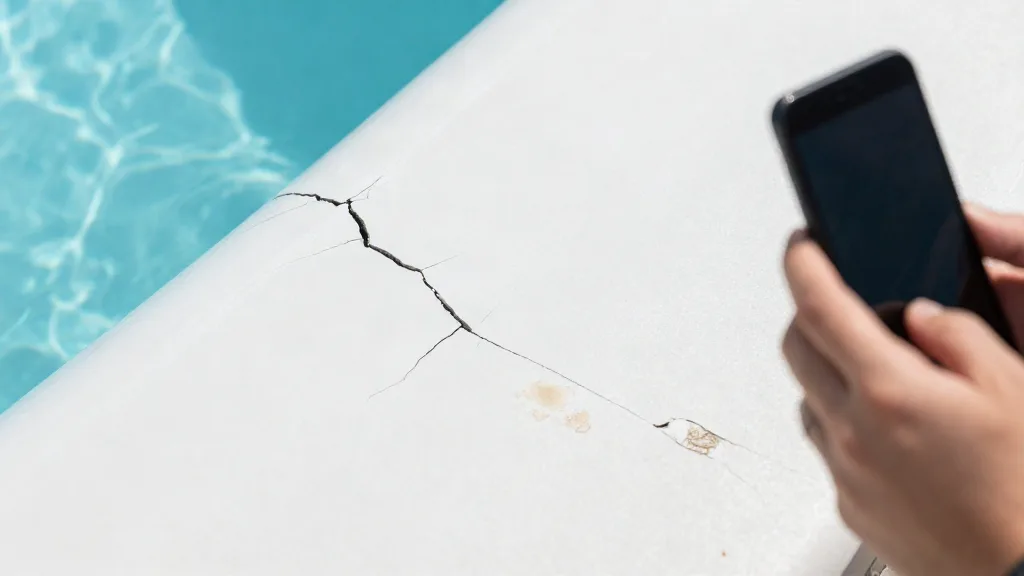
Heavy equipment can crack concrete, rut a lawn and damage pavers. Talk with your contractor about how they protect surfaces — for example with plywood or ground protection mats — and what happens if damage occurs. Take dated photos of your driveway, walkways, lawn and exterior walls before work begins. They're helpful for everyone if a question comes up later.
9. Timing, weather and the rainy season
Central Florida's summer brings frequent afternoon thunderstorms, and the Atlantic hurricane season runs from June 1 through November 30. Heavy rain can delay digging, inspections and concrete work, and it can turn a yard muddy. That doesn't mean you can only build in winter, but it does mean:
- Building in some flexibility for weather delays
- Asking your contractor how they handle rain days and storm prep
- Making sure the work area is secured if a storm is forecast
If you have an important date in mind — a birthday, a family visit, summer break — mention it early, but be realistic about weather.
10. What you do during each phase
Every contractor's sequence is a little different, but here's a general picture of where the homeowner fits in:
| Phase | What the homeowner typically does |
|---|---|
| Before work starts | Clear the yard, mark sprinklers and private lines, secure pets, talk to neighbors, take photos |
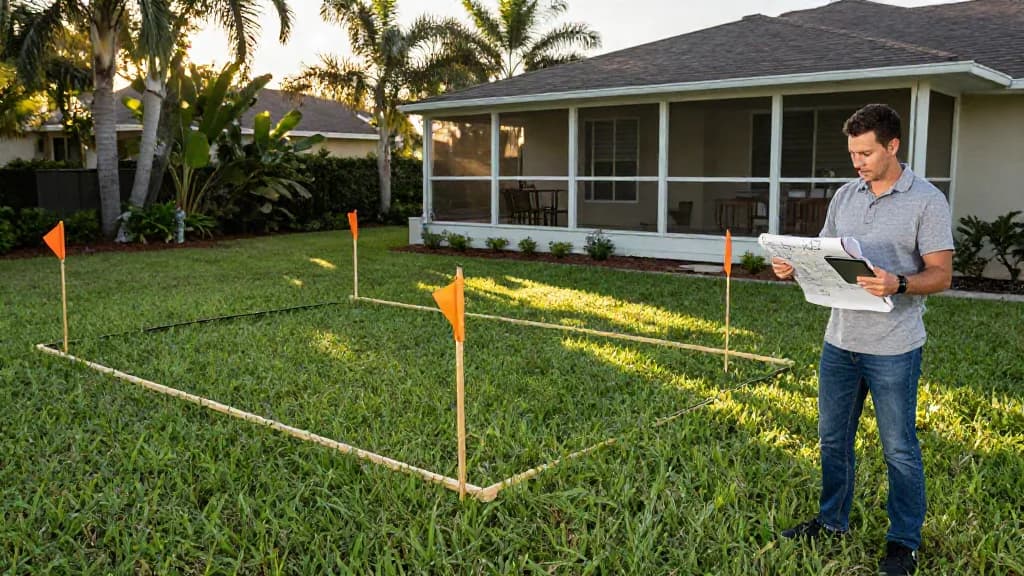
| Layout | Walk the staked outline with the contractor and confirm position, size and steps before digging |
| Excavation and structure | Keep the area off-limits, stay available for questions, keep access clear |
| Plumbing, electrical and inspections | Make sure inspectors can access the yard; respond quickly if a decision is needed |
| Deck, tile and finish | Confirm tile, coping and finish selections; at D&J you can choose them in person at our showroom at 5610 Carder Rd, Orlando |
| Fill and start-up | Follow the start-up and brushing instructions; don't skip the chemical start-up period |
| Final walkthrough | Review the work, ask questions, learn how to run the equipment |
11. Final cleanup: set expectations early
"Cleanup" can mean different things. Before work starts, ask what the final condition of the yard will be:
- Is construction debris removed and the dumpster hauled away?
- Is the yard rough-graded, and is sod or landscaping included or separate?
- Will the fence and gates be reinstalled and checked?
- Will sprinkler lines be repaired, or is that on you or your landscaper?
- Who repairs any damage to the driveway or walkways?
Writing these answers into the contract avoids the most common end-of-project disappointment: a beautiful new pool surrounded by a yard nobody planned for. If you're thinking about a new deck or outdoor living area, this is a good time to plan it too — see our outdoor living and decking services.
Frequently Asked Questions
Do I need to be home during pool construction?
Not all day, every day, but you should be reachable. Decisions come up — layout confirmation, inspections, material choices — and quick answers keep the project moving.
Will pool construction damage my lawn?
Some disturbance along the access route and around the pool is normal. Ask your contractor how they protect surfaces and whether sod repair is included, and plan for some landscaping afterward.
What happens to the dirt from the excavation?
It depends on the project. Some soil may be used for grading on site and the rest hauled away. Confirm haul-off and grading in your written contract.
How do I keep my dog safe while the fence is open?
Keep pets indoors or in a secured area, walk them on a leash, and ask your contractor how the yard will be closed off at the end of each work day.
Planning a new pool?
At D&J The Pool Resurfacers, we've been serving Central Florida since 2014 with new pool construction, resurfacing and outdoor living projects, and we're happy to walk your yard with you before anything starts. Learn more about our new pool construction service, sketch your idea in the Brito Pool Builder, or request a free estimate — or call (689) 358-9790. Se habla español.
Related: Building a Custom Pool from Scratch: What to Expect
Written and reviewed by
D&J The Pool Resurfacers
A Florida-licensed pool contractor and certified PebbleTec applicator that resurfaces, remodels and builds pools across Central Florida, working with pebble, quartz and polished finishes.
- Florida Certified Pool/Spa Contractor
- CPC1459797 · Verify the license on MyFloridaLicense.com
- PebbleTec
- Certified PebbleTec applicators
- Last updated
Why trust this article: it’s written by the licensed crew that does this work in Central Florida, and it only states what we do on our own jobs — pebble, quartz and polished finishes. More about D&J