Problems After Pool Construction or Resurfacing: Normal, Defect, or Damage?
You just invested in a new pool or a fresh finish, and something doesn't look right. Before you panic, or before you let it slide, here's how to figure out what you're looking at and what to do next.
A few weeks after the water goes in, a homeowner notices a hairline crack near a step, a patch of rough spots, a tile that sounds hollow, or a water level that seems to drop a little faster than it should.
The first reaction is usually one of two extremes: "The contractor ruined my pool," or "It's probably nothing." Neither is a good place to start.
Quick answer: Some changes after construction or resurfacing are normal (minor shading variation, early dust, small settling of loose soil). Others can point to a workmanship or material defect (widespread delamination, cracks that keep growing, persistent leaks). And some are damage from outside causes like storms, unbalanced water or another trade working in the yard. Document everything with dates, put your concern in writing to your contractor first, and give them a fair chance to inspect.
Why the Cause Matters
When something goes wrong with a pool, there are usually several possible sources:
- Workmanship: how the shell, finish, tile, plumbing or deck was installed.
- Materials or manufacturer: a product that didn't perform as designed (a finish batch, a pump, a heater, a light).
- Water chemistry: water that was too aggressive, too scaling or poorly balanced, especially during the first weeks.
- Ground and structure: soil movement, drainage, a high water table or hydrostatic pressure.
- Outside causes: storms, falling trees, flooding, a landscaper's equipment, an irrigation line, or a fence installer drilling into the deck.
Each of these points to a different person or policy. Your contractor handles workmanship. A manufacturer handles its product warranty. Your homeowner's insurance may handle certain sudden, accidental damage. And water chemistry is often the owner's or the service company's responsibility once the pool is turned over.
That's why the first job is not to assign blame. It's to gather facts.
Common Problems and Their Usual Suspects
The table below is a general guide, not a diagnosis. Only an on-site inspection can tell you what actually happened in your pool.
| What you see | Often normal or minor when… | May point to a defect when… | Other common causes |
|---|---|---|---|
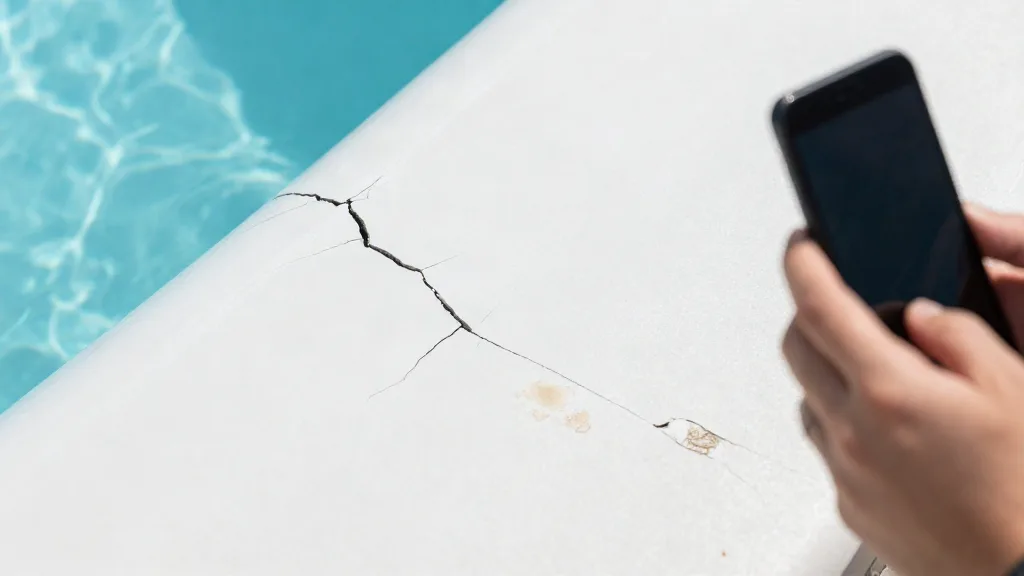
| Hairline cracks in the finish | Very fine surface "craze" lines that don't grow | Cracks widen, multiply or leak | Shell movement, ground settling |
| Spot etching / rough patches | — | Appears early and widespread | Aggressive water, improper start-up, chemicals dumped directly on the surface |
| Discoloration or mottling | Light, even shading variation typical of the finish | Large, sharp blotches soon after start-up | Metals in fill water, scale, low or high pH |
| Delamination / hollow spots | — | Finish sounds hollow or flakes off in sheets | Surface preparation issues, bond failure |
| Leaks | Normal evaporation in Florida heat | Loss continues with equipment off, near fittings or lights | Plumbing, skimmer, light niche, ground movement |
| Tile popping or cracking | — | Several tiles loosen along the waterline | Thermal stress, adhesive or grout issues |
| Equipment failure | Breaker trips from a storm | Repeated failure of a new unit | Manufacturer defect, power surge, installation |
| Deck settling or cracks | Control joints doing their job | Heaving, trip hazards, separation from coping | Soil compaction, drainage, tree roots |
A word about water chemistry
New finishes are at their most vulnerable during the first weeks. That's why a proper chemical start-up matters so much. At D&J, our arranque químico (chemical start-up) is part of the process. It's one of the reasons a complete resurfacing takes about a month and a half from start to swim-ready, even though the hands-on work is only 3 to 4 days.
If water chemistry was off during that period, damage like etching or staining can appear even when the installation was done correctly. That's not an excuse for a contractor. It's simply a reason to keep your water test records.
For more on how Florida's climate stresses finishes, see How Florida's Climate Damages Your Orlando Pool and Why Heat and Chlorine Destroy Your Finish Faster.
How to Document the Problem
Good documentation protects everyone, including a contractor who wants to fix a problem fairly. Start the day you notice something.
- Take dated photos and short videos. Shoot the same spot from the same angle every week. Include a coin or tape measure for scale.
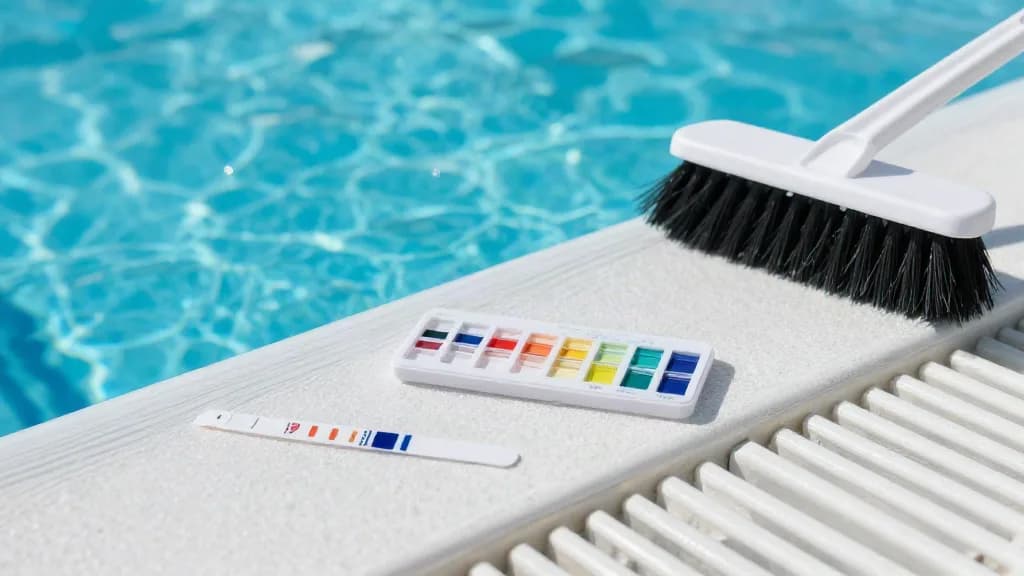
- Record water test results. Write down pH, total alkalinity, calcium hardness, chlorine and cyanuric acid with the date. Keep store printouts or service logs.
- Track water loss. The simple "bucket test" (a bucket of pool water on a step, comparing levels after 24 hours) helps separate evaporation from a leak.
- Gather paperwork. Contract, proposal, change orders, invoices, receipts, permit and inspection records, warranty documents and the equipment's model and serial numbers.
- Save communications. Texts, emails and notes from phone calls with dates, names and what was said.
- Write a simple timeline. When the work was finished, when the pool was filled, when you first noticed the issue, and what's happened since.
Don't try to repair it yourself, drain the pool, or pour chemicals on the spot before the contractor or manufacturer has a chance to see it. Well-intentioned fixes can make the cause harder to identify and may affect warranty coverage.
Who to Contact First
Your contractor, in writing
For anything that could be related to the work, contact the company that did it. A phone call is fine to start, but follow up with a short email or letter describing the issue, when you noticed it and your photos. Ask for an inspection.
Before you call, check that the company holds an active license on the Florida DBPR license lookup. You'll want the exact business name and license number for your records anyway.
The equipment manufacturer
Pumps, heaters, salt systems, automation and lights usually carry their own manufacturer warranties. Your contractor may help process the claim, but the coverage terms belong to the manufacturer. Registration requirements and coverage periods vary, so read the warranty card.
Your homeowner's insurance
If the damage was sudden, like a tree falling into the pool or storm debris cracking the deck, call your insurance agent and ask what your policy covers. Coverage for pools varies widely from policy to policy.
If it can't be resolved
If you and your contractor can't agree, Florida has a formal pre-suit notice process for construction defect claims under Chapter 558 of the Florida Statutes, plus complaint options with the state licensing agency. We cover those steps in detail in a separate guide. This article is general information, not legal advice; for your specific situation, consult a Florida attorney.
What a Fair Contractor Response Looks Like
Most problems get solved without a fight. Here's what a professional response usually includes:
- Prompt acknowledgment. A reply within a reasonable time, not silence.
- An inspection. Someone qualified comes out and looks, ideally with you present.
- A clear explanation. What they think caused the issue, in plain language, and why.
- A written plan. If it's their responsibility, what they'll do and when. If they believe it isn't, a written explanation of why, and what they recommend.
- Honest coordination. If a manufacturer is involved, help connecting you with them.
In return, it's fair for the contractor to expect access to the pool, your records and reasonable patience.
How D&J Approaches It
At D&J The Pool Resurfacers we've been working on Central Florida pools since 2014 under CPC license CPC1459797. We're certified PebbleTec applicators, FSPA members and NPC certified. When a customer calls us about something that doesn't look right, we'd rather see it early than late. Small issues are almost always easier to solve when they're caught right away.
If you have a pool built or resurfaced by someone else and you'd like an honest second opinion on its condition, we give free estimates and a written, itemized quote after seeing your pool. You can request a free estimate or call (689) 358-9790. Se habla español.
Frequently Asked Questions
Are small cracks in a new pool finish normal?
Very fine surface lines that don't grow, leak or catch your hand can be cosmetic. Cracks that widen, multiply or come with water loss should be inspected. Photograph them with a scale reference and check again over a few weeks.
Can bad water chemistry damage a brand-new finish?
Yes. Aggressive or poorly balanced water, especially during the first weeks after start-up, can cause etching, roughness and staining. That's why keeping water test records is one of the most useful things you can do.
Should I contact my contractor or my insurance first?
If the issue could be related to the work, start with your contractor, in writing. If the damage was sudden and accidental, like storm debris or a fallen tree, call your insurance agent to ask about coverage.
How do I know if my pool is leaking or just evaporating?
Florida heat causes real evaporation. A bucket test comparing the pool's level to a bucket of water over 24 hours is a simple first check. If the pool drops noticeably more than the bucket, ask a professional to look for a leak.
Will the finish warranty cover my problem?
It depends on the warranty's terms and on the cause. Finish and equipment manufacturers typically exclude damage from improper water chemistry or outside causes. Read your warranty documents and keep them with your records.
Written and reviewed by
D&J The Pool Resurfacers
A Florida-licensed pool contractor and certified PebbleTec applicator that resurfaces, remodels and builds pools across Central Florida, working with pebble, quartz and polished finishes.
- Florida Certified Pool/Spa Contractor
- CPC1459797 · Verify the license on MyFloridaLicense.com
- PebbleTec
- Certified PebbleTec applicators
- Last updated
Why trust this article: it’s written by the licensed crew that does this work in Central Florida, and it only states what we do on our own jobs — pebble, quartz and polished finishes. More about D&J