Warning Signs Your Pool Needs Resurfacing
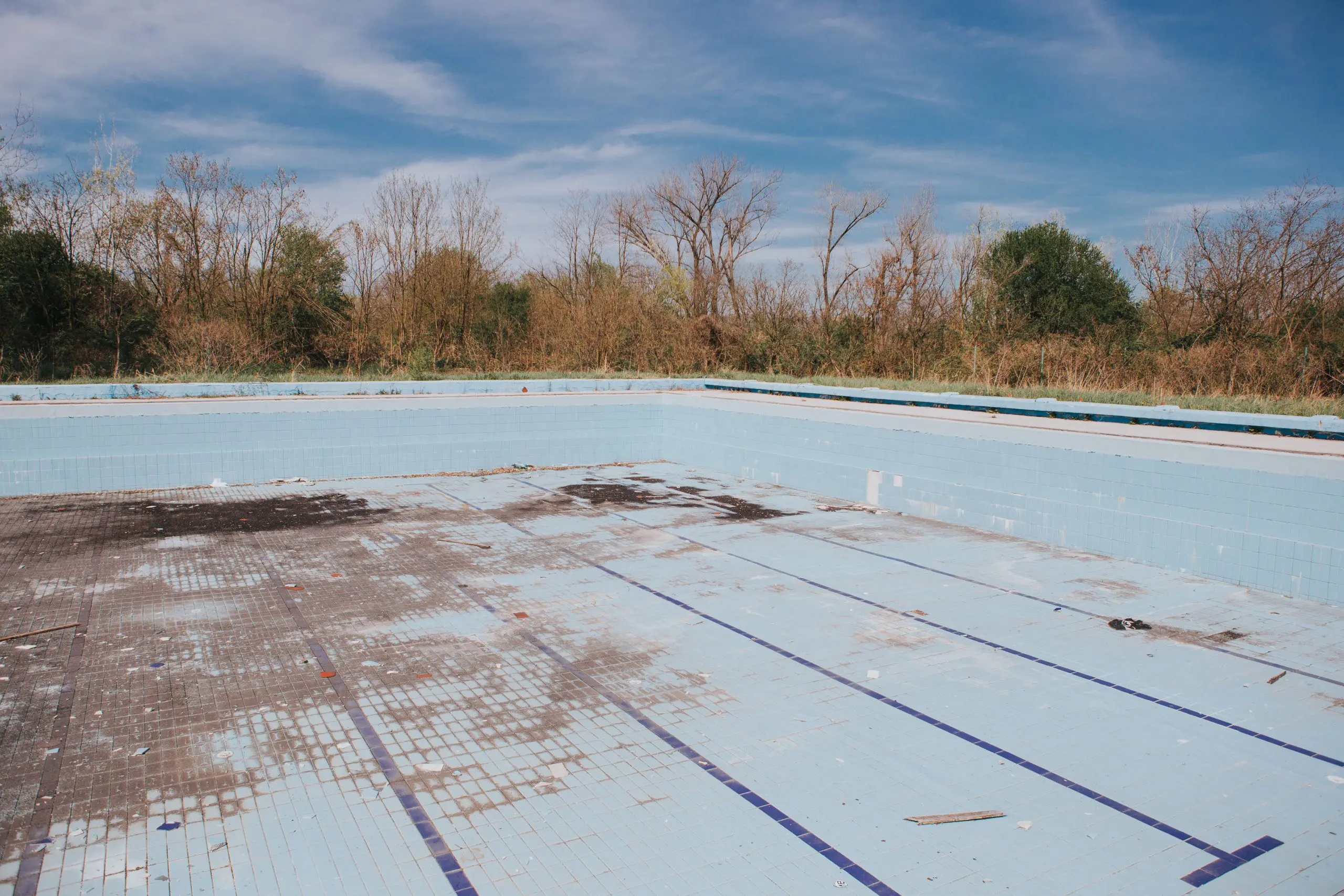
Your pool doesn’t fail overnight. It sends signals — sometimes for years — before the damage becomes impossible to ignore. The problem is that most homeowners don’t know what those signals mean until they’re looking at a structural repair bill that’s two or three times what a timely resurface would have cost. If you’re noticing something off about your pool — the texture, the color, the water level — this guide will help you read what your pool is actually telling you. Catching these signs of pool surface damage early is the difference between a straightforward resurfacing project and a costly structural intervention.
How Long Should a Pool Surface Last?
Before diving into the warning signs, it helps to know the baseline. A well-maintained pool surface typically lasts 10 to 15 years, depending on the material, water chemistry, and how much use the pool gets. In Florida, where pools are used year-round and exposed to intense UV and chemical demand, surfaces often show wear closer to the 10-year mark.
If your pool is approaching or past that window, some of the signs below aren’t a surprise — they’re expected. The question is whether you address them now, on your schedule, or later when the damage forces your hand.
The 6 Warning Signs Your Pool Needs Resurfacing
Sign 1: The Surface Feels Rough
Run your palm along the walls or floor of your pool. It should feel smooth — even after years of use. If it feels like sandpaper or coarse stone, that texture is the protective surface breaking down.
A rough pool surface isn’t just uncomfortable — it tears through swimsuits, scratches skin, and signals that the finish has eroded to the point where it’s no longer protecting the shell beneath it. This is one of the most reliable early indicators, and it’s one most homeowners notice but underestimate.
Sign 2: Stains That Don’t Respond to Chemicals
Pool staining happens. But there’s a clear difference between staining caused by water chemistry imbalance — which can be treated — and staining that has penetrated a deteriorated surface, which cannot.
If you’ve adjusted your chemistry, shocked the pool, and the stains keep coming back or don’t respond at all, the problem isn’t the water. The problem is a surface that’s no longer able to resist penetration. At that point, chemicals are treating symptoms — not the cause.
Common types to watch for:
- White or gray streaks: Usually calcium deposits — a sign the surface is losing integrity
- Green or black spots: Algae that returns quickly after cleaning, indicating the surface has become porous
- Brown or rust-colored patches: Mineral staining that has penetrated below the finish layer
Sign 3: Visible Cracks or Chipping
Small surface cracks in aging plaster are normal — up to a point. But once cracks become visible to the eye, or the surface starts chipping, you’re looking at a problem that compounds over time without intervention.
Cracks create pathways for water to reach the pool shell. Water that reaches the shell leads to structural damage — a problem that costs significantly more to fix than a resurfacing project. If you’re seeing visible cracking or finding chips at the bottom of the pool, the time to act is now, not next season.
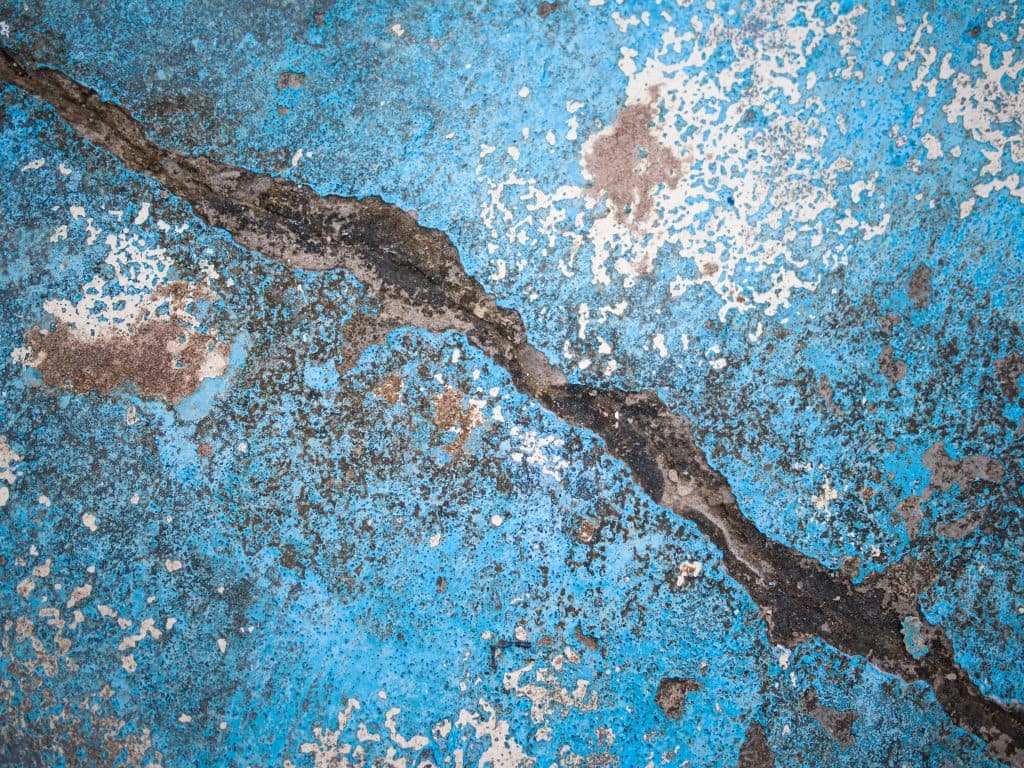
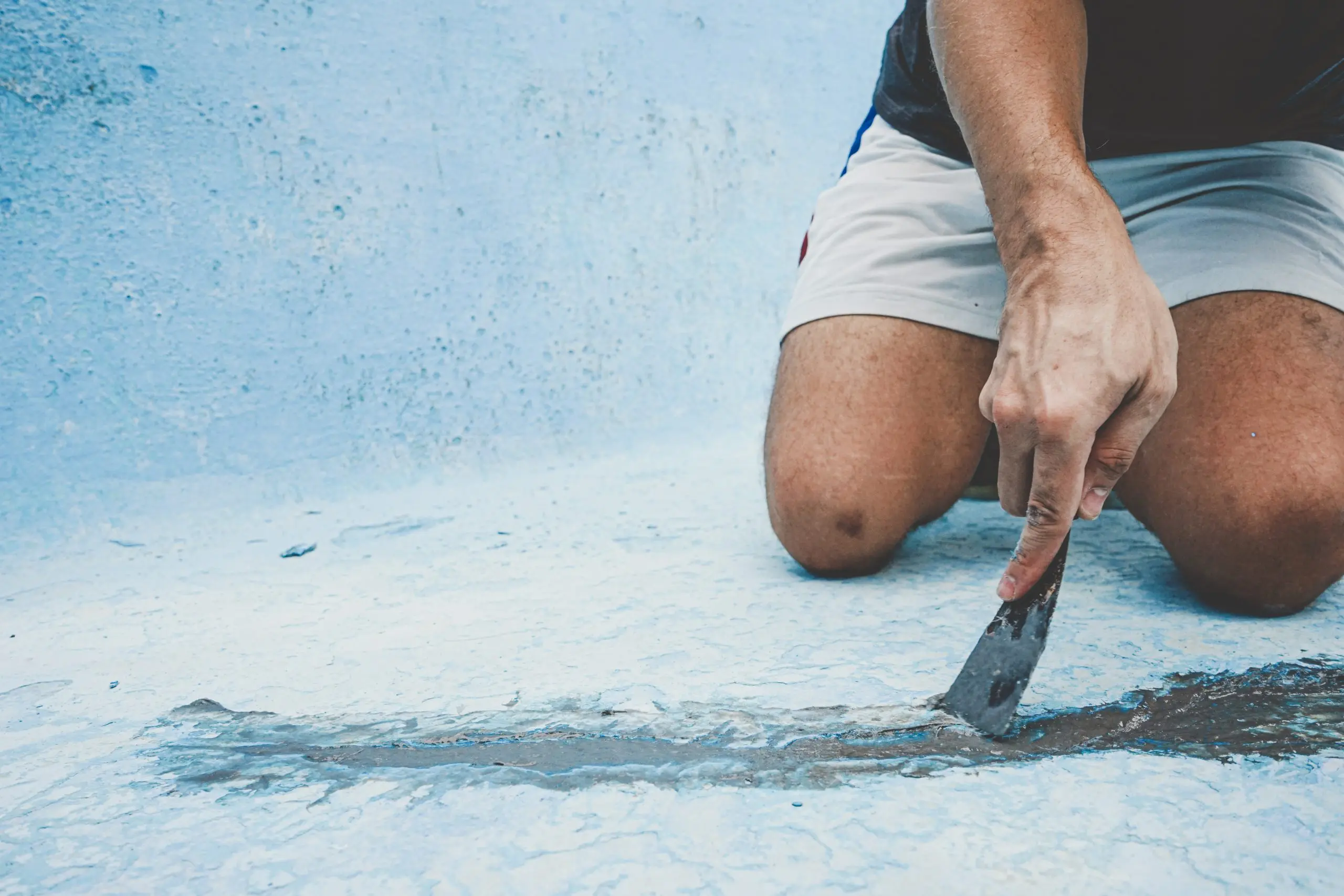
pool plaster cracking — sign pool needs resurfacing Orlando Florida
Sign 4: Chalky Residue or Flaking Material
If you run your hand along the pool wall and come away with white powder or dust, plaster is dissolving. If you’re finding small flakes or chips at the bottom of the pool, the surface is actively breaking down.
This is past early warning territory. At this stage, the decomposing surface is affecting water chemistry — which creates its own set of maintenance problems and can accelerate damage to pool equipment.
Sign 5: Unexplained Water Loss
Some water loss is normal — evaporation is real, especially in Florida heat. But if your pool is consistently losing more than a quarter inch of water per day without heavy evaporation conditions, you may have a surface leak.
A simple test: fill a bucket with pool water, place it on a pool step at waterline level, and mark both the bucket water level and the pool water level. After 24 hours without the pump running, check both. If the pool has dropped more than the bucket, the loss isn’t evaporation — it’s a leak worth investigating.
Sign 6: Faded or Uneven Color Across the Surface
A healthy pool surface has consistent color throughout. When you start noticing different shades in different areas — lighter patches, faded spots, or areas that look almost gray compared to the rest — that’s the finish deteriorating unevenly.
This often happens gradually, which is why homeowners sometimes don’t notice until they compare current photos to how the pool looked several years earlier. If your pool looks significantly different from when it was last resurfaced, that comparison is telling you something.
What Happens If You Ignore These Signs?
The honest answer: the damage gets more expensive. Surface problems that cost a few thousand dollars to fix with a resurfacing project can become structural repairs that cost two or three times more if left unaddressed.
Beyond cost, a deteriorating pool surface creates real safety concerns — rough textures that scratch skin, compromised slip resistance, and water quality issues from a porous surface that’s harder to keep clean and balanced.
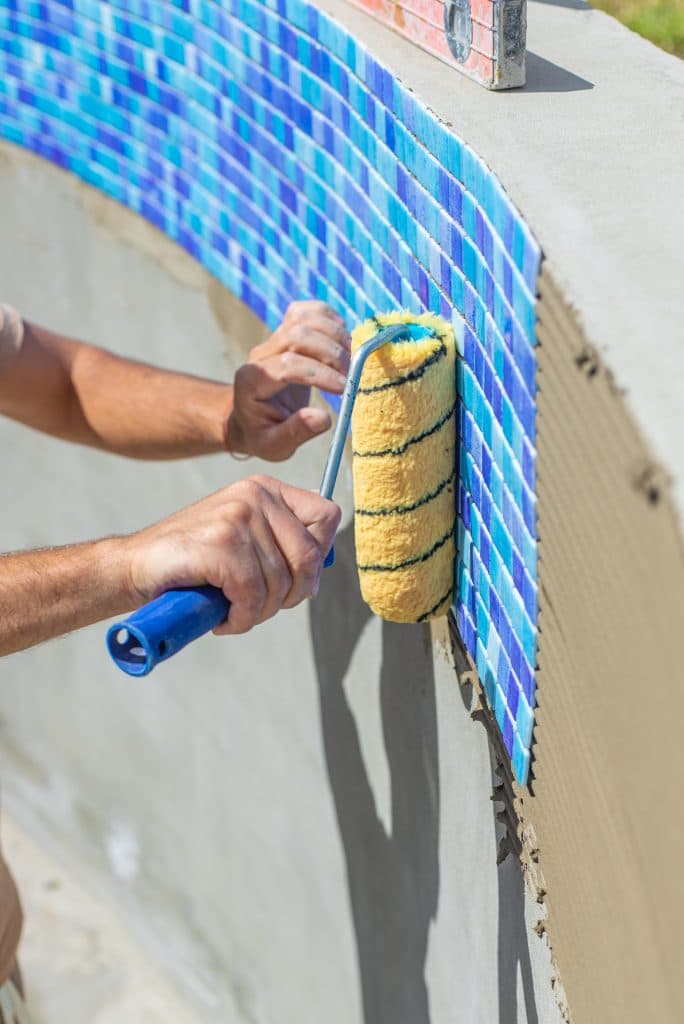
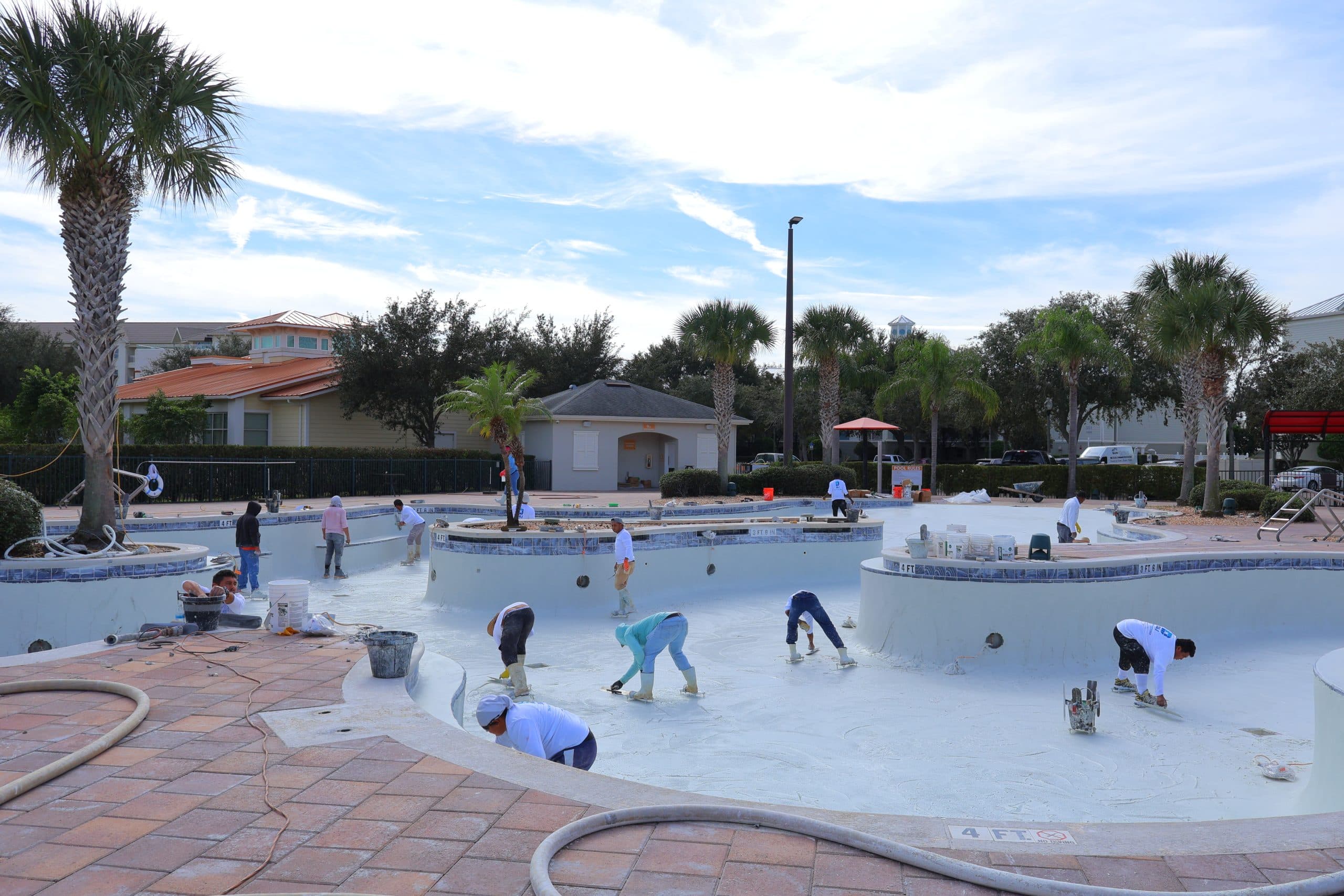
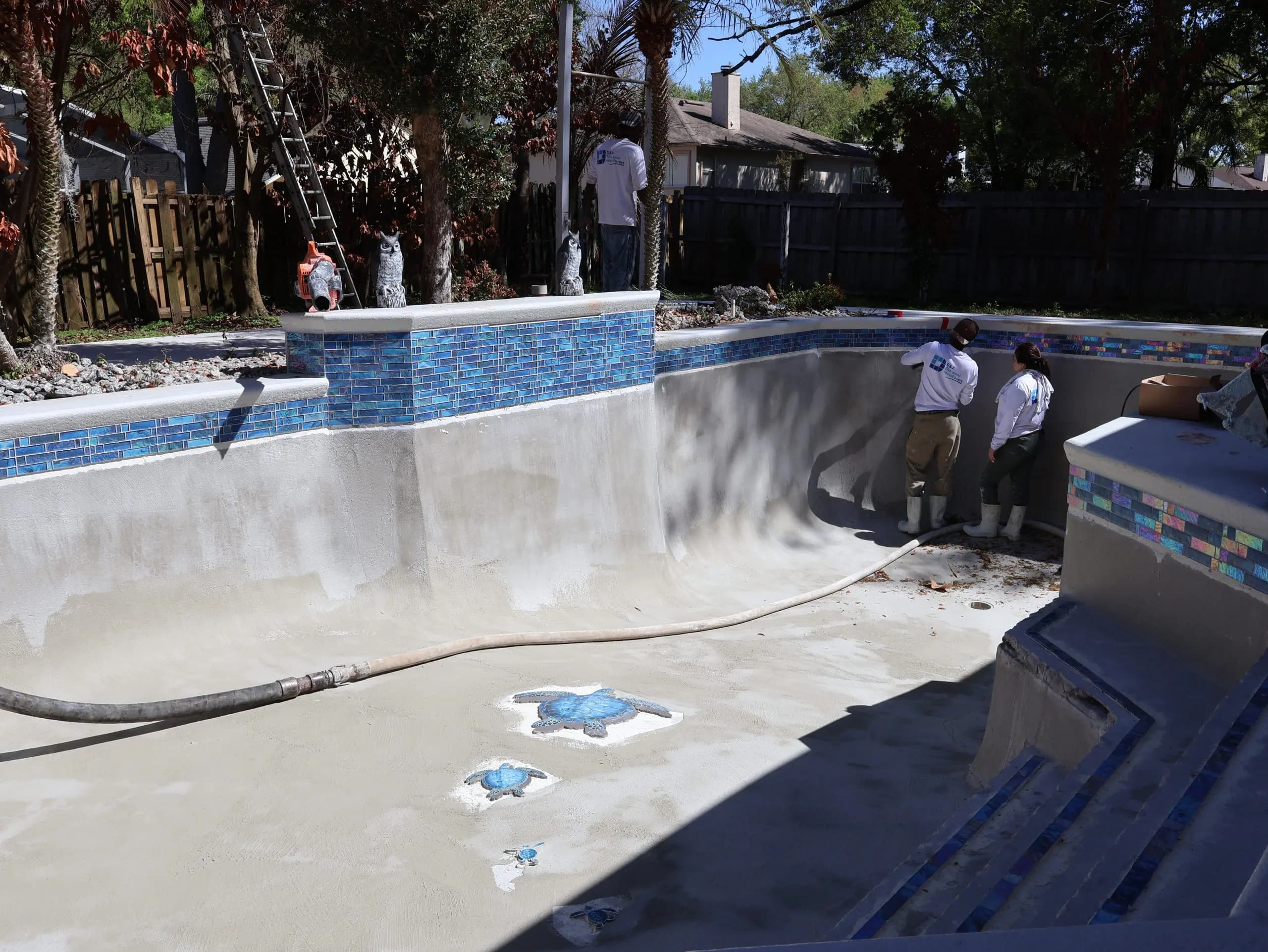
pool resurfacing repair process — fixing pool surface damage Florida
How to Know If Your Pool Needs Resurfacing or Just Repairs
Not every surface problem requires a full resurface. Minor crack repairs, isolated tile replacement, or stain treatment may be appropriate in some situations. The question is whether the problem is localized or systemic.
If one area of the pool has a crack and the rest of the surface is in good condition, a targeted repair may be the right answer. If the roughness, staining, or cracking is widespread — or if the surface is simply approaching the end of its natural lifespan — resurfacing is the more durable solution.
The only way to know for certain is a professional assessment. D&J offers free estimates that include a thorough inspection of your pool’s current condition. We’ll tell you exactly what your pool needs — and what it doesn’t.
learn more about our complete pool renovation process
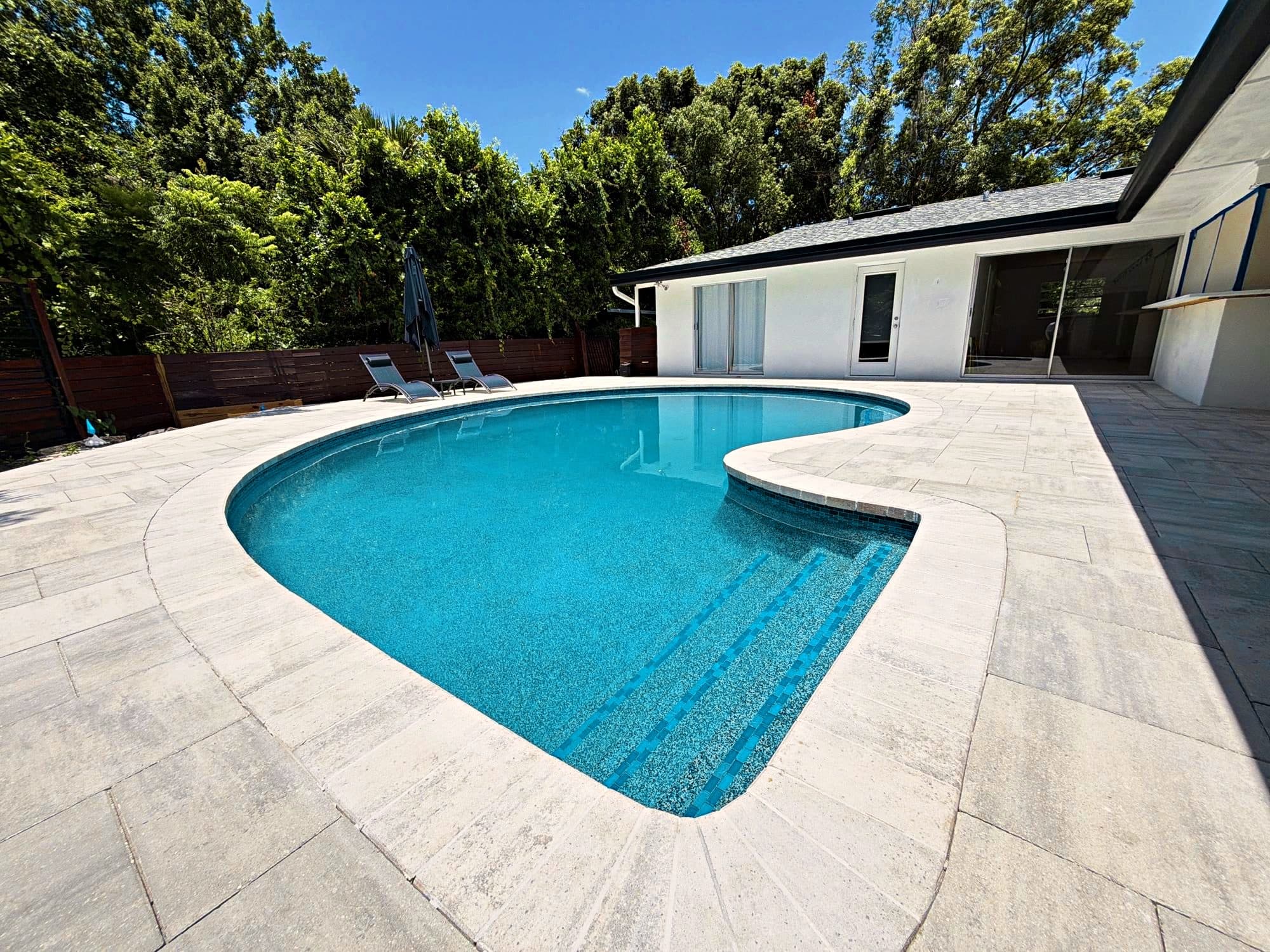
Don’t Wait for the Damage to Decide for You
Every pool shows wear eventually. What separates a straightforward resurfacing project from a costly structural repair is timing. If you’re seeing one or more of these signs, the right move is a professional assessment — not another season of hoping it stays manageable.
D&J The Pool Resurfacers has been identifying and fixing pool surface problems in Central Florida since 2014. As certified PebbleTec applicators, every installation comes backed by a 25-year warranty — and we give you an honest assessment of what your pool actually needs.
Call (321) 360-4867 for a free inspection and estimate. Or contact us at dandjthepoolresurfacers.com/en/contact-pool-resurfacing-in-orlando/
Written and reviewed by
D&J The Pool Resurfacers
A Florida-licensed pool contractor and certified PebbleTec applicator that resurfaces, remodels and builds pools across Central Florida, working with pebble, quartz and polished finishes.
- Florida Certified Pool/Spa Contractor
- CPC1459797 · Verify the license on MyFloridaLicense.com
- PebbleTec
- Certified PebbleTec applicators
- Last updated
Why trust this article: it’s written by the licensed crew that does this work in Central Florida, and it only states what we do on our own jobs — pebble, quartz and polished finishes. More about D&J