Commercial Pool Resurfacing: What’s Different
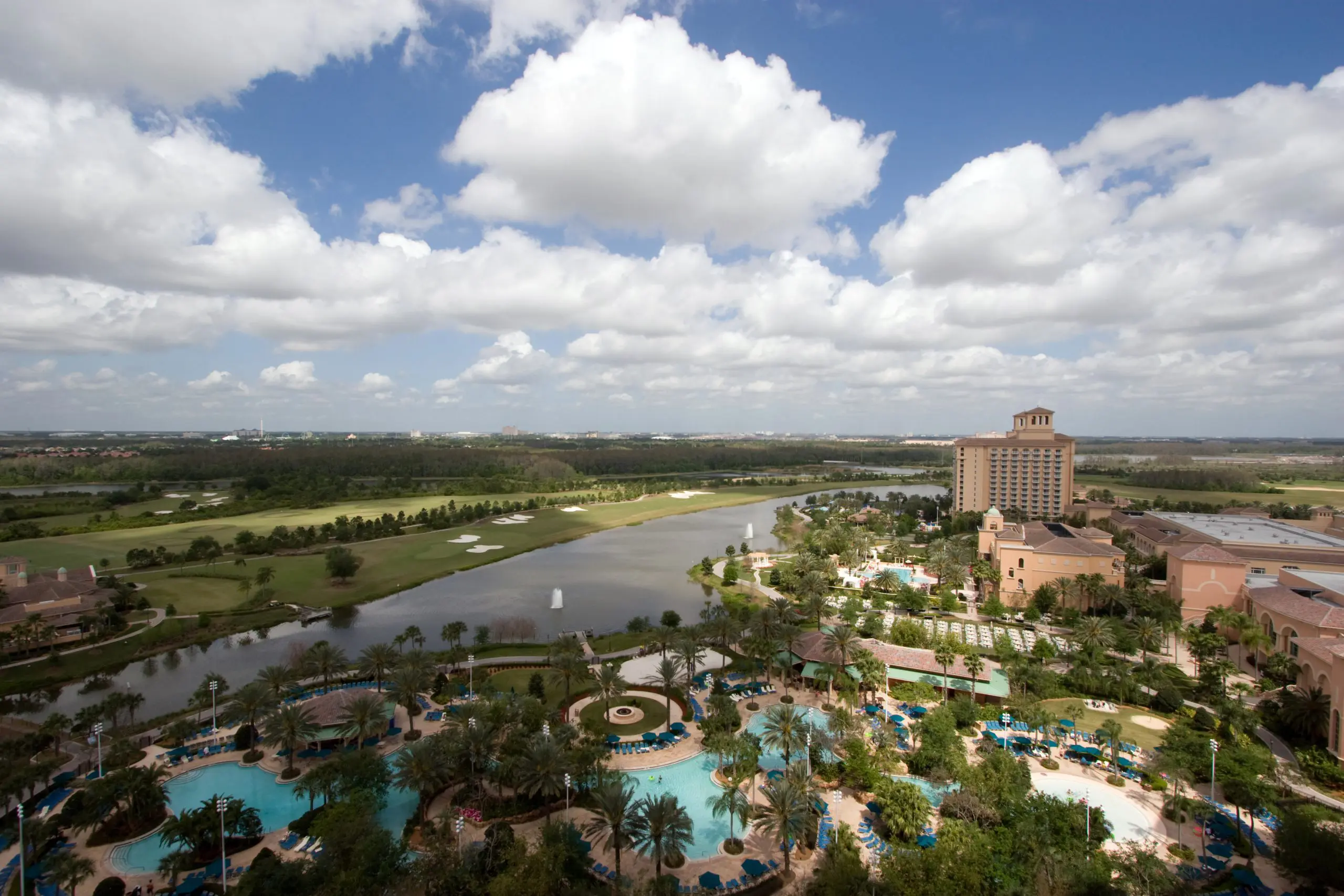
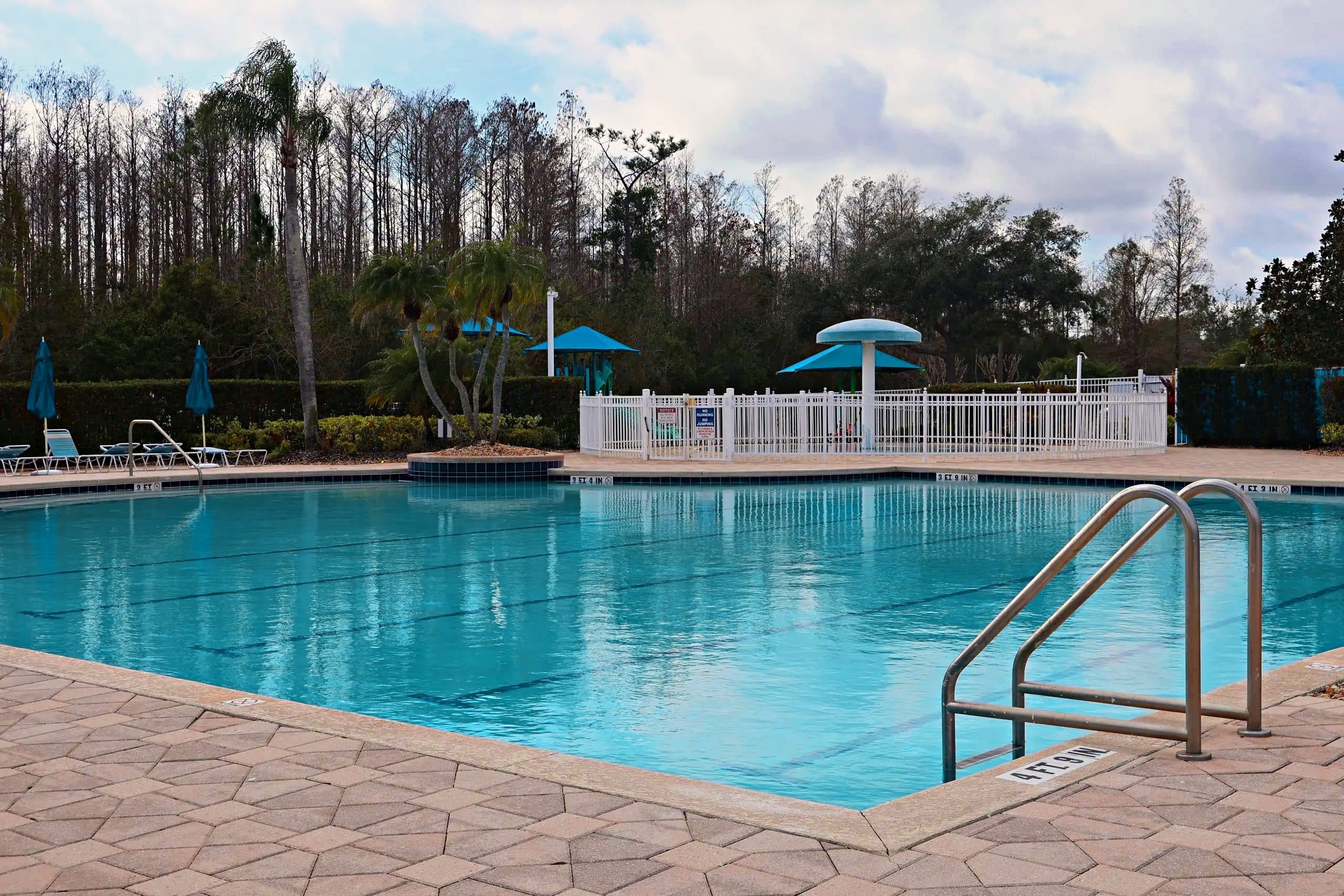
Managing a commercial pool in Florida is nothing like owning one in your backyard. The usage volume is different. The regulatory environment is different. The cost of getting it wrong — in downtime, in liability, in guest or resident satisfaction — is different. And yet many property managers approach commercial pool resurfacing the same way a homeowner would: finding a contractor when something looks visibly wrong and hoping for a quick fix. That approach works until it doesn’t. This guide is for hotel managers, HOA directors, condominium property managers, and club operators who want to understand commercial pool resurfacing in Florida — what makes it different, when to do it, and what a professional project actually looks like.
Why Commercial Pools Age Faster Than Residential Ones
The answer is volume. A residential pool might see 10 to 15 swimmers on a busy day. A hotel pool in peak season can see 10 times that — every day. That constant traffic increases chemical demand, accelerates physical wear, and puts the pool surface under sustained stress that no residential pool experiences.
The result is predictable: commercial pool surfaces degrade faster, require more frequent resurfacing, and show damage earlier than residential surfaces under equivalent material and maintenance conditions.
How Often Should a Commercial Pool Be Resurfaced?
The honest answer is: it depends on the surface material and usage volume. But here’s a practical framework:
- Plaster surfaces in commercial settings: Resurface every 5 to 7 years — roughly half the lifespan of the same material in a residential pool
- Aggregate and pebble finishes (like PebbleTec): Can last 10 to 12 years in commercial applications with proper maintenance — significantly longer than plaster under the same conditions
- High-traffic facilities (hotels, community centers, public pools): Lean toward the shorter end of these ranges regardless of material
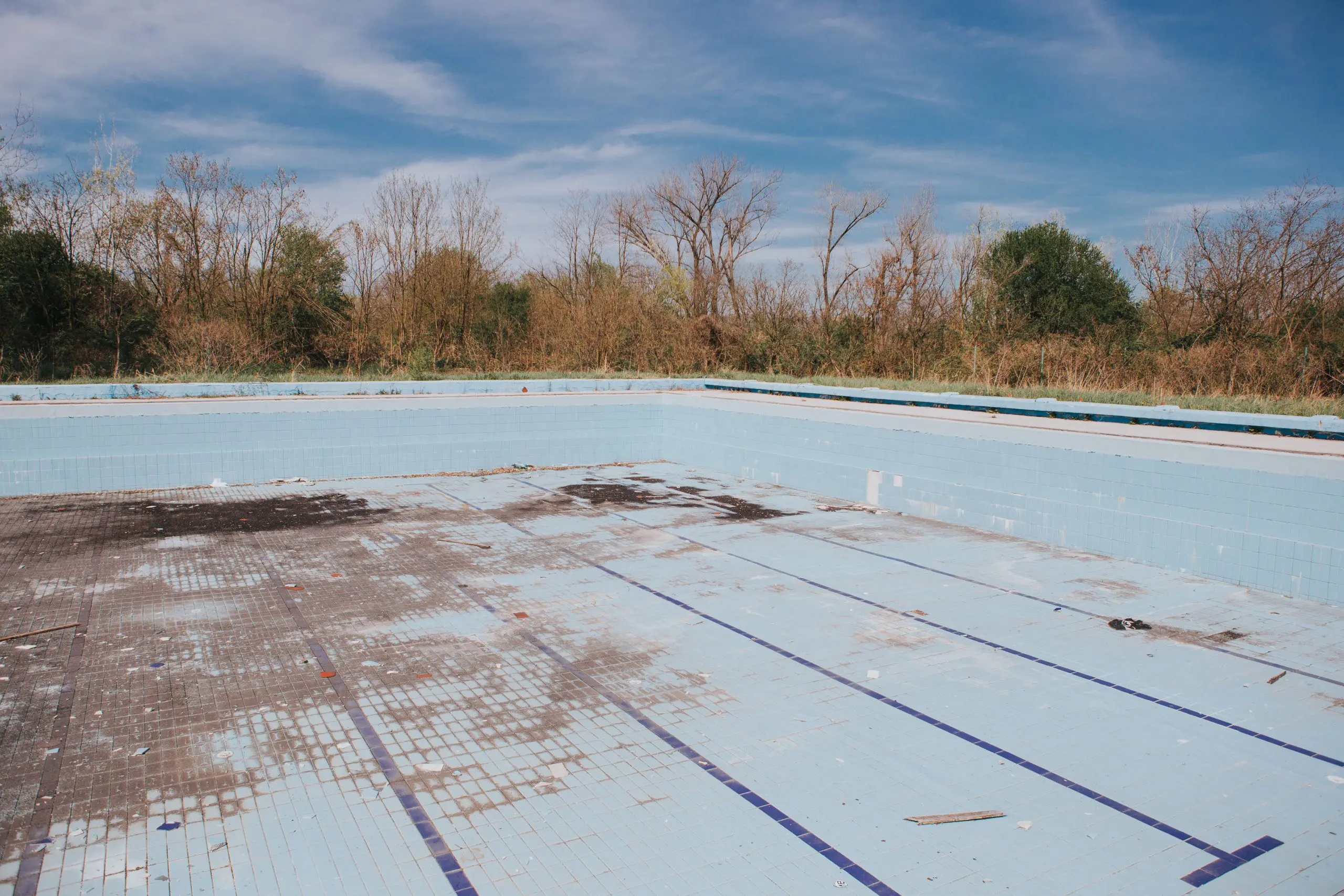
The problem with waiting too long is not just aesthetic. A deteriorating surface becomes porous, which creates hiding places for bacteria and algae that routine chemical treatment can’t fully address. It also creates rough textures that can injure guests — and that’s where regulatory exposure enters the picture.
The Florida Regulatory Dimension
In Florida, commercial pool regulation is more stringent than most operators realize. HOA and condominium pools fall under the public pool definition at Florida Administrative Code Rule 64E-9 — meaning they face the same permitting and inspection requirements as hotel pools.
This matters for resurfacing decisions because surface condition is not just an aesthetic or maintenance issue — it’s a compliance issue. Health inspectors evaluate:
- Surface texture (must not be abrasive or hazardous)
- Visible cracks or damage
- Depth markings (must be legible and durable)
- ADA-compliant access and entry features
- Slip resistance of deck and pool surfaces
A surface that passes a visual check from the pool deck may not pass a formal inspection. And a failed inspection in peak season — with forced closure — is a business problem that far exceeds the cost of proactive resurfacing.
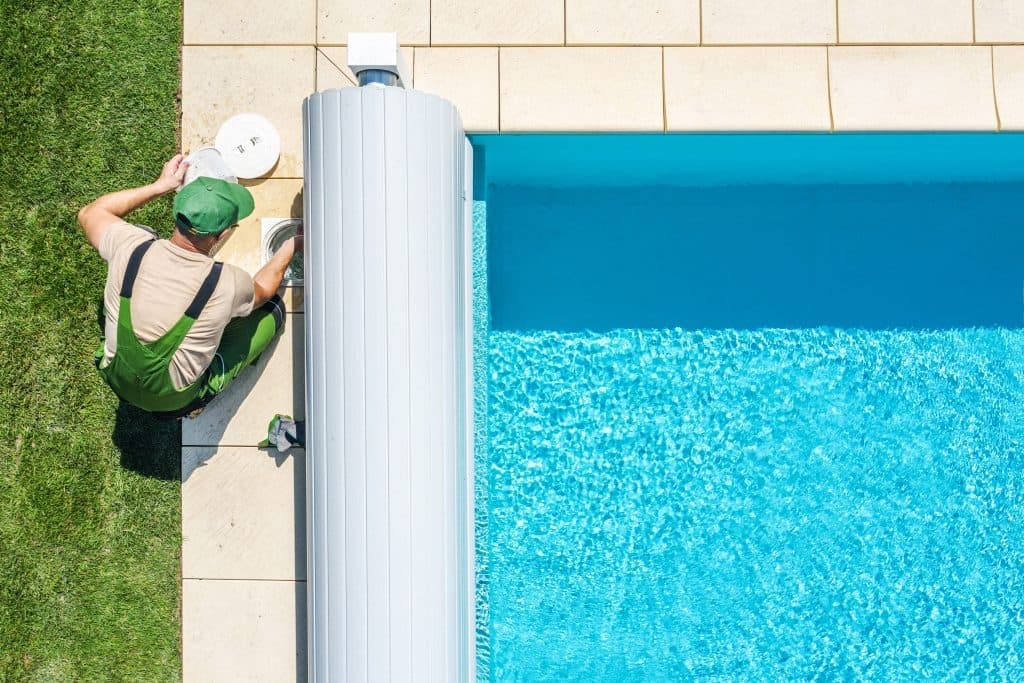
commercial pool inspection Florida compliance — HOA hotel pool resurfacing
The Downtime Problem — and How to Minimize It
For any commercial property, pool downtime has a direct operational cost. A hotel pool closed during peak season affects guest satisfaction scores and online reviews. An HOA pool unavailable over a holiday weekend creates friction with residents that doesn’t go away quickly.
Managing this well requires two things: planning ahead and working with a contractor who understands operational constraints.
Here’s what minimizing downtime looks like in practice:
- Schedule during your slow season: For most Florida properties, that means fall or early winter — when pool usage is lowest and the resurfacing window has the least impact
- Get a realistic timeline upfront: Most commercial resurfacing projects take 10 to 14 business days. Any contractor who gives you a shorter estimate without knowing your pool’s condition is not giving you a real answer
- Plan the communication: Residents and guests who know the pool will be closed — and for how long — are far more understanding than those who find it closed unexpectedly
D&J The Pool Resurfacers works with commercial clients across Central Florida and Florida’s east coast. We build our project scheduling around your operational calendar, not ours.
What Makes Commercial Resurfacing Different in Practice
Beyond scheduling, commercial pool resurfacing requires specific technical considerations that residential projects don’t:
Material Selection for High-Traffic Durability
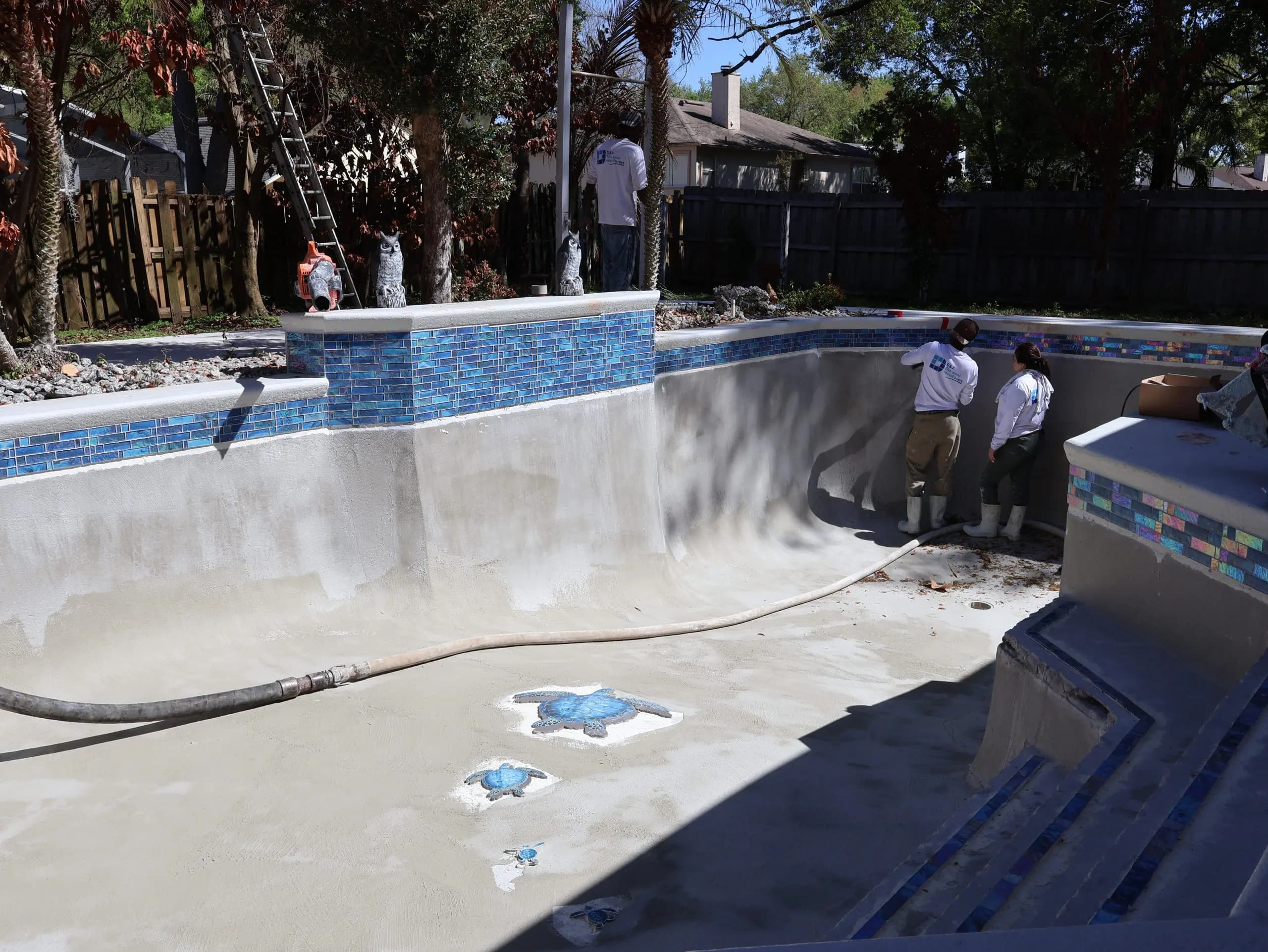
Not all pool finishes are appropriate for commercial applications. Standard plaster, while fine for residential use, deteriorates faster under the chemical load and physical traffic of a commercial pool. Premium aggregate finishes — particularly PebbleTec, which D&J has been certified to install for over 25 years — are specifically engineered for durability under sustained high-use conditions.
ADA Compliance Integration
Commercial pool resurfacing is the right time to address ADA accessibility requirements: proper depth markings, slip-resistant surfaces, pool lift anchors, and compliant entry and exit features. A qualified contractor will assess these during the initial inspection and integrate compliance work into the project scope — not add it as an afterthought.
Water Quality Improvement
A new surface eliminates the porous patches and micro-cracks that harbor algae and bacteria in aging commercial pools. Property managers often report that water quality becomes noticeably easier to maintain after resurfacing — requiring fewer chemicals and less frequent intervention to keep levels balanced.
The Cost of Waiting Too Long
Reactive pool maintenance — addressing surface problems after they’ve become failures — is consistently more expensive than proactive resurfacing. The repair costs are higher, the timeline is less controllable, and the downtime happens on the contractor’s schedule rather than yours.
For commercial operators, there’s an additional cost: every day of unexpected pool closure during peak season has a measurable impact on guest or resident experience. The operators who manage their pools most effectively treat resurfacing as a planned capital expenditure — scheduled in advance, budgeted for, and executed during the lowest-impact window.
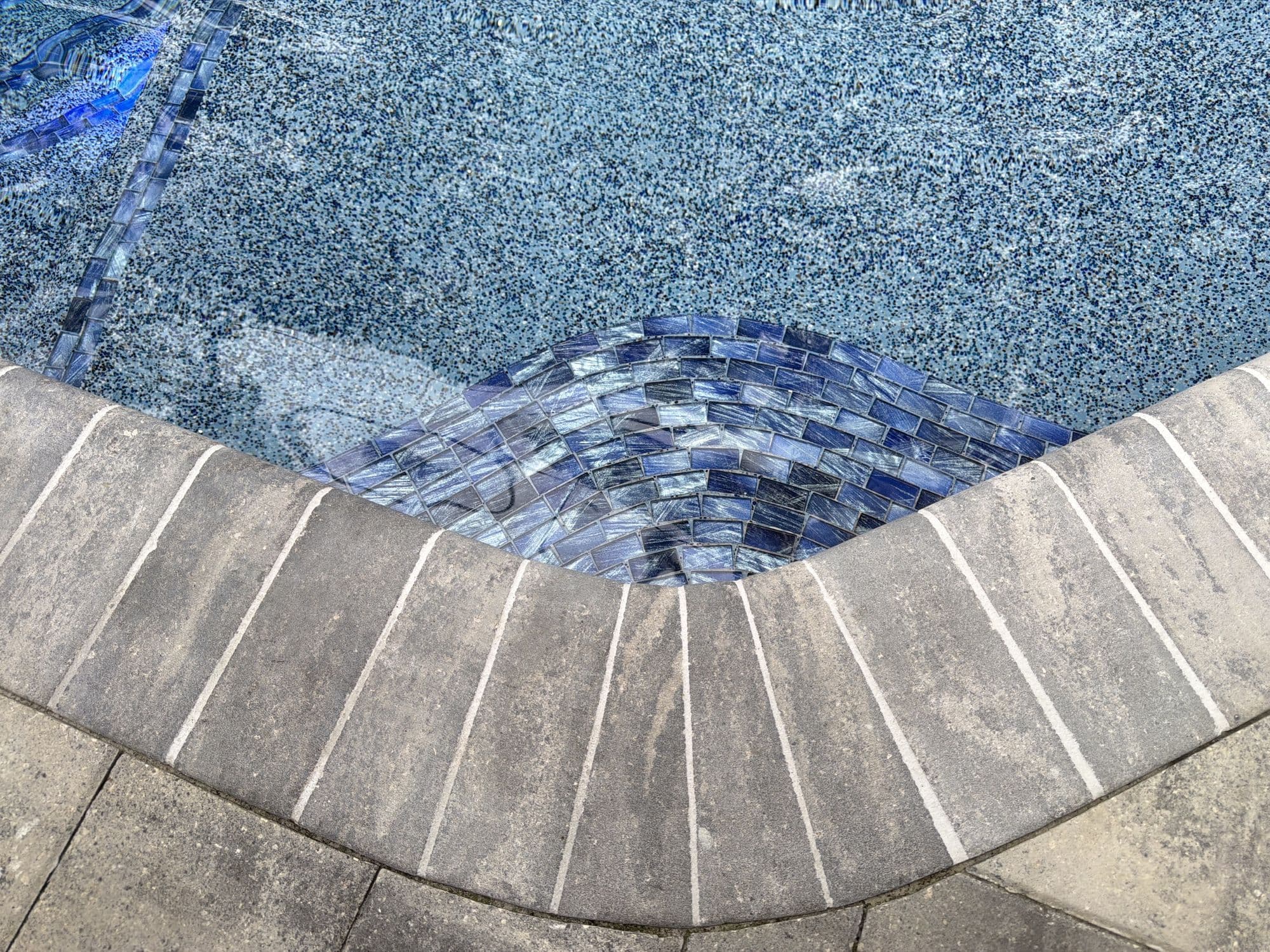
our commercial pool resurfacing and renovation services
Warning Signs Your Commercial Pool Needs Resurfacing Now
If you’re not sure whether your pool’s surface has reached the end of its useful life, look for these indicators:
- Surface feels rough or abrasive to swimmers
- Visible cracking, chipping, or flaking material
- Staining that doesn’t respond to chemical treatment
- Water loss that exceeds normal evaporation
- Faded or uneven color across the pool interior
- Guest or resident complaints about the pool surface
- Approaching or past the 7-year mark on plaster, or 10 years on aggregate
Any combination of these is reason for a professional assessment — not necessarily a full resurface, but a clear answer on where your pool stands.
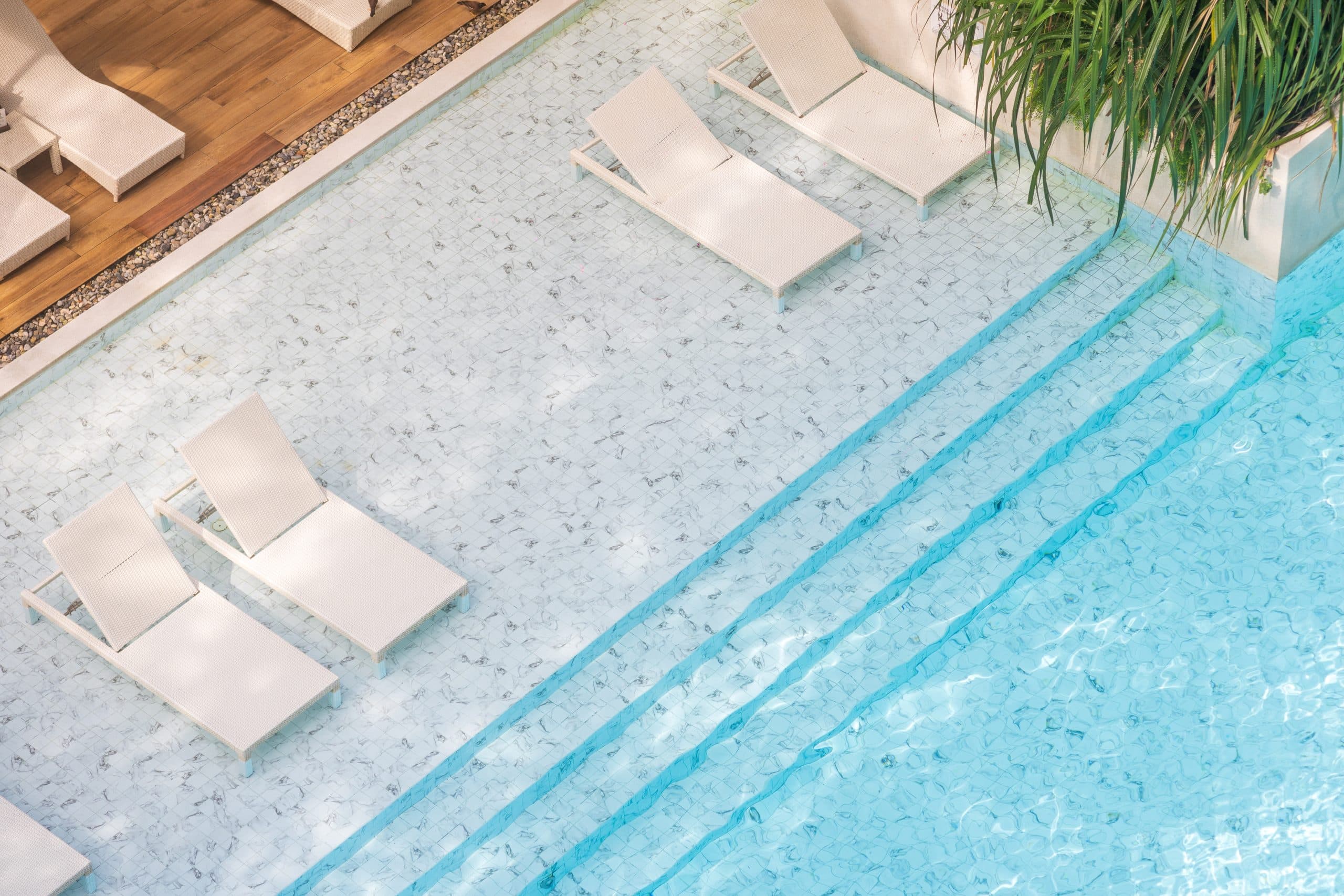
PebbleTec commercial pool finish Florida — high-traffic pool resurfacing
Plan Your Commercial Resurfacing Before It Plans You
The best commercial pool resurfacing projects are the ones that happen on a schedule the property chose — not the one damage forced. If your pool is showing signs of wear, or you’re approaching the end of your surface’s expected lifespan, now is the time to get a professional assessment and plan the project on your terms.
D&J The Pool Resurfacers works with hotels, HOA communities, condominiums, and commercial facilities across Central Florida and Florida’s east coast. We’re certified PebbleTec applicators with over 25 years of experience in high-performance surface installation — and we understand the operational constraints of managing a commercial property.
Call (321) 360-4867 for a free commercial estimate — or contact us at dandjthepoolresurfacers.com/en/contact-pool-resurfacing-in-orlando/
Written and reviewed by
D&J The Pool Resurfacers
A Florida-licensed pool contractor and certified PebbleTec applicator that resurfaces, remodels and builds pools across Central Florida, working with pebble, quartz and polished finishes.
- Florida Certified Pool/Spa Contractor
- CPC1459797 · Verify the license on MyFloridaLicense.com
- PebbleTec
- Certified PebbleTec applicators
- Last updated
Why trust this article: it’s written by the licensed crew that does this work in Central Florida, and it only states what we do on our own jobs — pebble, quartz and polished finishes. More about D&J