How Long Does Pool Resurfacing Take in Florida?
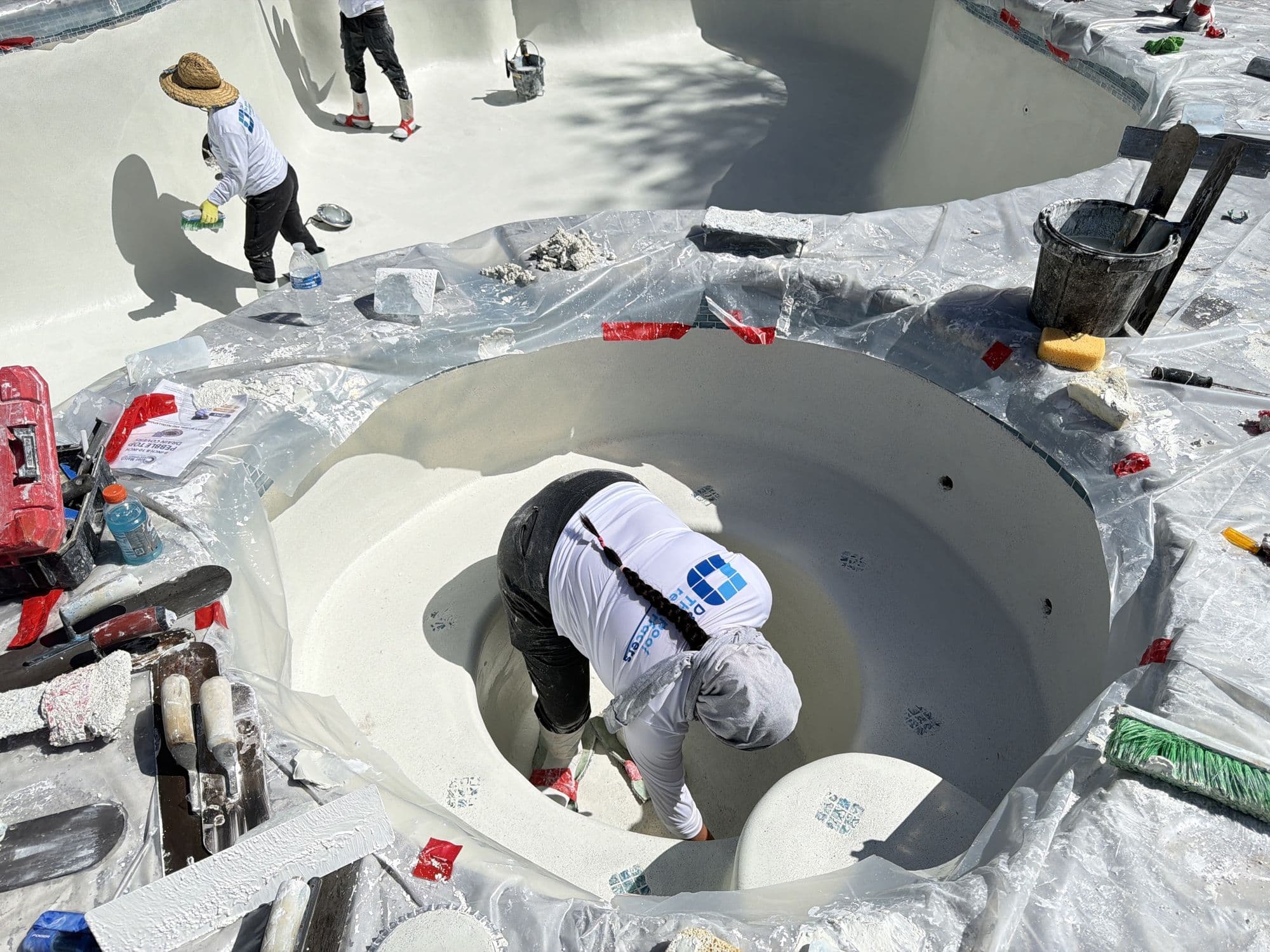
One of the most common questions homeowners ask before starting a pool renovation is simple: how long will I be without my pool?
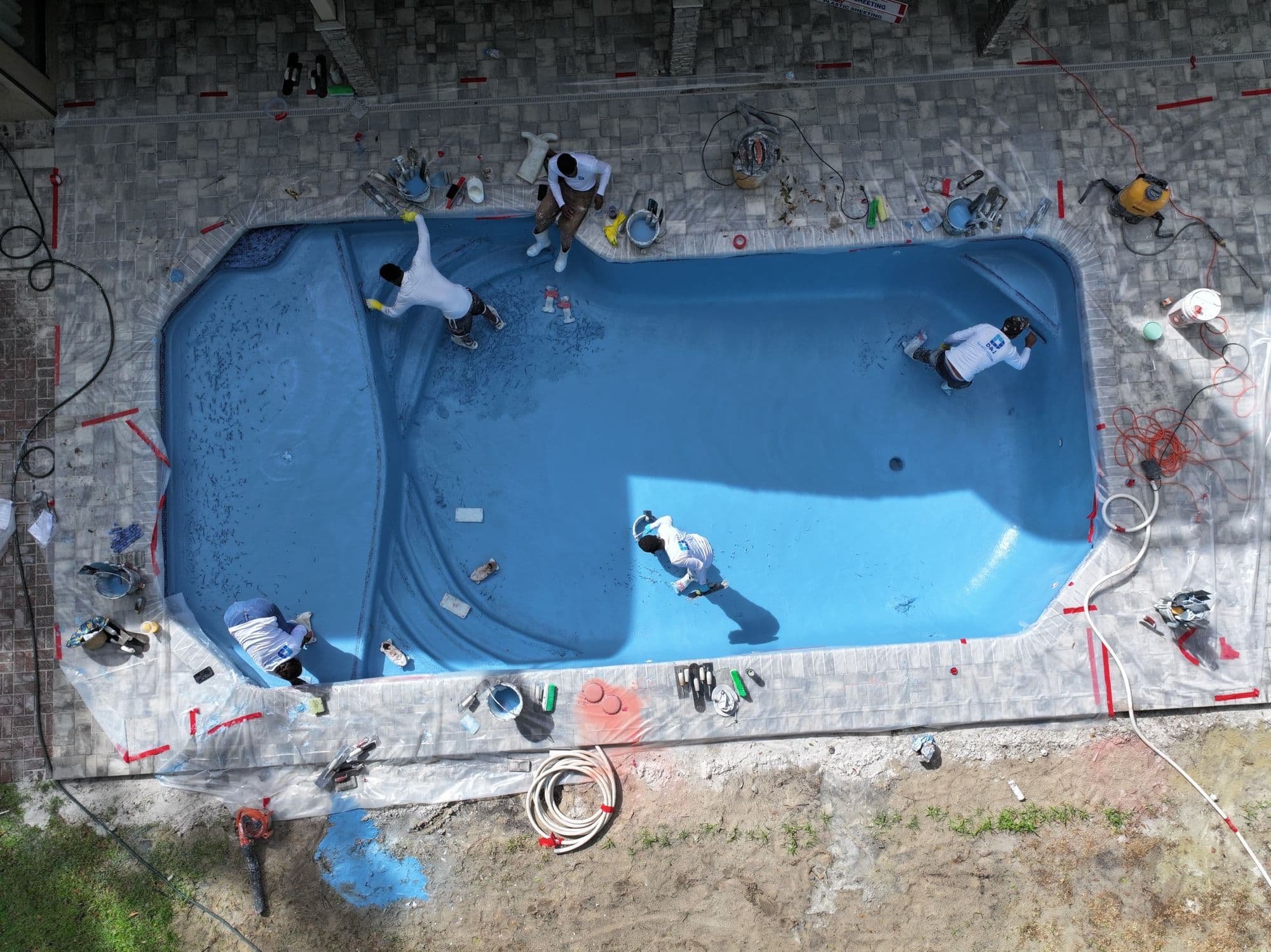
In Florida, where pools are used almost year-round, downtime matters. Whether you're preparing for summer or fixing surface damage, understanding the timeline helps you plan better and avoid frustration.
Pool resurfacing is a structured process that involves draining, preparation, surface removal, repair, application of a new finish, curing, and refilling. Each stage has a specific purpose and timeline. Most homeowners are surprised to learn that the actual application is only a small part of the total process — the majority of time goes into preparation and curing to ensure long-term durability.
In Central Florida, weather conditions such as humidity and rain can slightly impact timing, which is why working with experienced contractors is essential.
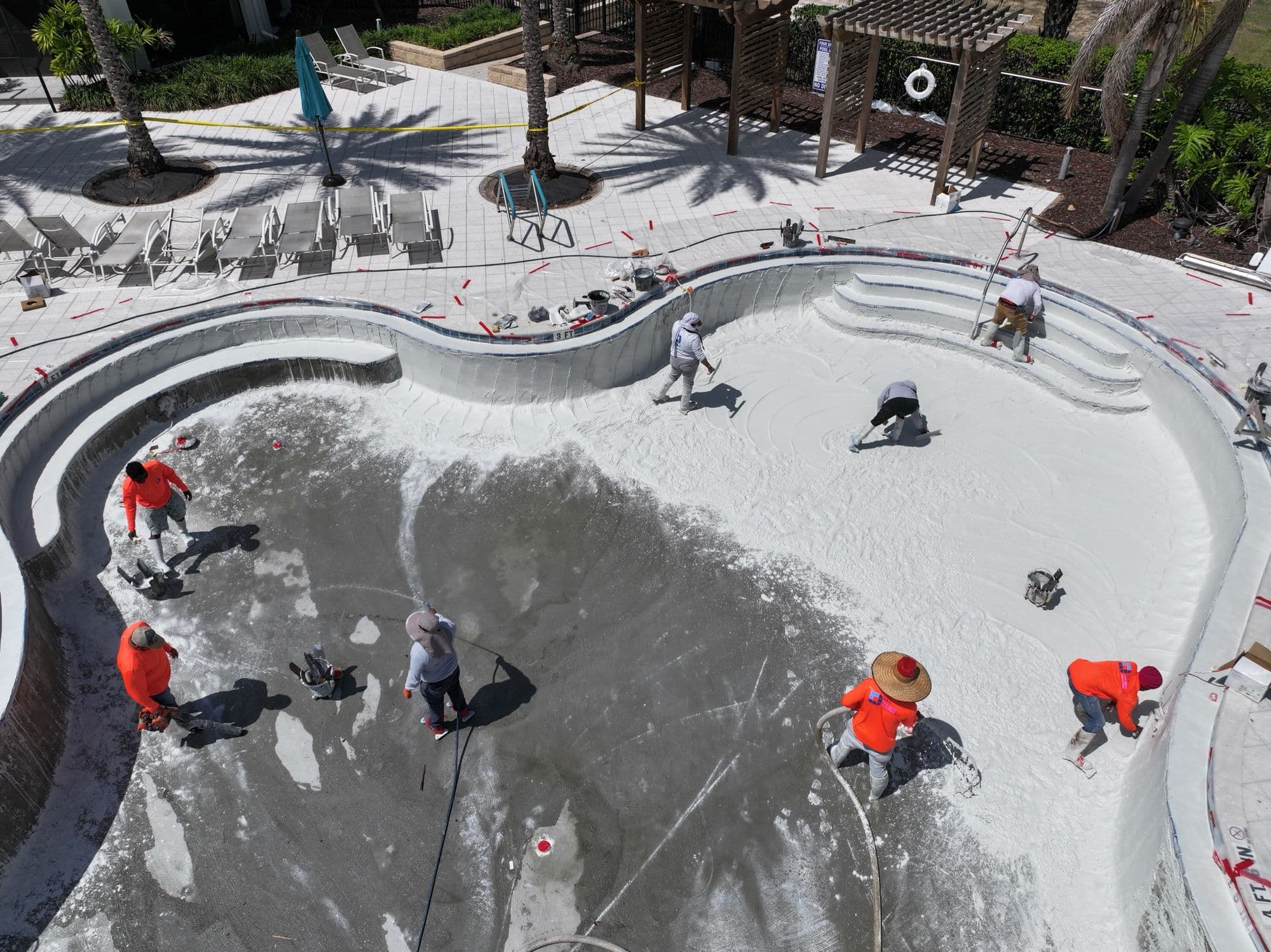
Quick answer: Pool resurfacing in Florida typically takes 5–7 days from start to finish. The surface application takes 1–2 days, while the remaining time is used for preparation, curing, refilling, and water balancing.
Step-by-Step Pool Resurfacing Timeline: What's Actually Happening to Your Pool Each Day
Most homeowners picture this process as "a few days of work." That's true — but only for part of it. What nobody explains clearly before the project starts is that the physical work and the full process are two completely different timelines. Here's what actually happens, in order.
DAY 1The pool comes out of service
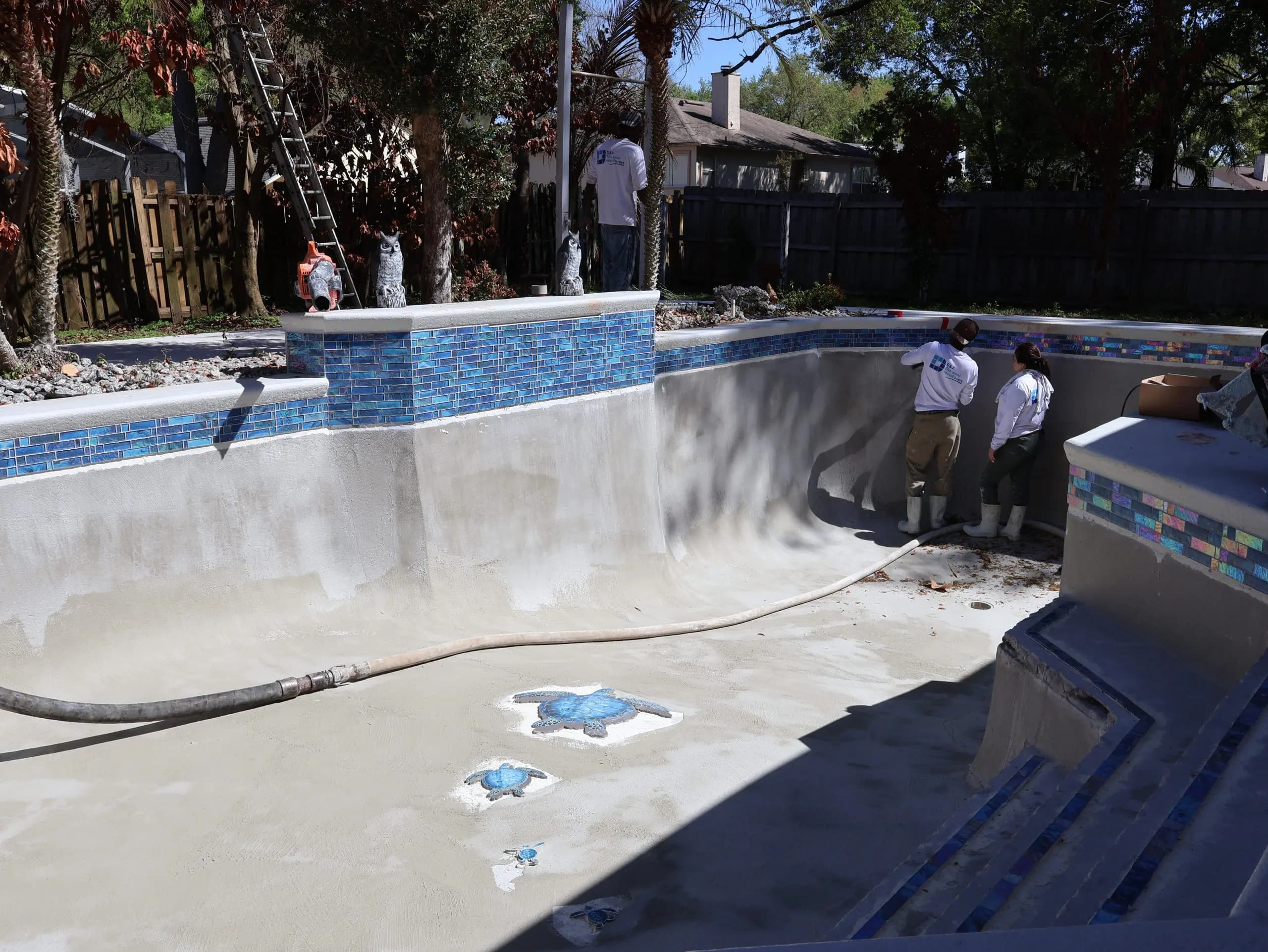
The pool is drained completely and the old surface is removed down to the concrete shell. Once the shell is exposed, its true condition is visible for the first time — cracks, delamination, or deterioration that weren't visible through the old finish show up now.
DAY 2–3The shell gets prepared
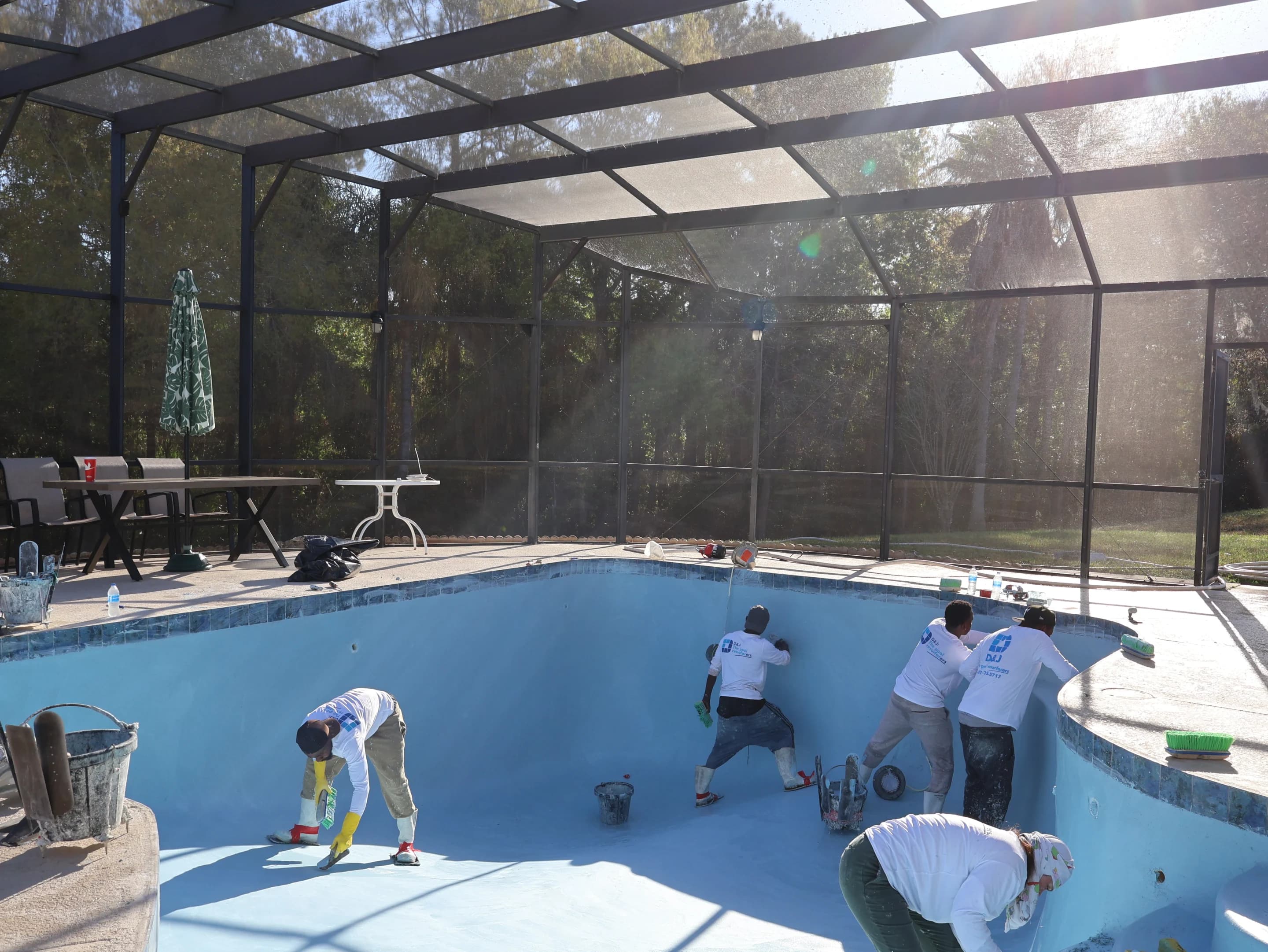
Any repairs to the shell are completed. The surface is cleaned, profiled, and treated so the new finish bonds correctly. This phase moves faster on pools in good structural condition and slower on pools that need more repair work than expected.
DAY 3–4The new finish goes on
PebbleTec, Quartz, or plaster is applied. For PebbleTec and Quartz, this requires certified applicators — D&J holds that certification. Application is typically completed in one working day for a standard residential pool.
DAY 4–6The fill begins
After a brief initial cure window, the pool starts filling. Once the water starts going in, it doesn't stop — interrupting the fill can leave a permanent waterline mark on a fresh surface. A standard Central Florida pool fills in 12 to 24 hours.
WEEK 2–5The startup runs
The pool is full, the crew is gone, and the process is still not finished. The chemical startup — four weeks of active water chemistry management — begins the moment the pool is full. Most homeowners can get in around week two if the startup is progressing correctly.
That's the real timeline: not a few days, but five to six weeks total from the first day of work to the first swim — with the most important phase happening after the crew has already left.
Why Curing Time Is the Phase That Decides Whether Your Investment Lasts 5 Years or 25
The pool is full, the water is blue, the new surface looks exactly like you hoped — and someone just told you that you still can't swim. This is the moment that frustrates almost every homeowner who goes through a resurfacing project for the first time. The pool looks done. But the surface isn't finished doing what it needs to do.
A new pool finish — whether PebbleTec, Quartz, or traditional plaster — is a cementitious material. It doesn't stop curing when the crew leaves. It continues to harden and bond after the water goes in, releasing minerals into the water as it cures, while the water chemistry simultaneously conditions the surface from the outside in. If that interaction isn't managed, the problems show up fast and stay.
Calcium scaling that forms on a fresh surface during an improperly managed startup is significantly harder to remove than scaling on a mature surface — because the surface is still hardening and more vulnerable to the aggressive treatments needed to remove it. Staining that develops in the first two weeks can become permanent in ways that staining on a three-year-old surface wouldn't.
This is why daily brushing during the first week to ten days is not optional. It's part of the curing protocol — it helps the surface harden evenly, prevents calcium from concentrating in one area, and keeps the water moving for consistent chemistry throughout the pool. The curing period isn't a delay. It's the foundation of everything that comes after.
What Can Delay Pool Resurfacing — and Why Good Delays Are Worth It
Nobody wants to hear that their project is taking longer than expected. But in Florida pool resurfacing, not all delays mean something went wrong — some of them mean something went right.
What the shell reveals when the old surface comes off
This is the most common source of unexpected timeline extension — and the most legitimate one. The shell can only be fully inspected once it's exposed. When a contractor finds structural issues and takes the time to address them properly before applying a new surface, the project takes longer. It also produces a result that lasts.
Florida's afternoon storms
The application phase requires a weather window. Rain hitting a fresh finish before it has set can cause streaking, uneven texture, and adhesion issues that don't become visible until the pool is full. D&J monitors forecasts during every active project and adjusts the schedule if a system is developing — one reason the dry season produces more predictable timelines.
Chemistry complications during startup
A significant rain event during startup, an unexpected interaction with Central Florida's hard water, or a surface releasing more minerals than typical can extend the time before the pool is cleared for swimming. The startup isn't a fixed 28-day countdown — it's a process with a target: a fully stabilized surface and balanced water chemistry.
How Florida Weather Changes the Rules at Every Phase of Your Project
This is the variable that catches homeowners who've had pools in other states completely off guard. Florida doesn't just have weather — it has weather that rewrites the conditions of a pool resurfacing project at every single phase.
During application
High humidity slows the initial surface cure and can cause inconsistent bonding if it isn't accounted for. Florida's dry season (October–February) provides the conditions where PebbleTec and Quartz finishes cure most consistently.
During the fill
Water temperature, evaporation rate, and initial mineral load all shift with the season. A pool filling in January starts with different chemistry than a pool filling in July.
During startup
Central Florida's hard water — high in calcium and minerals — combined with intense UV and year-round temperatures creates a startup environment that demands more active management than most of the country.
During curing
Florida's UV intensity accelerates surface hardening while increasing evaporation load. A pool losing water faster than expected during startup may need water added to maintain chemistry balance — expected in Florida, manageable with experience.
The short version: every phase of this project is more demanding in Florida than in most states. That's a reason to hire a contractor who has been managing these specific variables — in Orlando, in Kissimmee, in Saint Cloud — for over a decade.
Can You Speed Up Pool Resurfacing? The Honest Answer Nobody Gives You
It's one of the most common questions we hear, especially from homeowners working backward from a specific date. The honest answer has two parts.
What can be legitimately compressed
Scheduling efficiency. A well-organized contractor with a solid crew moves through draining, removal, repairs, and application without unnecessary gaps between phases. A project run well moves at the pace the work requires — not faster, not slower.
What cannot be compressed without consequences
The curing period, the startup, and the daily brushing schedule during the first two weeks. Adding excess chemicals to accelerate the startup doesn't speed up curing — it stresses a surface that is still hardening and can cause staining or scaling on a brand-new finish. The homeowners who rush the startup are the ones who call us six months later wondering why the surface that was supposed to last 15 to 20 years is already showing problems.
The actual fastest path to swimming: schedule during the dry season. Weather delays disappear, humidity conditions support faster, more consistent curing, and the startup runs without rain events disrupting the chemistry. If you have a specific date in mind, call D&J early — a project that had room to cure properly is always faster, in the end, than one where something was rushed and had to be redone.
"The call I dread most is the one that comes six months after a project — not from one of our clients, but from a homeowner whose pool was resurfaced by someone else. The surface is already showing problems. Scaling, discoloration, texture that doesn't feel right. And when I ask about the startup, they say the same thing every time: 'The contractor said we could swim after a week.' That's the moment the project failed — not during the application, during the curing phase, when someone decided the four weeks were optional.
I've been doing this work in Orlando and across Central Florida since 2014. The pools that last — the ones that still look and feel exactly right ten or fifteen years later — are the ones where the startup was managed the way it needed to be. Daily brushing. Frequent chemistry checks. No shortcuts. The curing phase isn't the part of the project that happens after the work is done. It's the part of the project that determines whether the work was worth doing."
Mauro — Owner, D&J The Pool Resurfacers · Licensed Contractor CPC1459797 · Certified PebbleTec Applicator · FSPA Member · NPC Member
Step-by-Step Pool Resurfacing Timeline
Draining, surface removal, repairs, application, curing, and refilling each take specific time depending on pool condition.
Why Curing Time Is Important
Curing ensures the new surface bonds properly, preventing early damage and extending lifespan.
What Can Delay Pool Resurfacing?
Weather, structural repairs, and material selection can affect the total timeline.
How Florida Weather Impacts the Process
High humidity and rain can slightly extend drying and curing times.
Can You Speed Up Pool Resurfacing?
Not without risking quality. Proper timing ensures long-term durability.
Common Mistakes Homeowners Make
- Expecting overnight completion
- Ignoring weather impact
- Choosing speed over quality
- Not planning downtime
FAQ
Can you swim immediately after resurfacing?
No, curing and balancing are required.
What is the fastest pool resurfacing time?
Around 5 days under ideal conditions.
Does PebbleTec take longer to cure?
Yes, slightly longer than plaster.
Is pool resurfacing messy?
Yes, but professional contractors manage cleanup.
Can I stay home during resurfacing?
Yes, the process is non-invasive.
Plan Your Pool Project with Confidence Know exactly what to expect before you start.
Written and reviewed by
D&J The Pool Resurfacers
A Florida-licensed pool contractor and certified PebbleTec applicator that resurfaces, remodels and builds pools across Central Florida, working with pebble, quartz and polished finishes.
- Florida Certified Pool/Spa Contractor
- CPC1459797 · Verify the license on MyFloridaLicense.com
- PebbleTec
- Certified PebbleTec applicators
- Last updated
Why trust this article: it’s written by the licensed crew that does this work in Central Florida, and it only states what we do on our own jobs — pebble, quartz and polished finishes. More about D&J