When Is the Best Time to Resurface a Pool in Florida?
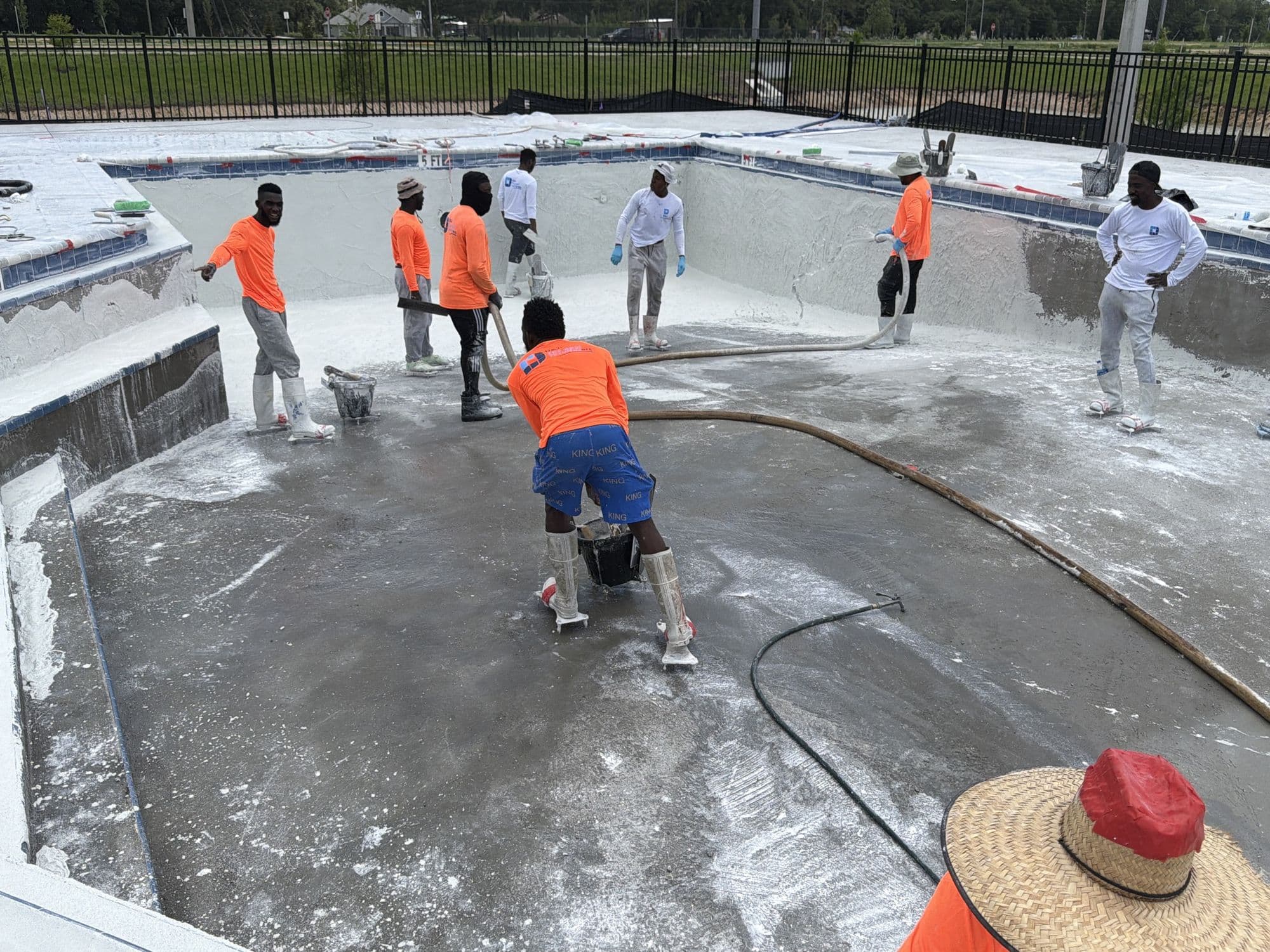
Most homeowners in Orlando don't think about timing until they're already frustrated.
The plaster is rough. The color is gone. Maybe the water won't stay clear no matter what chemicals you throw at it. So you call a contractor, you want it done, and the last thing on your mind is what month it is.
Here's the thing: in Florida, the month matters more than almost anywhere else in the country.
At D&J The Pool Resurfacers, we've been completing pool resurfacing, pool remodeling, and pool construction projects across Orlando, Kissimmee, and Saint Cloud since 2014 — license CPC1459797, certified PebbleTec applicators. We've seen what Florida weather does to a resurfacing project when the timing is wrong. We've also seen what it looks like when everything goes right.
This article is the honest version of that conversation — the one we have with homeowners before they book, not after something goes sideways.
Quick answer: The best time to resurface a pool in Florida is between October and February. Lower humidity and stable temperatures let PebbleTec and Quartz finishes cure correctly, and the risk of rain interrupting the 3–4 day application process drops significantly. Factor in four weeks of chemical startup, and a project started in November has your pool ready and swimmable well before Florida summer arrives.
Florida Has Two Seasons. One of Them Will Work Against Your Project.
People who move to Florida from other states are always surprised by this. It's not four seasons here. It's essentially two: the dry season and the wet season. And the wet season — June through September — isn't just rainy. It's relentlessly, unpredictably, aggressively rainy in a way that catches even longtime residents off guard.
We're talking about a sky that goes from blue to black in twenty minutes, drops three inches of rain in forty-five, and then clears up like nothing happened. Every single day. For four months straight.
Now picture that hitting a freshly applied pool surface that's in the middle of curing. When D&J applies a new PebbleTec or Quartz finish, that surface is actively bonding and setting for several days. Rain during that window doesn't just delay things — it can streak the surface, cause uneven texture, create discoloration, or compromise adhesion in ways that only become visible weeks later when the pool is full.
And it gets worse after the work is done. The four-week chemical startup that follows a resurfacing project is a precise, controlled process. Every rain event introduces uncontrolled water into that chemistry — shifting pH, diluting treatments, sometimes staining a brand-new surface before a single person has swum in it.
None of this means summer projects are impossible. We complete them. But every summer project carries variables that a dry season project simply doesn't have. And when you're spending real money on your pool, why carry variables you don't have to?
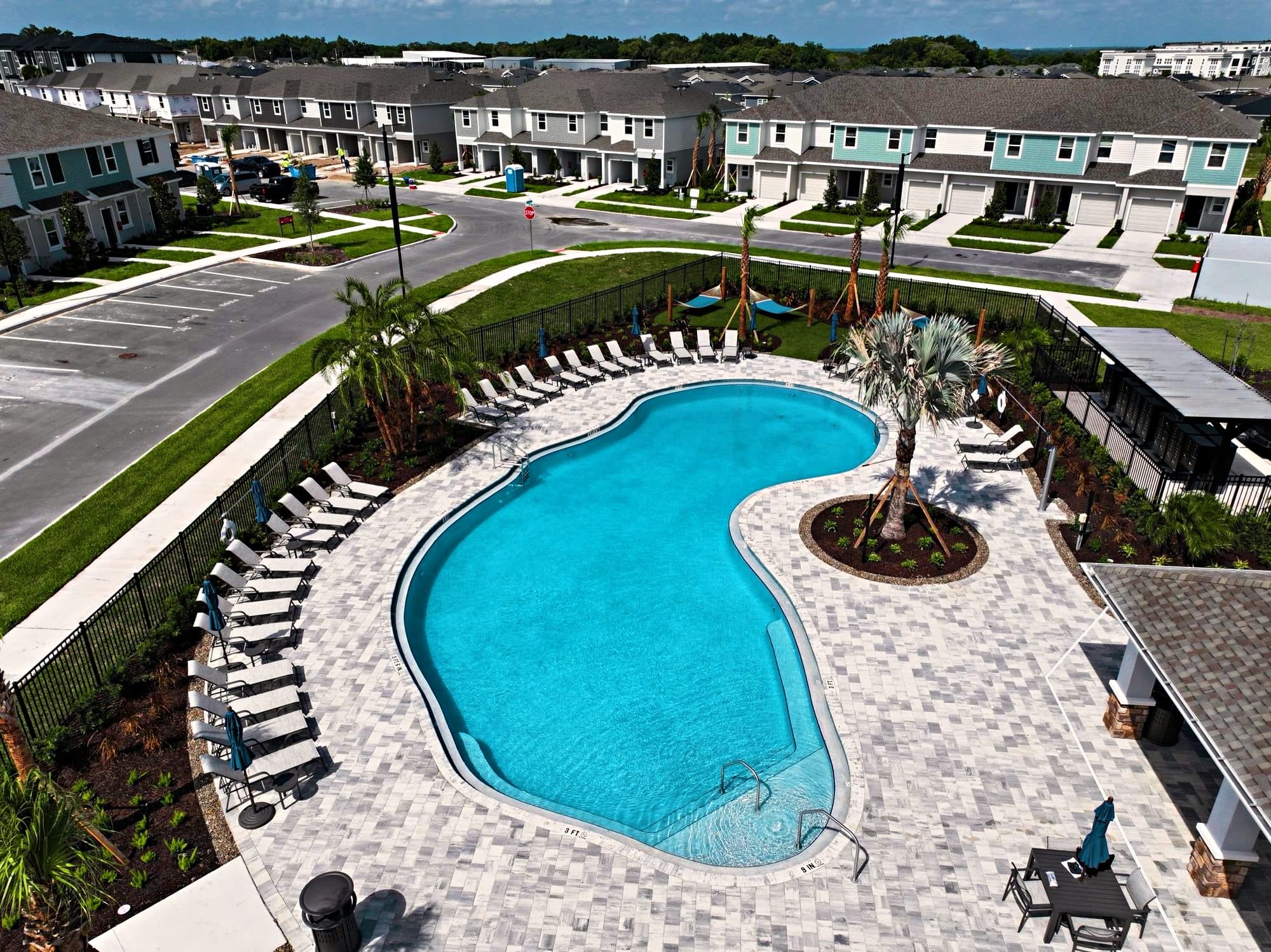
Florida's afternoon storms don't check your contractor's schedule before they arrive.
The Hurricane Question Nobody Thinks to Ask Until It's Too Late
Here's something we hear almost never — and should hear a lot more: "What happens to my resurfacing project if a hurricane comes through?"
Most Central Florida homeowners know we're far enough inland that direct hits are rare. What they sometimes forget is that "rare" isn't "never," and that tropical systems don't have to make landfall in Orlando to cause real problems. Sustained wind, debris, and heavy rain from a system passing offshore can disrupt a pool project significantly — especially if that system arrives at the wrong moment.
If your pool already needs resurfacing and a storm passes through
A deteriorated surface is far more vulnerable than a sound one. Rough plaster traps organic debris. Surface cracks allow chemistry to go haywire. After a significant storm event, getting a pool back to clean, clear, balanced water takes two to three times longer when the surface underneath is compromised.
If you just had your pool resurfaced and a storm comes through
A fully cured PebbleTec or Quartz surface handles storm conditions well — these are durable materials designed for Florida's environment. The concern is timing: if a storm arrives during the first two weeks of the chemical startup, before the surface has fully hardened, you're introducing uncontrolled conditions into a process that needs to be controlled.
What this means practically: if you want to eliminate hurricane season from the equation entirely, a project that starts by mid-April finishes and fully stabilizes before June 1. A project that starts in late November is completely clear of the season from day one.
The Window That Changes Everything: October Through February
Put the rain season and hurricane season together on a calendar, and something becomes obvious. From June 1 to November 30, you're either inside hurricane season, inside rain season, or both — six months of the year where Florida's weather is actively working against a pool resurfacing project.
October through February is the other side of that equation. Humidity drops to levels Central Florida residents barely recognize from summer. Afternoon storms essentially disappear. The sky stays clear for days at a time, which means a 3–4 day application process can run without a single weather interruption.
There's a practical bonus: demand for resurfacing work peaks in the summer, so the October–February window typically has better contractor availability, more flexibility on scheduling, and — in many cases — faster turnaround from first call to project completion.
A project started in November, with four weeks of chemical startup, has the pool ready in December. A project started in January has the pool ready in February, well before spring break.
The Cost of Waiting One More Season
Pool surfaces don't deteriorate at a steady rate. They deteriorate faster as the damage compounds. What starts as rough texture becomes delamination. What starts as minor discoloration becomes surface cracks. What starts as chemistry that's slightly hard to balance becomes chemistry that simply won't hold.
Every summer that passes on a surface that needs resurfacing is another season of Florida heat, UV, and rain working on a structure that's already losing the fight. There's no right time to tell a homeowner this — but there is a right time to act on it, and that window opens in October.
Common Mistakes Florida Homeowners Make When Timing Pool Resurfacing
#1Booking in July because that's when the problem is most visible
Summer is when you're in the pool every day and the deterioration is impossible to ignore. It's also the worst possible time to start work. Use that moment to start the conversation — not to schedule the project.
#2Waiting to see how hurricane season goes before deciding
Post-hurricane demand for contractors spikes across every home service category. Homeowners who wait until October find November and December already booked. Those who called in August are the ones on the schedule.
#3Forgetting the four weeks after the work is done
Hands-on work takes 3–4 working days. Counting the chemical startup, the pool is swim-ready about a month and a half after the first day. If you want the pool ready by mid-March, the project needs to start by the end of January at the latest.
#4Assuming all finishes work the same way in Florida heat
PebbleTec and Quartz finishes have specific curing requirements and perform best in stable, lower-humidity conditions. Protecting a PebbleTec investment — which carries a 25-year manufacturer warranty — starts with choosing the right season to apply it.
"People call us in July wanting it done by August, and I get it — you're frustrated, the pool looks terrible, and you just want it fixed. My job isn't to talk you out of doing the project. My job is to make sure the project turns out the way it should. The honest truth is that Florida summer gives us more variables to manage. We handle all of it. But when someone calls us in September and says they want to get on the October schedule, everything is cleaner: the application, the curing, the startup, the result. I've been doing this work in Orlando, Kissimmee, and Saint Cloud since 2014. The pools that give us the most consistent results are the ones where the weather was on our side. And in Florida, that means October through February. Every time."
D&J The Pool Resurfacers · Licensed Contractor CPC1459797 · Certified PebbleTec Applicator · FSPA Member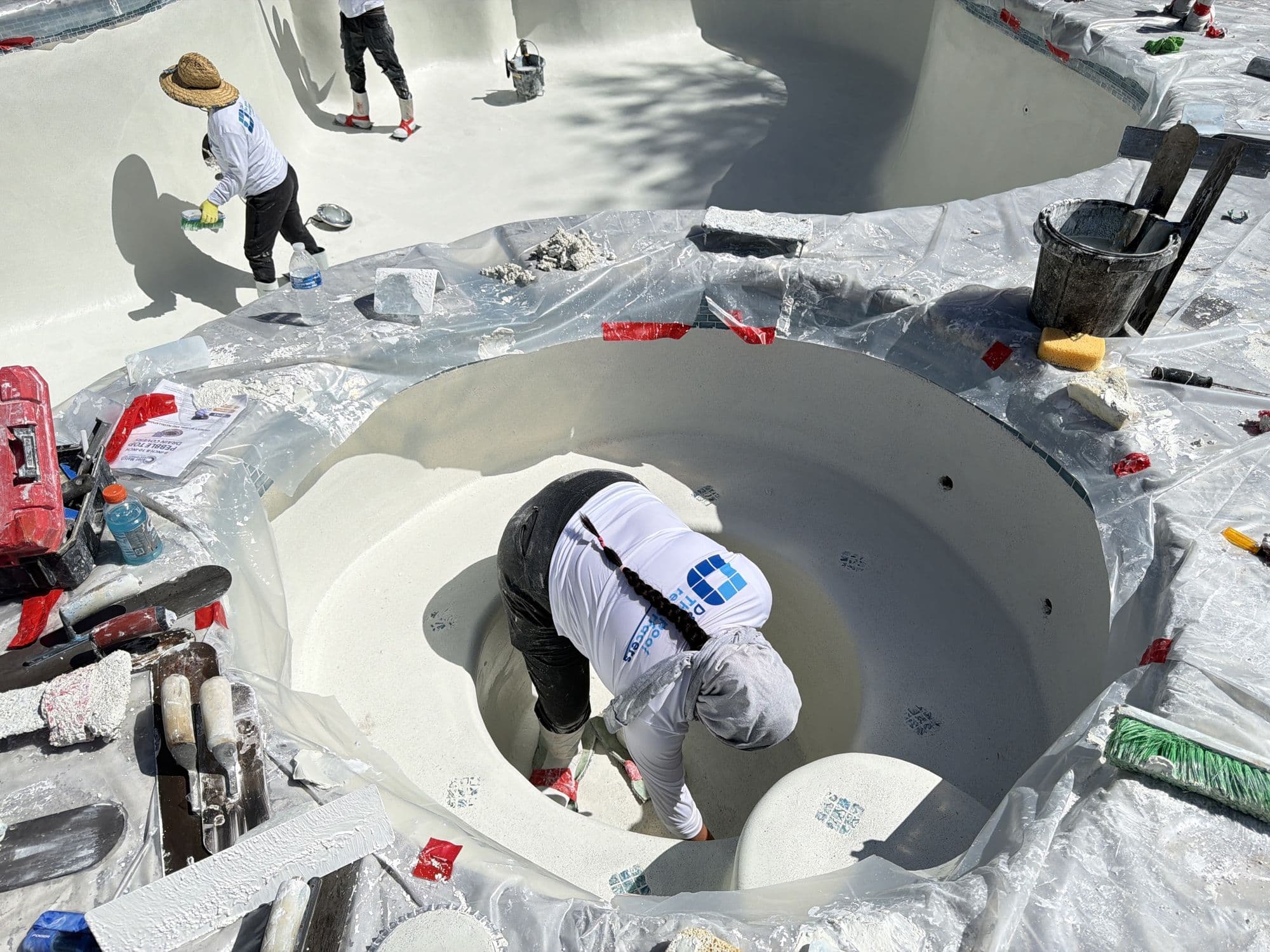
Frequently Asked Questions
What is the best time of year to resurface a pool in Florida?
October through February is the optimal window. Humidity drops, the rainy season ends, and hurricane season is over — allowing PebbleTec and Quartz finishes to cure evenly, with fewer weather interruptions than Florida summer can guarantee.
Can I resurface my pool during hurricane season?
Yes, and we do it. But hurricane season runs June 1 through November 30, and a tropical system arriving during application or the first two weeks of startup introduces real complications. Completing the project before June or starting after late November removes that variable.
How long after resurfacing can I swim in my pool?
Hands-on work takes 3–4 working days. Counting the chemical startup, most homeowners can swim about a month and a half after the first day of work. Build your timeline backward from any target date.
Does rain during pool resurfacing cause permanent damage?
Rain on a fresh, uncured surface can cause streaking, discoloration, and uneven texture. Whether it causes lasting damage depends on timing and volume — one of the main reasons we schedule around weather windows.
Does the type of pool finish affect the best time to resurface?
Yes. PebbleTec and Quartz benefit most from stable, lower-humidity curing conditions — exactly what Florida's dry season provides. Plaster is somewhat more forgiving, but all concrete-based finishes perform better outside the June–September rain window.
How far in advance should I contact D&J to schedule a dry season project?
August or September is ideal for October or November scheduling. The dry season window books faster than most homeowners expect, and calling early gives you time to consider adding pool remodeling work alongside the resurfacing.
What happens if I delay resurfacing through another summer?
The surface gets harder to recover — rough plaster traps more debris, chemistry becomes harder to balance, and minor cracks become structural concerns. Every summer on a compromised surface is another season of damage.
Ready to Get on the October Schedule? Serving Orlando, Kissimmee & Saint Cloud.
Written and reviewed by
D&J The Pool Resurfacers
A Florida-licensed pool contractor and certified PebbleTec applicator that resurfaces, remodels and builds pools across Central Florida, working with pebble, quartz and polished finishes.
- Florida Certified Pool/Spa Contractor
- CPC1459797 · Verify the license on MyFloridaLicense.com
- PebbleTec
- Certified PebbleTec applicators
- Last updated
Why trust this article: it’s written by the licensed crew that does this work in Central Florida, and it only states what we do on our own jobs — pebble, quartz and polished finishes. More about D&J