HOA Pool Resurfacing in Orlando: The Approval Process, the Rules, and How to Get It Done
Your pool needs resurfacing. You know it. Anyone who's run their hand along the wall lately knows it.
But you live in an HOA — and the moment you started looking into it, someone mentioned you need approval first. Maybe it was a neighbor. Maybe it was the first contractor you called. Maybe you found it buried in a document you hadn't read since closing day.
Now you're not just thinking about resurfacing a pool. You're thinking about forms, board meetings, timelines, and the very real possibility that someone on a committee tells you no.
Here's what we've learned after eleven years of completing pool resurfacing, pool remodeling, and pool construction projects across HOA communities in Orlando, Kissimmee, and Saint Cloud: the process is manageable. It just has to be done in the right order, with the right documentation, before a single day of work begins.
This article walks you through exactly how it works — the approval process, the rules that matter, the mistakes that get requests denied, and how to put together a submission that gets a yes. D&J The Pool Resurfacers holds license CPC1459797 and is a certified PebbleTec applicator.
Quick answer: Yes, you can resurface your pool if you live in an HOA in Florida — but most communities require written approval before any work begins. You'll typically need to submit a request to your HOA's Architectural Review Committee with your contractor's license and insurance, the materials and finish colors you've selected, and a project timeline. D&J helps our clients put that documentation together before we ever schedule a start date.
The Question Every HOA Homeowner Asks First — and the Answer That Saves You Time
"Do I really need approval for this? It's my backyard." It's the most common thing we hear, and it's completely understandable. Resurfacing a pool feels like maintenance — like repainting a fence or replacing a roof shingle.
But in Florida, most HOA governing documents classify pool resurfacing as an exterior alteration or improvement, not routine maintenance. That distinction matters because exterior alterations almost universally require Architectural Review Committee approval before work begins. Not after. Before.
If a contractor starts work without that approval — even a licensed, insured contractor doing quality work — your HOA has the right to issue a stop-work order, require restoration of the original surface, and in some cases fine you for the violation.
The good news is that the approval process, while real, is not designed to stop you from improving your property. It exists to maintain consistency in the community. When you approach it correctly, approval is the expected outcome, not the lucky one.
Step by Step: How the HOA Approval Process Actually Works in Florida
Step 1Read your CC&Rs and architectural guidelines first
Every HOA has governing documents — Covenants, Conditions & Restrictions (CC&Rs) — plus, often, a separate Architectural Review Guidelines document. Read them before you call a contractor, since some HOAs have specific requirements affecting which materials you can choose.
Step 2Choose a contractor who understands HOA requirements
An HOA submission is a package that includes your contractor's license number, proof of insurance, scope of work, materials, and finish color samples. A contractor who has done this before knows what to include.
Step 3Prepare and submit the Architectural Review Request
Typically includes: your name and address, project description, contractor's information and license, materials and finishes selected, color samples, and an estimated timeline. D&J helps our clients prepare this package before submission.
Step 4Wait for the review period
Florida law gives HOA boards a specific window to respond — typically 30 days. If the board doesn't respond within that window, many CC&Rs treat the request as automatically approved.
Step 5Schedule the project once you have written approval
Written approval — not a verbal yes from a neighbor on the board. A formal written response confirming approval. Keep that document; you may need it during or after the project.
What HOA Boards Actually Look At When They Review a Pool Resurfacing Request
HOA Architectural Review Committees are not looking for reasons to say no. They're looking for three things: that the work is being done by a qualified professional, that materials and colors are consistent with community standards, and that the project won't create an ongoing problem for neighboring properties.
The contractor's credentials matter more than homeowners expect
A licensed, insured contractor with a documented track record removes the committee's biggest concern immediately. D&J's license number — CPC1459797 — our FSPA and NPC memberships, and our PebbleTec certification are credentials committees see and move past quickly.
Finish colors are reviewed carefully in communities with strict aesthetic standards
Some HOAs in the Orlando area require pool finishes to fall within a specific color range — typically lighter blues and whites. Choosing a color within your HOA's guidelines before you submit is significantly easier than requesting a revision after a denial.
Scope of work clarity reduces back-and-forth
A submission that clearly describes what's being done, what's not, how long it will take, and how the property will be left at the end of each workday gives the committee everything it needs to approve in one review cycle.
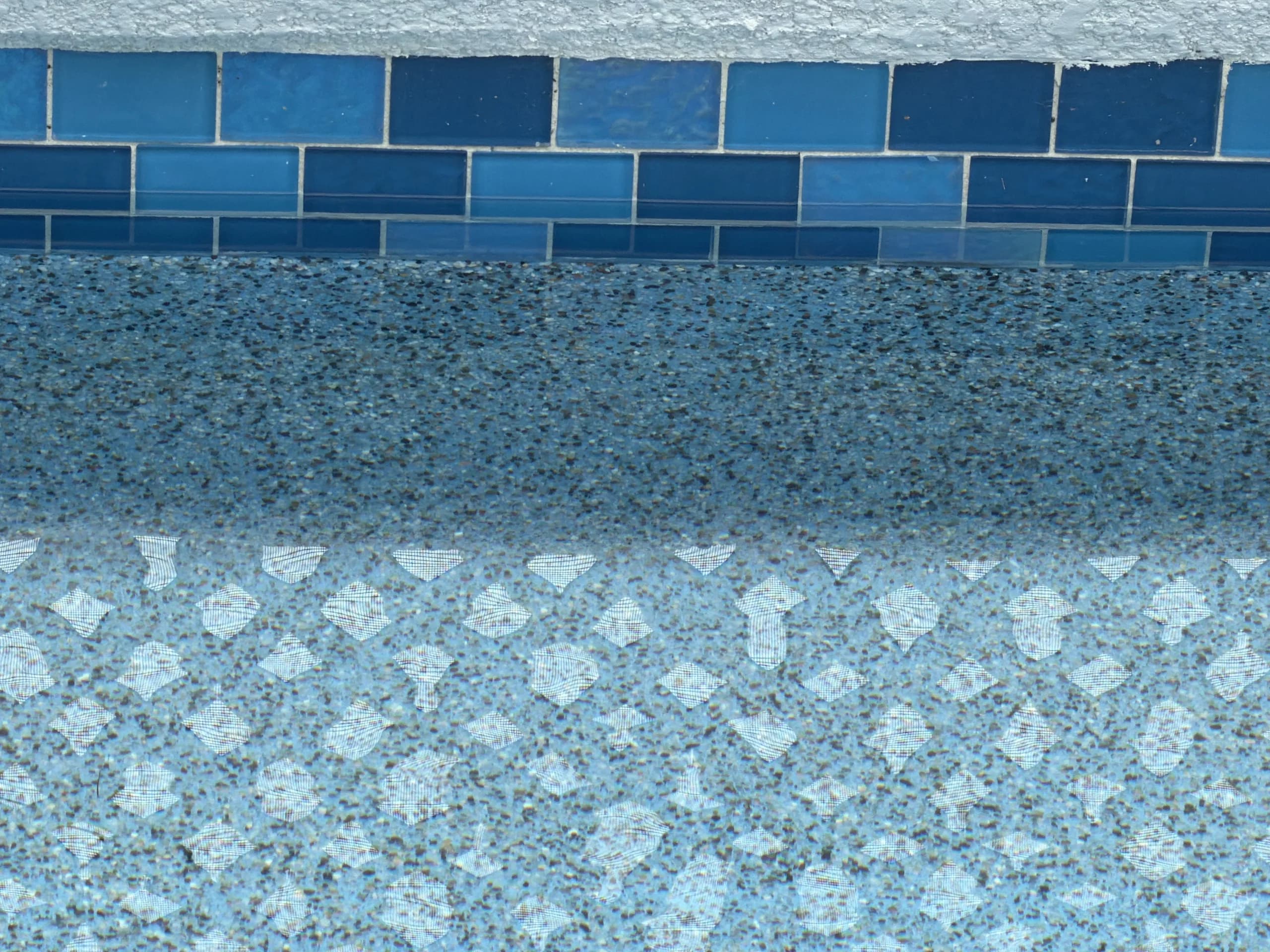
Color selection isn't just an aesthetic decision in HOA communities — it's part of the approval package.
The 8 Questions Every HOA Homeowner Asks Before Starting a Pool Resurfacing Project
Can my HOA force me to use a specific contractor?
Some HOAs maintain a preferred vendor list but cannot legally require a specific contractor in Florida — you have the right to choose a licensed professional. They can require your contractor meet certain standards: active license, general liability insurance, and workers' comp. D&J meets all of these.
What happens if I start the work without HOA approval?
Your HOA can issue a stop-work order, require restoration of the original surface at your expense, and impose fines. An unapproved project can also create complications when you sell the property.
How long does HOA approval typically take in Florida?
Most HOA boards must respond within 30 days of a complete submission. Some committees meet on a set schedule (bi-weekly or monthly), which can affect timing. A complete package on the first attempt is the most effective way to stay on schedule.
Can the HOA deny my request if my contractor is licensed and insured?
Yes. License and insurance are baseline requirements, not guarantees. A board can deny based on material or color choices, scope concerns, or an incomplete submission.
Does PebbleTec require special HOA approval compared to other finishes?
PebbleTec is widely accepted, though some communities with strict color guidelines may require a specific subset of colors. A certified applicator like D&J knows which colors align with typical HOA requirements in Central Florida.
What documents does D&J provide to support an HOA submission?
Contractor license (CPC1459797), certificate of general liability insurance, workers' comp documentation, written scope of work, manufacturer specifications, and finish color samples — usually everything a committee needs for one review cycle.
Can I resurface just part of my pool to reduce cost?
Technically yes, but it's rarely recommended — mixing old and new surfaces creates inconsistent texture and color. It's still subject to the same HOA approval process as a full resurfacing.
Is pool deck resurfacing subject to the same HOA approval as pool resurfacing?
In most communities, yes. Any exterior modification visible from neighboring properties or common areas typically falls under architectural review. Submitting deck and pool work together often streamlines the review.
"HOA communities make up a significant part of the work we do in Orlando and Kissimmee. Once you've been through the process a few times, it's not complicated — it's just specific. The homeowners who run into trouble are usually the ones who hired someone who had never dealt with an HOA before, or who tried to skip the approval step. The approval process is not your enemy. It's a checklist. We've been doing this work in Central Florida since 2014. When a homeowner comes to us and says they live in an HOA, our first question is: do you have your CC&Rs? That tells us everything we need to build the submission correctly the first time."
Expert Insight from D&J The Pool Resurfacers
How to Put Together a Submission Your HOA Will Approve
A complete submission reviewed once is faster than an incomplete submission reviewed twice.
From you
- Completed Architectural Review Request form (or written letter)
- Your property address and HOA lot number if applicable
- Estimated project start date and duration
From your contractor
- Active contractor license number (D&J: CPC1459797)
- Certificate of general liability insurance — current, HOA named as certificate holder if required
- Workers' compensation documentation
- Written scope of work describing materials and daily worksite management
For the materials
- Manufacturer name and product line (PebbleTec, Quartz, etc.)
- Specific color name and code
- Color sample or manufacturer product sheet
- Confirmation the selection falls within your HOA's preferred color range, if applicable
Optional but helpful
- Photos of the current pool surface showing the condition requiring resurfacing
- A brief note explaining why the project is needed
Common Mistakes That Get HOA Pool Resurfacing Requests Denied
#1Submitting before reading the color and material guidelines
Choosing a color you love, submitting, then finding out your HOA only approves a specific range means starting over. Read the guidelines first.
#2Hiring a contractor who can't produce complete documentation
If your contractor can't give you a certificate of insurance, a workers' comp certificate, and a written scope of work the same day, that will delay your project.
#3Starting work on a verbal approval
A conversation with a board member is not binding on the HOA and won't protect you from a stop-work order. Get it in writing. Always.
#4Submitting an incomplete package and expecting the board to ask for what's missing
Many boards will simply table the request until the next review cycle. A complete submission is the only submission that moves at the pace you need.
Ready to Start the Process? We prepare the documentation with you, from the first conversation.
Written and reviewed by
D&J The Pool Resurfacers
A Florida-licensed pool contractor and certified PebbleTec applicator that resurfaces, remodels and builds pools across Central Florida, working with pebble, quartz and polished finishes.
- Florida Certified Pool/Spa Contractor
- CPC1459797 · Verify the license on MyFloridaLicense.com
- PebbleTec
- Certified PebbleTec applicators
- Last updated
Why trust this article: it’s written by the licensed crew that does this work in Central Florida, and it only states what we do on our own jobs — pebble, quartz and polished finishes. More about D&J