The Best Pool Tile and Waterline Materials: Glass, Porcelain or Natural Stone?
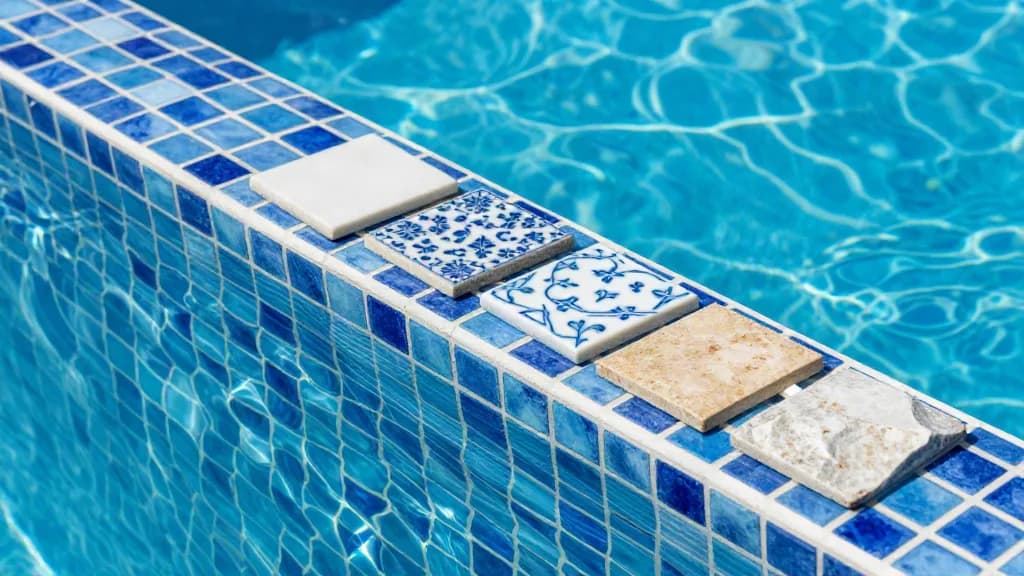
The waterline tile is a small strip of your pool, but it does a lot of work, and it's the first place people look.
When homeowners think about tile, they often think about decoration: a splash of blue glass, a mosaic on the steps, a pattern that ties the pool to the house. Those choices matter. But the tile band at the waterline also has a practical job, and the material you choose affects how easy that band is to keep clean in Florida.
This guide explains what waterline tile does, how glass, porcelain and natural stone compare, how to care for grout and calcium deposits, and how to choose a color that works with your interior finish.
Quick answer: For most Florida pools, glazed porcelain and glass mosaic are the most practical waterline tiles. Both have smooth, low-absorption surfaces that make scum and calcium easier to remove. Glass offers the most shine and color depth; porcelain offers a huge range of styles and is very durable. Natural stone can look beautiful but is more porous, so it usually needs more care at the waterline. Whatever you choose, make sure the tile is rated for submerged pool use and installed with a grout suited for pools.
What the Waterline Tile Actually Does
Water level in a pool rises and falls a little with evaporation, rain and swimmers. Right at that line, several things collect:
- Body oils, sunscreen and dirt float on the surface and leave a ring, often called the scum line.
- Calcium and other minerals are left behind as water evaporates. Over time they can build up as white or gray scale.
Pool interior finishes are textured and porous, which makes that ring harder to clean. A band of smooth tile at the waterline gives you a surface that is much easier to wipe down. It also creates a clean visual border between the water and the coping.
So the waterline tile is part decoration, part maintenance tool.
Pool Tile Materials Compared
Glass Mosaic Tile
Glass tile is the most eye-catching option. It reflects sunlight and pool lights, and its colors can look deeper and more vivid through water.
Strengths:
- Non-porous surface, so oils and scale tend to sit on top rather than soak in
- Wide range of colors, including blends and iridescent finishes
- Colors don't fade from UV
Things to know:
- Glass tile requires careful installation with the right setting materials; it is less forgiving of poor technique
- It can be scratched by harsh abrasives, so cleaning methods matter (more on that below)
- Small mosaic formats mean more grout joints to maintain
If glass is on your list, our article Why Glass Tiles Elevate Any Florida Pool goes deeper into the look and design options.
Porcelain Tile
Porcelain is the workhorse of pool tile. It is fired at high temperatures, which makes it dense and low in water absorption.
Strengths:
- Very durable and resistant to chemicals and fading
- Huge variety: solid colors, patterns, stone looks, textured and glazed surfaces
- Glazed porcelain has a smooth face that makes scum and scale easier to clean
Things to know:
- Not every porcelain or ceramic tile is meant to be underwater; confirm it is rated for pool or submerged use
- Heavily textured surfaces can hold onto scale more than smooth glazed ones
- Printed designs vary by quality, so look at samples up close
Natural Stone Tile
Stone tiles, such as travertine, slate or other natural stones, can create a beautiful, organic waterline that matches a stone deck or coping.
Strengths:
- Natural, one-of-a-kind look
- Pairs naturally with travertine or coral stone coping and decks
Things to know:
- Stone is more porous than glass or porcelain, so oils and minerals can work into the surface
- It usually needs sealing and more attentive cleaning at the waterline
- Some stones are softer and can wear or etch with acidic cleaners or unbalanced water
Many homeowners who love a stone look choose a porcelain tile that imitates stone at the waterline, then use real stone for the coping and deck.
Quick Comparison
| Glass mosaic | Porcelain | Natural stone | |
|---|---|---|---|
| Surface | Non-porous, glossy | Dense, low absorption | Porous |
| Ease of cleaning scum and scale | Easy with gentle methods | Easy (glazed) | More effort |
| Look | Brightest, most color depth | Widest style range | Natural, organic |
| Sealing | No (tile itself) | No (tile itself) | Usually yes |
| Main caution | Avoid harsh abrasives | Confirm pool rating | Porosity, acid sensitivity |
Grout, Calcium and Efflorescence
The tile is only part of the system. Grout and water chemistry play a big role in how the waterline looks after a few years.
Calcium scale
Calcium scale forms when minerals in the water come out of solution, often where water evaporates at the waterline. It is more likely when pH, alkalinity or calcium hardness run high. Keeping water chemistry balanced is the best long-term prevention. Regular brushing of the tile line also keeps light deposits from hardening.
Efflorescence from grout and joints
Sometimes white deposits come from behind the tile rather than from the water. This is called efflorescence: water moving through cement-based materials carries minerals to the surface, where they dry into a white crust. It often shows up around grout lines and along the top edge of the tile under the coping.
Good installation, proper waterproofing and well-sealed joints help reduce it.
Choosing and caring for grout
- Ask your contractor which grout they recommend for submerged pool tile. Many installers use pool-rated cementitious or epoxy grouts; epoxy grout is generally more resistant to stains and chemicals, but it is harder to install.
- Grout color affects how visible stains and scale are. Mid-tone grouts often hide minor deposits better than bright white.
- Damaged or missing grout should be repaired promptly so water doesn't get behind the tile.
Cleaning without damage
- Use a soft brush and a cleaner made for pool tile for routine care.
- Pumice stones and harsh abrasives can scratch glass tile and some glazed surfaces. Check the tile manufacturer's guidance first.
- For heavy scale, professional cleaning methods may be safer than scrubbing harder.
Choosing Tile Color With Your Finish
The waterline tile, the interior finish and the coping should be chosen together. A few guidelines:
- Blues and aquas in the tile often pair naturally with blue pebble or quartz finishes.
- Neutral or stone-look tile works well with tan, gray or white finishes and stone coping.
- High contrast (dark tile with a light finish, for example) creates a bold frame; low contrast feels softer.
- Remember that water changes how colors look. A tile that seems bright on a sample board can look deeper underwater, and the finish color shifts with depth and sunlight.
If you're still deciding on the interior surface itself, our comparison of plaster vs pebble vs quartz explains the trade-offs.
Trim Tile on Steps and Benches
Many pools use a row of contrasting tile along the front edge of steps, benches and swim-outs. Besides looking finished, a contrasting edge makes those steps easier to see from above and below the water.
Local codes may have requirements about marking step edges, and they can differ by project type, so this is something your contractor should confirm for your pool. Trim tile is also a nice place to repeat the waterline color or add an accent.
Why Seeing Samples in Person Helps
Tile is one of the hardest things to choose from a screen. Glass changes with sunlight. Porcelain textures and printed patterns look different up close. And you really need to see the tile next to finish samples and coping to judge the combination.
You can get an early feel for colors in the free 3D Brito Pool Builder, then come to our showroom at 5610 Carder Rd in Orlando to see tile and finish samples side by side before deciding. At D&J we help homeowners choose tile as part of complete pool resurfacing and new pool construction, and we're happy to give you a free estimate with a written, itemized quote after seeing your pool. You can contact us here or call (689) 358-9790.
Frequently Asked Questions
What is the best tile for a pool waterline?
For most Florida pools, glazed porcelain or glass mosaic. Both are smooth and low-absorption, so scum and calcium are easier to clean. Glass gives more shine and color depth; porcelain gives more style options.
Why does my pool get a white line at the tile?
Usually it's calcium scale from evaporation and water chemistry, or efflorescence coming from grout and cement behind the tile. Balanced water, regular brushing and sound grout help prevent both.
Is glass tile worth it for a pool?
Many homeowners love it for its color and reflection, and its non-porous surface is easy to keep clean with gentle methods. It does require skilled installation and should not be cleaned with harsh abrasives.
Can I use natural stone tile at the waterline?
You can, but stone is more porous and typically needs sealing and more attentive cleaning. A porcelain tile with a stone look is a common lower-maintenance alternative.
Can I clean pool tile with a pumice stone?
Be careful. Pumice can scratch glass tile and some glazed surfaces. Check the tile manufacturer's recommendations, and consider professional cleaning for heavy scale.
Should I replace the waterline tile when resurfacing?
It's often a good time to consider it, since the pool is already drained. Whether it's needed depends on the tile's condition, whether it's loose or cracked and whether you want a new look with your new finish.
Written and reviewed by
D&J The Pool Resurfacers
A Florida-licensed pool contractor and certified PebbleTec applicator that resurfaces, remodels and builds pools across Central Florida, working with pebble, quartz and polished finishes.
- Florida Certified Pool/Spa Contractor
- CPC1459797 · Verify the license on MyFloridaLicense.com
- PebbleTec
- Certified PebbleTec applicators
- Last updated
Why trust this article: it’s written by the licensed crew that does this work in Central Florida, and it only states what we do on our own jobs — pebble, quartz and polished finishes. More about D&J