The Best Pool Deck and Coping Materials for Florida: Travertine, Pavers, Concrete, Porcelain and More
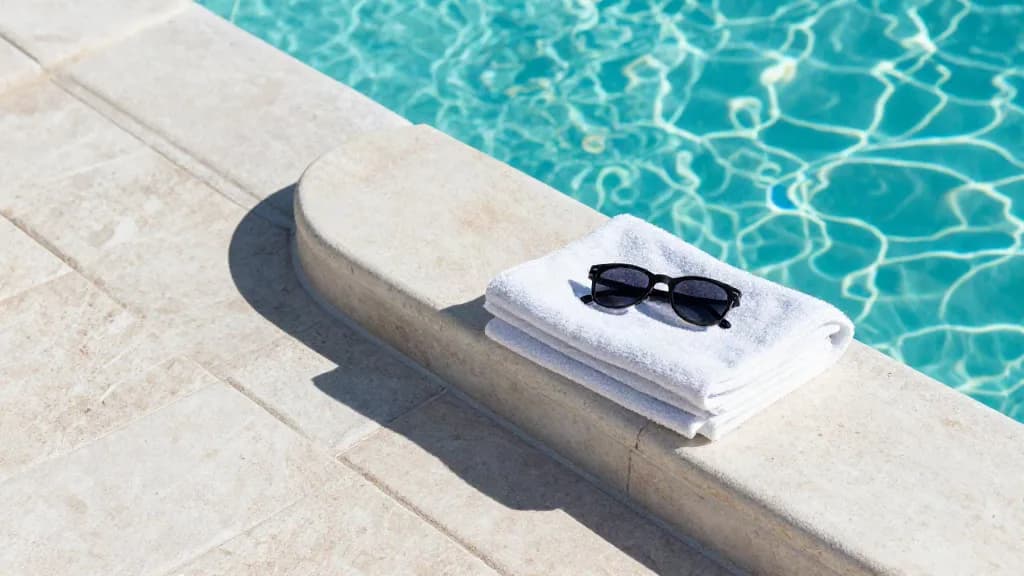
Your family will touch the deck and the coping more than any other part of the pool. In Florida, choosing those materials well is about comfort and safety as much as looks.
Most pool conversations start with the water: the shape, the depth, the color of the finish. But the first thing anyone feels when they walk outside is the deck under their feet, and the first thing they grab when they climb out is the coping.
In Central Florida, those surfaces face strong sun, afternoon storms, splashed chlorine or salt water and constant barefoot traffic. A material that looks great in a catalog can feel very different at 3 p.m. in July.
This guide walks through the most common deck and coping materials used around Florida pools and how they compare on the things that actually matter day to day. (If you're comparing interior finishes like plaster, quartz and pebble, we cover that separately in Plaster vs Pebble vs Quartz Pool Finish.)
Quick answer: For most Florida homes, light-colored travertine, concrete pavers and a cool-deck coating over concrete are the most popular deck choices because they balance heat, grip and durability. Large-format outdoor porcelain is a strong modern option with very low upkeep. For coping, travertine, pavers, porcelain and poured concrete all work well; the best choice is the one that matches your deck, stays comfortable to the touch and is installed to shed water away from the pool.
Deck vs. Coping: What Each One Does
It helps to separate the two.
- Coping is the cap along the edge of the pool. It covers the top of the pool wall, gives swimmers a hand-hold, frames the waterline and helps direct splash water away from the pool structure.
- The deck is everything you walk on around the pool. It handles foot traffic, furniture, drainage and heat.
They don't have to match, but they should be planned together, since the coping is the transition between water and deck.
The Four Things That Matter Most in Florida
Before looking at specific materials, these are the questions worth asking about any option:
- Heat underfoot. Lighter colors and more porous materials generally stay more comfortable than dark, dense ones. Color often matters as much as the material itself.
- Slip resistance when wet. A deck should have enough texture to grip wet feet. Polished or glossy surfaces don't belong around a pool.
- Durability in sun, chlorine and salt. UV fades some materials. Soft natural stone can wear or flake faster with salt water if it isn't suited for it or isn't sealed.
- Maintenance. Some surfaces need periodic sealing, joint sand or recoating. Others mainly need a rinse.
Pool Deck Materials Compared
Travertine
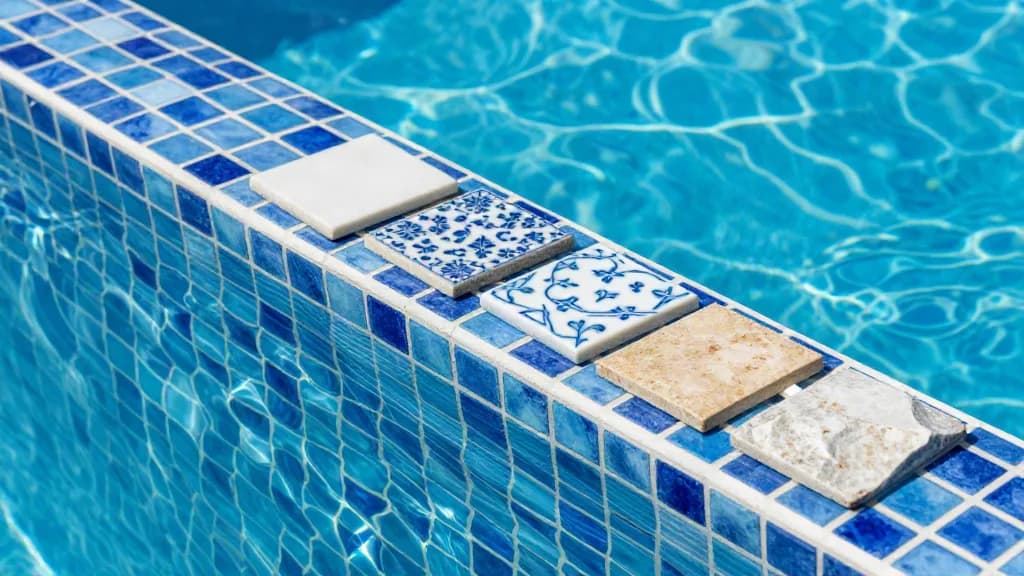
Travertine is a natural stone that has become one of the most requested deck and coping materials in Florida. In lighter tones, it tends to stay comfortable underfoot, and its tumbled or textured surfaces offer good grip when wet.
Things to know: it is natural, so color and pattern vary from piece to piece. Its natural holes and porosity mean it is usually sealed, especially near salt water pools, and the sealer should be one recommended for outdoor, wet areas so it doesn't create a slick film. Travertine pavers can be set over a compacted base or bonded to a concrete slab, depending on the project.
Concrete Pavers
Interlocking concrete pavers are a Florida staple. They come in many shapes, colors and textures, and because individual pieces can be lifted and reset, repairs are usually simpler than with a solid slab.
Things to know: pavers set on sand can shift or settle over time if the base isn't well prepared. Joint sand can wash out and weeds or ants may find their way in. Color can fade in strong sun, and many owners choose to seal pavers to help with color and joint stability. Lighter colors stay cooler.
Poured Concrete With a Broom Finish
Plain concrete, finished with a broom texture for grip, is often the most budget-friendly deck surface and is easy to shape around curves.
Things to know: bare gray concrete can get hot and shows stains over time. Some cracking is normal; control joints help it happen in planned places. Many homeowners later add a coating for comfort and looks.
Cool-Deck Coatings Over Concrete
Textured, light-colored acrylic or cementitious coatings applied over a concrete deck are a long-standing Florida favorite. They are designed to reflect heat and add a textured surface that feels better under bare feet than plain concrete.
Things to know: coatings can wear, chip or stain over the years and are typically recoated or refreshed periodically. The condition of the concrete underneath matters, because a coating won't fix a slab that is moving. For more on refreshing an existing deck, see our guide to pool deck resurfacing in Orlando.
Large-Format Outdoor Porcelain
Porcelain pavers made for exterior use have grown quickly in popularity. They are very dense, absorb very little water, resist staining and fading, and come in looks that imitate stone, wood or concrete.
Things to know: choose a porcelain specifically rated for outdoor, wet areas with a textured or anti-slip surface. Indoor or polished porcelain is not appropriate around a pool. Darker colors can still get warm. Installation method matters, so ask how it will be set and how the joints will handle drainage.
Natural Stone and Coral Stone (Keystone)
Coral stone, often called keystone in Florida, has a classic, coastal look and a very porous texture. Like travertine, lighter varieties tend to stay comfortable underfoot. Other natural stones, such as slate or flagstone, are also used around pools.
Things to know: porous stones collect dirt and organic stains more easily and usually benefit from sealing. Softer stones can wear faster in high-traffic spots. Ask your supplier whether a particular stone is suited to salt water if you have, or plan to have, a salt system.
Wood and Composite Decking
Wood and composite boards are less common at ground level around Florida pools but are used on raised decks, sloped lots or to connect a pool to a lanai or upper patio.
Things to know: natural wood needs regular sealing or staining and can splinter or weather in Florida humidity. Composite boards need less upkeep, but many get noticeably hot in direct sun, especially in darker colors, so check heat information from the manufacturer. Both need proper ventilation and drainage underneath.
Quick Comparison Table
| Material | Feel underfoot (light colors) | Wet grip | Typical upkeep |
|---|---|---|---|
| Travertine | Comfortable | Good when tumbled/textured | Sealing |
| Concrete pavers | Moderate | Good | Joint sand, optional sealing |
| Broom-finish concrete | Can get hot | Good | Crack and stain care |
| Cool-deck coating | Comfortable | Good | Periodic recoat |
| Outdoor porcelain | Moderate | Good if rated anti-slip | Very low |
| Coral stone (keystone) | Comfortable | Good | Sealing, cleaning |
| Composite decking | Can get hot | Varies by product | Low |
These are general tendencies; color, texture, shade and sealing all change real-world performance.
Choosing Coping Material
Common coping options in Florida include travertine, concrete pavers with a bullnose edge, outdoor porcelain coping pieces, coral stone and poured or cantilevered concrete.
A few practical points:
- Edge profile matters. A rounded (bullnose) edge is more comfortable for hands and arms than a sharp one.
- Water should drain away from the pool. Coping is typically set with a slight slope toward the deck.
- Match or contrast on purpose. Matching coping and deck feels calm and seamless; a contrasting coping frames the pool and highlights its shape.
How We Help Homeowners Decide
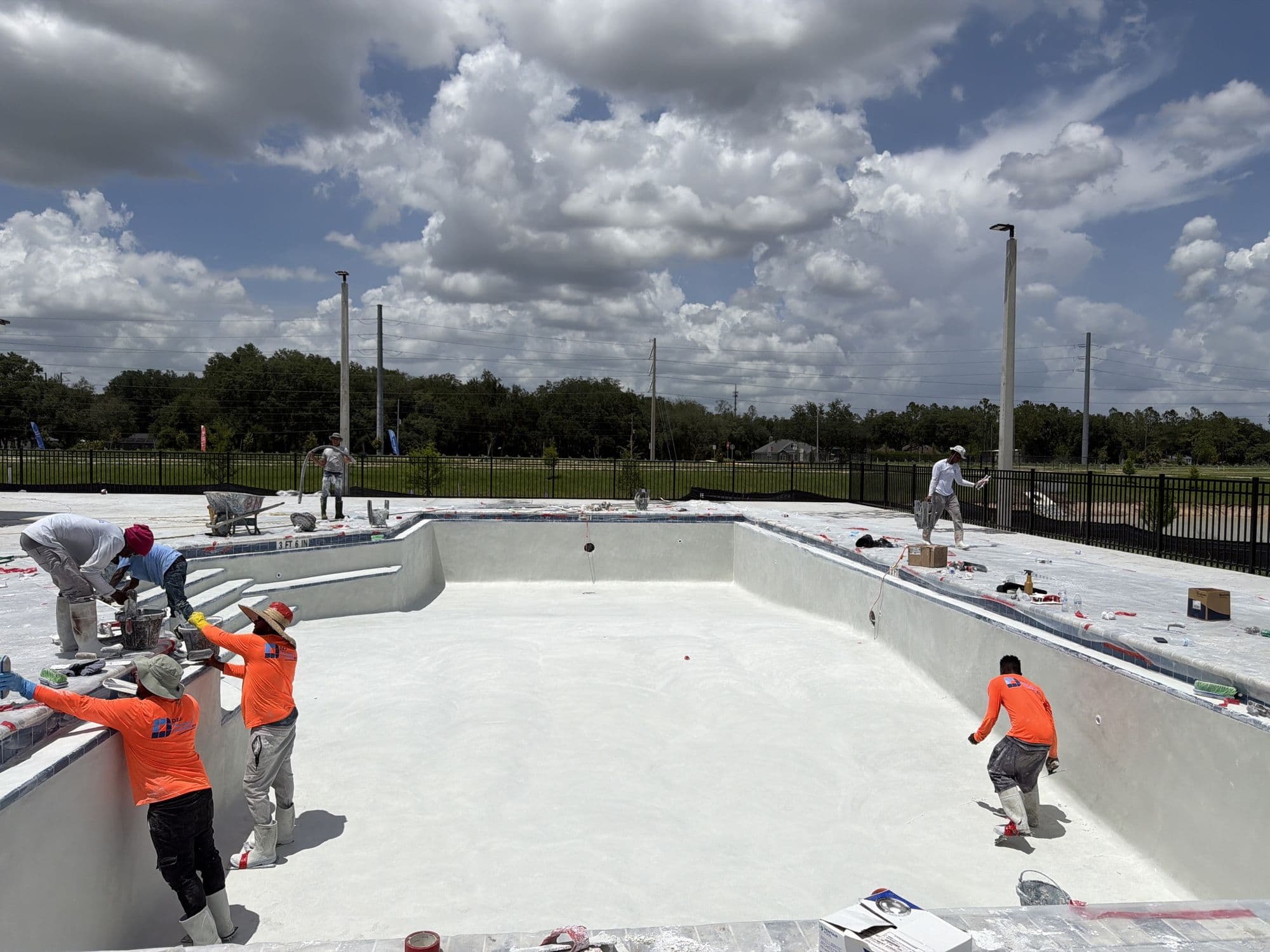
At D&J, we install decking and outdoor living spaces along with new pools and complete resurfacing, so we look at the pool and the surfaces around it as one project. The right material depends on your yard, how much sun the deck gets, whether you use salt, how you use the space and the look you want.
One easy way to start is the free 3D Brito Pool Builder, where you can try different deck and coping options, such as travertine, pavers, porcelain, keystone and concrete, on a pool design before you talk to anyone. When you're ready, you can also see materials in person at our showroom at 5610 Carder Rd in Orlando. You can learn more about our decking and outdoor living work or request a free estimate for a written, itemized quote after we see your yard.
Frequently Asked Questions
What is the coolest pool deck material for Florida?
Light-colored, porous or reflective surfaces generally feel the most comfortable. Light travertine, coral stone and cool-deck coatings are popular for this reason. Color plays a big role, so a light paver can feel cooler than a dark natural stone.
Is travertine slippery around a pool?
Tumbled or textured travertine typically offers good grip when wet. Polished travertine is not recommended around pools. If the stone is sealed, the sealer should be suited for wet outdoor areas so it doesn't leave a slick surface.
Are pavers or poured concrete better for a pool deck?
Both work well. Pavers offer more design options and easier spot repairs; poured concrete is seamless and often more budget-friendly, especially with a cool-deck coating.
Can I use porcelain tile around my pool?
Yes, if it's porcelain made for exterior use with a textured, slip-resistant surface. Interior or polished porcelain is not suitable for wet pool decks.
Does a salt water pool affect my deck or coping?
Salt can be harder on some soft or porous natural stones and on unprotected surfaces. Sealing helps, and it's worth confirming with the supplier that the stone is suited for salt water pools.
Do the deck and coping have to be the same material?
No. Some pools use a contrasting coping to frame the water; others match for a seamless look. Plan them together for color, comfort and drainage.
Written and reviewed by
D&J The Pool Resurfacers
A Florida-licensed pool contractor and certified PebbleTec applicator that resurfaces, remodels and builds pools across Central Florida, working with pebble, quartz and polished finishes.
- Florida Certified Pool/Spa Contractor
- CPC1459797 · Verify the license on MyFloridaLicense.com
- PebbleTec
- Certified PebbleTec applicators
- Last updated
Why trust this article: it’s written by the licensed crew that does this work in Central Florida, and it only states what we do on our own jobs — pebble, quartz and polished finishes. More about D&J