How to Get Ready to Finance a Pool (and Get Approved)

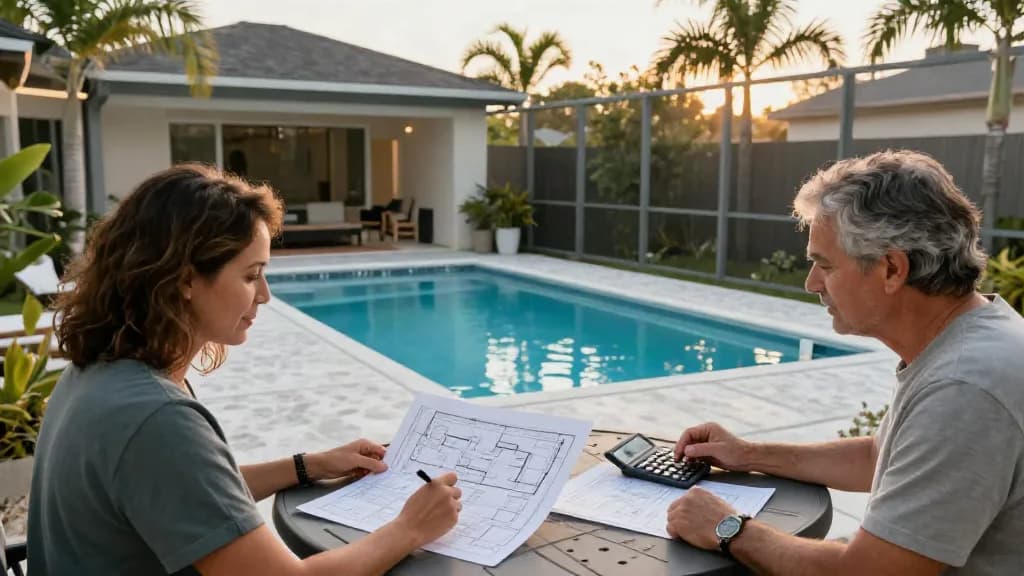
The best time to prepare for pool financing is before you apply. A few weeks of homework can mean a smoother approval and fewer surprises once construction starts.
Most homeowners think about financing after they fall in love with a design. That's natural. But lenders don't approve a dream; they approve a number, a borrower and a plan.
The good news is that almost everything a lender looks at is something you can review, organize or improve ahead of time. This guide walks through the steps in the order we recommend.
Quick answer: To get ready to finance a pool, first budget the entire project (not just the pool), then pull your free credit reports at AnnualCreditReport.com, calculate your debt-to-income ratio, gather income and identity documents, get a written itemized quote, and compare offers by APR and total cost, including any prepayment penalty. In Florida, also plan for a required pool safety feature.
This article is general education, not financial or legal advice. Rules and lending standards change, so confirm details with your lender, your county and, if needed, an attorney.
Step 1: Budget the Whole Project, Not Just the Pool
The most common financing mistake is borrowing for the pool and forgetting everything around it. A realistic budget usually includes:
- The pool itself: shell, interior finish, equipment, plumbing and electrical.
- Decking and coping: the area you'll actually walk and sit on. See our decking and outdoor living page for what's involved.
- Safety barrier or other required safety feature (more on Florida's rule below).
- Permits and inspections: building, electrical and any others your jurisdiction requires.
- Landscaping and restoration: sod, plants, irrigation changes and cleanup after equipment access.
- Ongoing costs: higher electricity for the pump, water, chemicals and routine service.
Ask your contractor what is included and what is not. At D&J we give a written, itemized quote after seeing your yard, so you can see each piece rather than one lump figure. If you're still deciding on a design, our free 3D pool builder can help you settle the size and features before asking for numbers.
Plan for Florida's pool safety requirement
Florida's Residential Swimming Pool Safety Act requires a new residential pool to have at least one approved safety feature to pass final inspection. The options listed in the statute include:
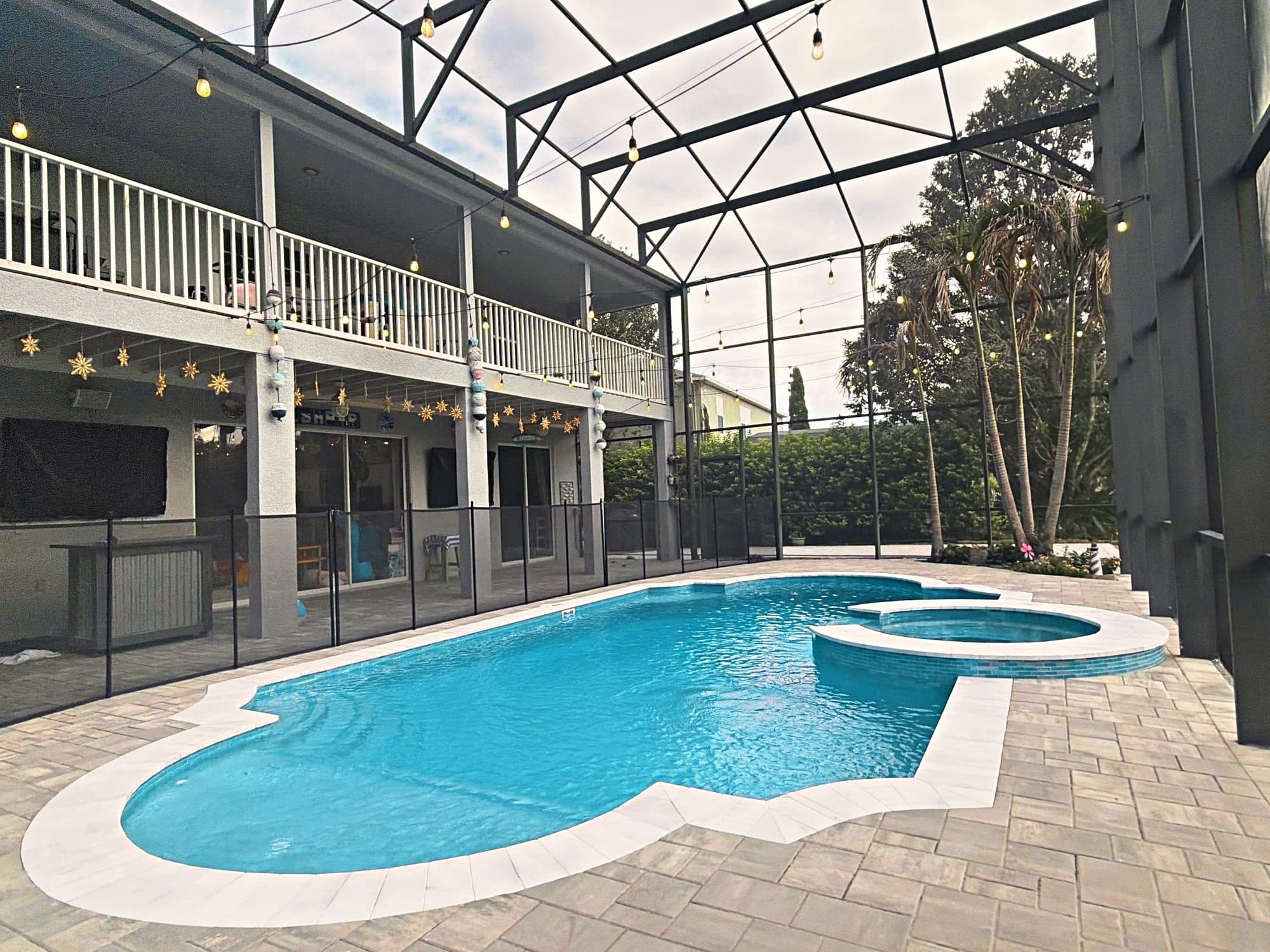
- A barrier that isolates the pool from the home and meets the requirements of section 515.29, including being at least 4 feet high on the outside, with self-closing, self-latching gates that open away from the pool.
- An approved safety pool cover.
- Exit alarms on doors and windows that give direct access to the pool.
- Self-closing, self-latching devices on those doors, with the release at least 54 inches above the floor.
- A pool alarm meeting ASTM F2208.
Whichever you choose has a cost, and local codes or your HOA may add requirements. Put it in the budget from day one, not as an afterthought. Rules change, so confirm current requirements with your county or city building department.
Step 2: Check Your Credit Reports
Before a lender pulls your credit, look at it yourself. According to the Federal Trade Commission, AnnualCreditReport.com is the only site authorized to provide the free credit reports you're entitled to by law, and the three nationwide credit bureaus now let you check your report from each of them once a week for free.
Read each report carefully. Look for accounts you don't recognize, late payments that weren't late and balances that are wrong. The FTC explains how to dispute errors with both the credit bureau and the business that reported the information. Fixing a real error takes time, which is one more reason to start early.
Be wary of sites that look official but aren't; the FTC warns about imposters.
Step 3: Know Your Debt-to-Income Ratio
The CFPB defines your debt-to-income ratio as all your monthly debt payments divided by your gross monthly income. Its example: a household paying a combined $2,000 a month in debts with $6,000 in gross monthly income has a DTI of 33%.
Calculate yours with your real numbers, then add the estimated new pool payment to see where you'd land. Acceptable limits vary by lender and loan type. If the number looks high, paying down a balance or waiting until a car loan ends may help before you apply.
Step 4: Gather Your Documents
Requirements vary, but lenders commonly ask for some combination of:
- Government-issued photo ID.
- Recent pay stubs or other proof of income.
- Recent tax returns or W-2s, especially if you're self-employed.
- Bank statements.
- Mortgage statement and homeowners insurance details (for home-secured loans).
- Your contractor's written quote or contract.
Having these in one folder, digital or paper, saves days of back-and-forth.
Step 5: Line Up the Timing With Your Quote and Permits
Financing, design and permitting run on overlapping clocks. A practical order is:
- Settle the design and get a written, itemized quote.
- Explore pre-qualification or apply, so you know the amount you can borrow.
- Sign the contract once financing is in place.
- Let the contractor pull permits and schedule the work.
Permitting rules differ between Orlando, unincorporated Orange County, Osceola County and other cities. Our guide to pool construction permits in Orange and Osceola County explains what to expect. For resurfacing, the timeline is shorter: a complete D&J resurfacing is 3 to 4 days of hands-on work and about a month and a half from start to swim-ready, including chemical start-up.
Step 6: Compare Offers by APR and Total Cost
A lower monthly payment is not always a cheaper loan. Longer terms can reduce the payment while increasing what you pay overall.
The CFPB explains that the APR includes the interest rate plus additional lender fees, so compare APR to APR. For each offer, write down:
| Ask the lender | Why it matters |
|---|---|
| APR | Captures interest plus lender fees |
| Total repaid over the life of the loan | Shows the real cost of a longer term |
| Fees at closing or origination | Can change which offer is cheaper |
| Secured or unsecured? | Tells you whether your home is collateral |
| Prepayment penalty? | Affects paying off early or refinancing |
| Fixed or variable rate? | Determines whether your payment can change |
Step 7: Watch for Prepayment Penalties
The CFPB describes a prepayment penalty as a fee some lenders charge if you pay off all or part of a mortgage early. It typically applies if you pay off the full balance, for example by selling or refinancing, within a set number of years. Not every loan has one, and you only owe it if you agreed to it.
If you might sell your home, refinance or pay the pool off with a bonus, ask directly whether a penalty applies, and ask for a quote on a similar loan without one so you can compare.
Where D&J Fits In
At D&J, our pool financing page lets you estimate a monthly payment and apply with Lyon Financial or Viking Capital. Financing is subject to credit approval, and the lender, not D&J, makes the decision and sets the terms. For a broader look at every way to pay, see Pool Financing Options Compared.
Frequently Asked Questions
Where can I get my credit report for free?
AnnualCreditReport.com is the official site authorized by federal law. The FTC says you can now check your report from each of the three nationwide bureaus once a week for free.
What is a good debt-to-income ratio for a pool loan?
There is no single number; limits vary by lender and loan type. Calculate your ratio, including the new payment, and ask each lender what it requires.
Should I get a quote before applying for financing?
Yes. A written, itemized quote tells you and the lender exactly how much you need and what it covers. It also helps you avoid borrowing too little and coming up short on decking or the safety barrier.
Does Florida require a fence around every new pool?
Not necessarily a fence. Florida law requires a new residential pool to have at least one approved safety feature, and a compliant barrier is one option. Others include an approved safety cover, door and window exit alarms, self-closing, self-latching doors, or a qualifying pool alarm. Local codes may add more, so check with your building department.
What's the difference between APR and interest rate?
The interest rate is the cost of borrowing the money. The APR adds lender fees, which makes it the better number for comparing offers.
Ready When You Are
Preparation doesn't guarantee approval, but it removes guesswork and helps you borrow the right amount for the whole project. When you're ready, request your free estimate or call D&J at (689) 358-9790. We've served Central Florida since 2014, CPC1459797. Se habla español.
Written and reviewed by
D&J The Pool Resurfacers
A Florida-licensed pool contractor and certified PebbleTec applicator that resurfaces, remodels and builds pools across Central Florida, working with pebble, quartz and polished finishes.
- Florida Certified Pool/Spa Contractor
- CPC1459797 · Verify the license on MyFloridaLicense.com
- PebbleTec
- Certified PebbleTec applicators
- Last updated
Why trust this article: it’s written by the licensed crew that does this work in Central Florida, and it only states what we do on our own jobs — pebble, quartz and polished finishes. More about D&J