What Your Pool Contract Should Include (and the Red Flags to Walk Away From)

The contract is the only part of a pool project you can hold in your hand before the work starts. Read it like it matters — because it does.
You've compared companies, checked licenses and picked a finish color. Now someone slides a contract across the table.
Most homeowners skim it, look for the total and sign. That's where many later problems begin: a finish that wasn't the one discussed, a permit nobody pulled, a payment made weeks before the work it covered.
Here's what a good Florida pool contract should spell out — for a new pool, a remodel or a complete resurfacing — and the warning signs that should make you pause. This isn't legal advice; for your situation, talk to a Florida attorney.
Quick answer: A solid pool contract names the exact materials by brand and model, includes drawings, says who pulls the permits, ties payments to completed milestones, explains how changes and weather delays are handled, separates workmanship and manufacturer warranties, and shows the contractor's license number. In Florida, residential contracts over certain amounts must also include specific notices about construction liens and the Homeowners' Construction Recovery Fund.
1. A Scope of Work You Could Hand to a Stranger
A good test: if you handed the scope to another pool contractor, could they tell exactly what is being built or repaired? Vague lines like "resurface pool" or "standard tile" leave too much room. Look for:
- The interior finish by brand, product line and color — for example, a named pebble, quartz or polished finish, not just "pebble."
- Tile and coping — the specific tile, the coping material, and whether existing coping is being kept, repaired or replaced.
- Equipment by brand and model — pump, filter, heater, lights, automation, if any are included.
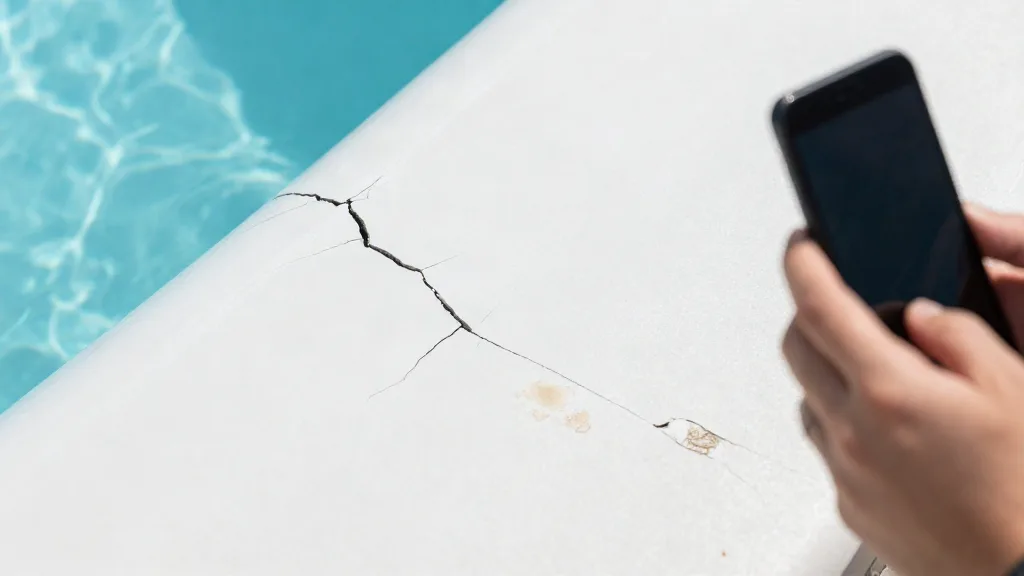
- Prep work — draining, removing the old surface, crack or structural repairs, and what happens if hidden damage is found once the old finish comes off.
- What is excluded — decking, fencing, landscaping, electrical work, screen enclosures and so on.
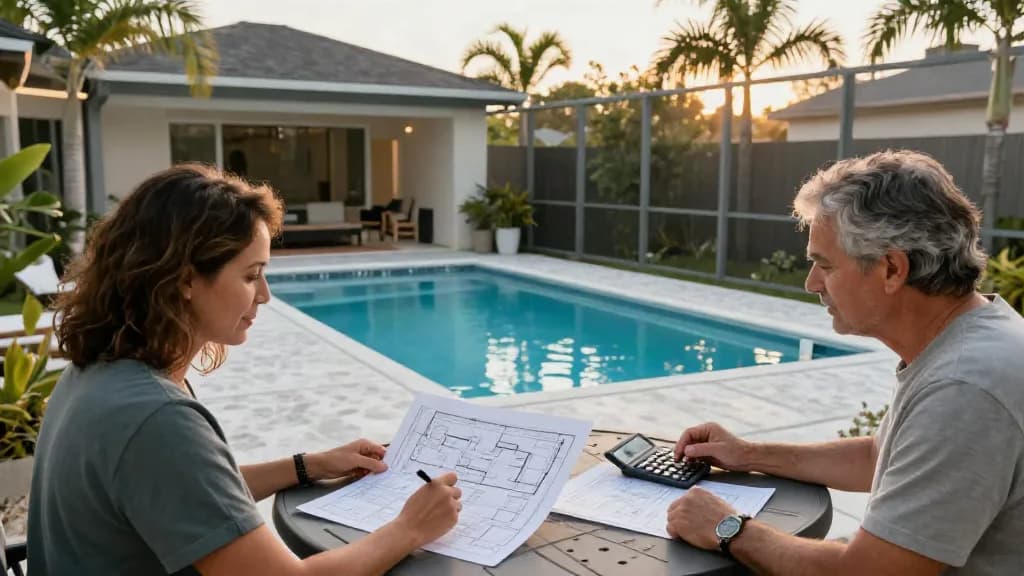
On new construction, the scope should reference drawings or plans: pool shape, dimensions, depths, steps, benches, a sun shelf if you want one, and equipment location. If you started with a design concept — for instance, in our free 3D pool builder — the contract plans should reflect the final, measured version, not the sketch.
2. Permits, Inspections and Safety Requirements
The contract should say plainly who applies for the permits and who pays for them. In most cases the licensed contractor pulls them, but don't assume.
Two related points worth knowing in Florida:
- New residential pools need a safety feature. Under Florida Statutes section 515.27, a new residential pool must have at least one approved safety option — such as a compliant barrier, an approved safety cover, exit alarms on doors and windows to the pool, self-closing and self-latching doors, or a certified pool alarm — to pass final inspection. Your contract should say which one is included and who provides it.
- Notice of Commencement. On many projects, Florida law requires the owner to record a Notice of Commencement and post it on the site before the first inspection (section 713.13). The owner signs it, so ask your contractor how they help you with this step.
Permit rules also vary by city and county. We covered the local process in more detail in how to get a pool construction permit in Orange and Osceola County. Rules change — confirm with your county.
3. Florida Notices Your Contract Should Contain
Florida requires certain information on residential construction contracts. If these are missing, ask why.
| What to look for | What the law says | Source |
|---|---|---|
| Contractor's license number | The registration or certification number must appear on each offer of services, bid, contract and advertisement. | F.S. 489.119 |
| Construction Lien Law notice | Direct contracts over $2,500 for homes of up to four units must include a bold, all-caps notice explaining construction liens, signed and dated by the owner. | F.S. 713.015 |
| Homeowners' Construction Recovery Fund notice | Residential repair, restoration, improvement or construction contracts must include a statement about the Recovery Fund (not required when labor and materials total $2,500 or less). | F.S. 489.1425 |
In plain terms, the lien notice warns that subcontractors and suppliers who aren't paid can place a lien on your property — even if you already paid your contractor in full. The notice itself recommends asking for written lien releases from anyone who has sent you a "Notice to Owner" before you make a payment. That's worth writing into your payment terms.
4. A Schedule — With Honest Weather Language
Afternoon storms are part of Central Florida life from late spring through fall. A good contract gives you:
- An estimated start window and the main phases.
- What counts as an excusable delay (weather, inspections, material backorders) and how you'll be told about it.
- What happens if work stalls for reasons that are not excusable.
For reference, a complete resurfacing at D&J involves 3–4 days of hands-on work, and about a month and a half from start to swim-ready once you include the chemical start-up.
5. Payments Tied to Milestones, Not the Calendar
The safest schedules follow the work: a deposit, then payments after visible stages — for example, after prep and repairs, after the finish is applied, and at completion.
Florida law also adds a protection on large upfront payments. Under section 489.126, a contractor who receives an initial payment of more than 10% of the contract price on residential work must apply for the necessary permits within 30 days and start work within 90 days after permits are issued — unless there's just cause or you agree in writing to a longer period.
If you plan to finance, make sure the contract's payment schedule matches how your lender releases funds. Our financing page lets you estimate a monthly payment and apply with Lyon Financial or Viking Capital; financing is subject to credit approval.
6. Change Orders in Writing
Plans change — you add a water feature, or the crew finds damage under the old surface. The contract should say that every change is documented in a signed change order showing the added or reduced cost and any effect on the schedule — before the extra work is done.
7. Two Kinds of Warranty
"Warranty" usually means two different things:
- Workmanship warranty — from the contractor, covering how the work was installed. The contract should state its length and what it covers.
- Manufacturer warranty — from the product maker, often with conditions such as installation by a certified applicator and proper water chemistry. As certified PebbleTec applicators, for example, we install finishes backed by PebbleTec's 25-year manufacturer warranty.
Ask for both in writing, and ask what you need to do to keep them valid.
8. Cleanup, Start-Up and Hand-Off
The contract should cover debris removal, protection of your deck and landscaping, the chemical start-up of a new finish (who does it, for how long), and a walkthrough explaining equipment and care.
9. Cancellation Terms
Read what happens if either side cancels: what portion of the deposit is refundable, and what costs (permits, custom materials ordered) can be kept.
One Florida rule to know: if a salesperson solicited you away from their place of business and you signed at home, the home solicitation sale law may let you cancel in writing until midnight of the third business day after signing. It does not apply to every sale — for instance, sales that result from your own request for specific services are excluded — so check with an attorney if this matters to you.
Red Flags: When to Slow Down or Walk Away
- Cash only, or payment to a personal name instead of the business.
- A large upfront deposit with no clear milestones after it.
- "We don't need a permit for this" on work that clearly does.
- Pressure to sign today — "this price expires tonight."
- No license number on the contract, proposal or ads, or a number that doesn't match the company when you look it up on the DBPR license search.
- No lien or Recovery Fund notices on a residential contract where they apply.
- Brand-free scopes like "premium finish" with nothing you can verify.
If you want a deeper look at licensing, read what a CPC licensed pool contractor is and why it matters.
How We Approach It at D&J
We've been serving Central Florida since 2014 under CPC license CPC1459797. We give a written, itemized quote after seeing your pool or yard, and you're welcome to visit our showroom at 5610 Carder Rd in Orlando to choose your tile and finish in person before anything is signed. If you'd like us to look at your project, request a free estimate or call (689) 358-9790 — se habla español.
Frequently Asked Questions
Should my pool contract list materials by brand?
Yes. It's the simplest way to get what you were shown and to compare bids fairly.
Who should pull the permit for my pool project?
Usually the licensed contractor, but the contract should say so, along with who pays the fees. Confirm local rules with your city or county.
How much deposit is normal for a pool contract in Florida?
There's no single number. What matters is that payments follow completed work. On residential jobs, Florida law sets permit and start deadlines when an initial payment exceeds 10% of the price.
What is a lien release and why do I need one?
A written statement from a subcontractor or supplier confirming they've been paid. Florida's lien notice recommends collecting them before each payment.
Can I cancel a pool contract after signing?
It depends on the contract and how it was signed. Florida's home solicitation sale law allows a three-business-day cancellation in some at-home sales, not all. Ask an attorney if you're unsure.
Written and reviewed by
D&J The Pool Resurfacers
A Florida-licensed pool contractor and certified PebbleTec applicator that resurfaces, remodels and builds pools across Central Florida, working with pebble, quartz and polished finishes.
- Florida Certified Pool/Spa Contractor
- CPC1459797 · Verify the license on MyFloridaLicense.com
- PebbleTec
- Certified PebbleTec applicators
- Last updated
Why trust this article: it’s written by the licensed crew that does this work in Central Florida, and it only states what we do on our own jobs — pebble, quartz and polished finishes. More about D&J